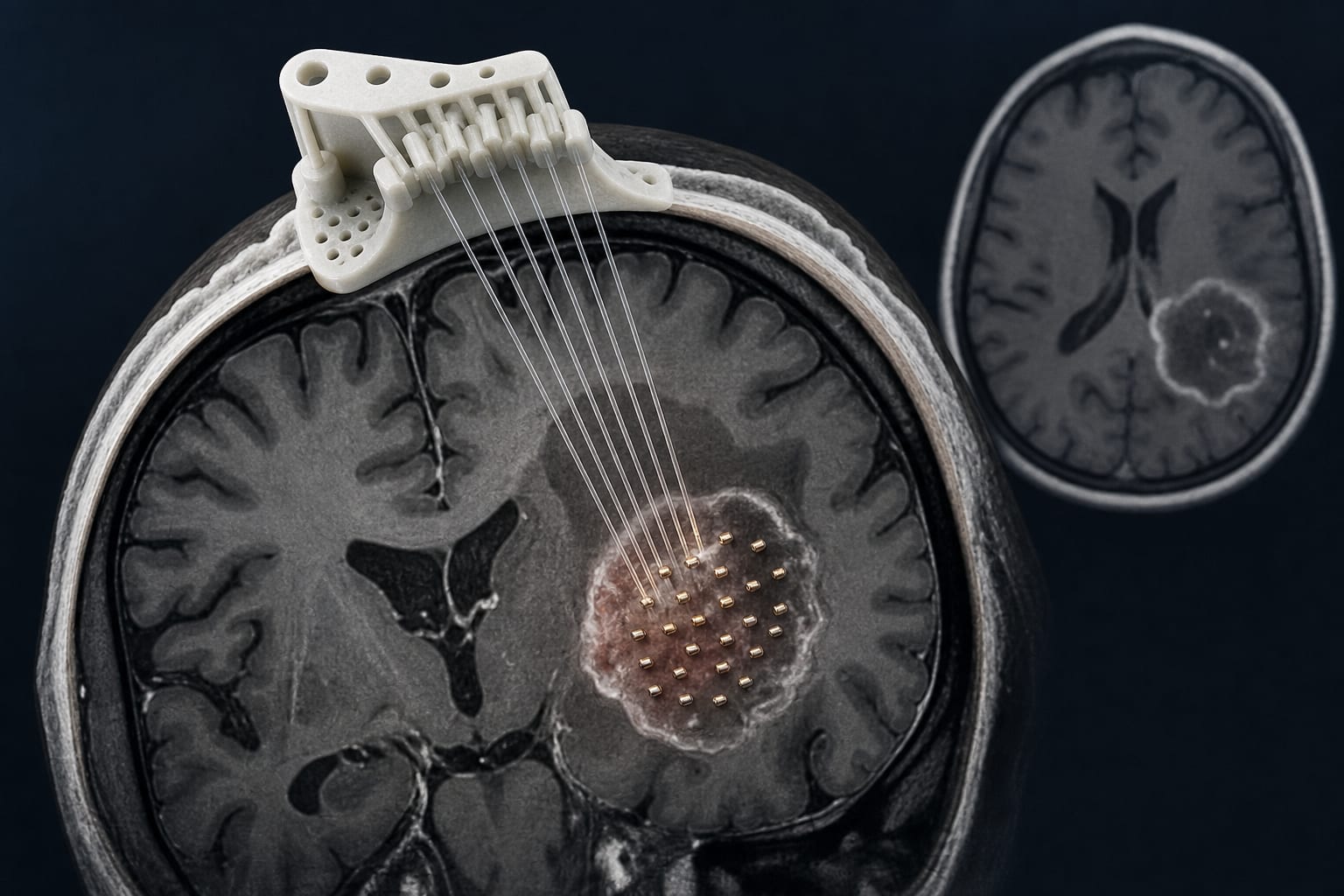
Initial observations on dose optimization in 125I seed implantation for recurrent glioblastoma: safety and efficacy across low- and high-dose ranges - Report - MDSpire
Advertisement
Initial observations on dose optimization in 125I seed implantation for recurrent glioblastoma: safety and efficacy across low- and high-dose ranges
Clinical Report: Evaluating Safety and Efficacy of Dose Adjustment in 125I Seed Implantation for Recurrent Glioblastoma
Overview
This study compares the efficacy and safety of low-dose versus high-dose iodine-125 seed implantation in patients with recurrent glioblastoma.
Background
Recurrent glioblastoma presents significant treatment challenges, with limited effective options following standard therapies. Iodine-125 seed implantation has emerged as a locoregional treatment modality, showing promise in managing recurrent cases.
Data Highlights
Parameter
120–140 Gy
140–160 Gy
P-value
6-month ORR
61.9%
73.2%
0.362
1-year survival rate
42.9%
68.3%
0.053
Median OS (months)
11.2
13.7
0.001
Symptomatic brain edema
2 cases (Grade 2)
10 cases (7 Grade 2, 3 Grade 3)
N/A
Key Findings
The 6-month objective response rate was 61.9% for the low-dose group and 73.2% for the high-dose group.
The 1-year survival rate was 42.9% in the low-dose group compared to 68.3% in the high-dose group.
Median overall survival was significantly longer in the high-dose group (13.7 months) compared to the low-dose group (11.2 months).
Higher doses (140–160 Gy) were associated with increased cases of symptomatic brain edema.
All patients with brain edema received corticosteroid and mannitol therapy, which alleviated symptoms.
Clinical Implications
The findings indicate a need for careful consideration of dosing in iodine-125 seed implantation for recurrent glioblastoma.
Conclusion
Iodine-125 seed implantation is a treatment option for recurrent glioblastoma. Further studies are needed to validate these findings.