Clinical Report: Innovative Cancer Detection Using Electronic Noses
Overview
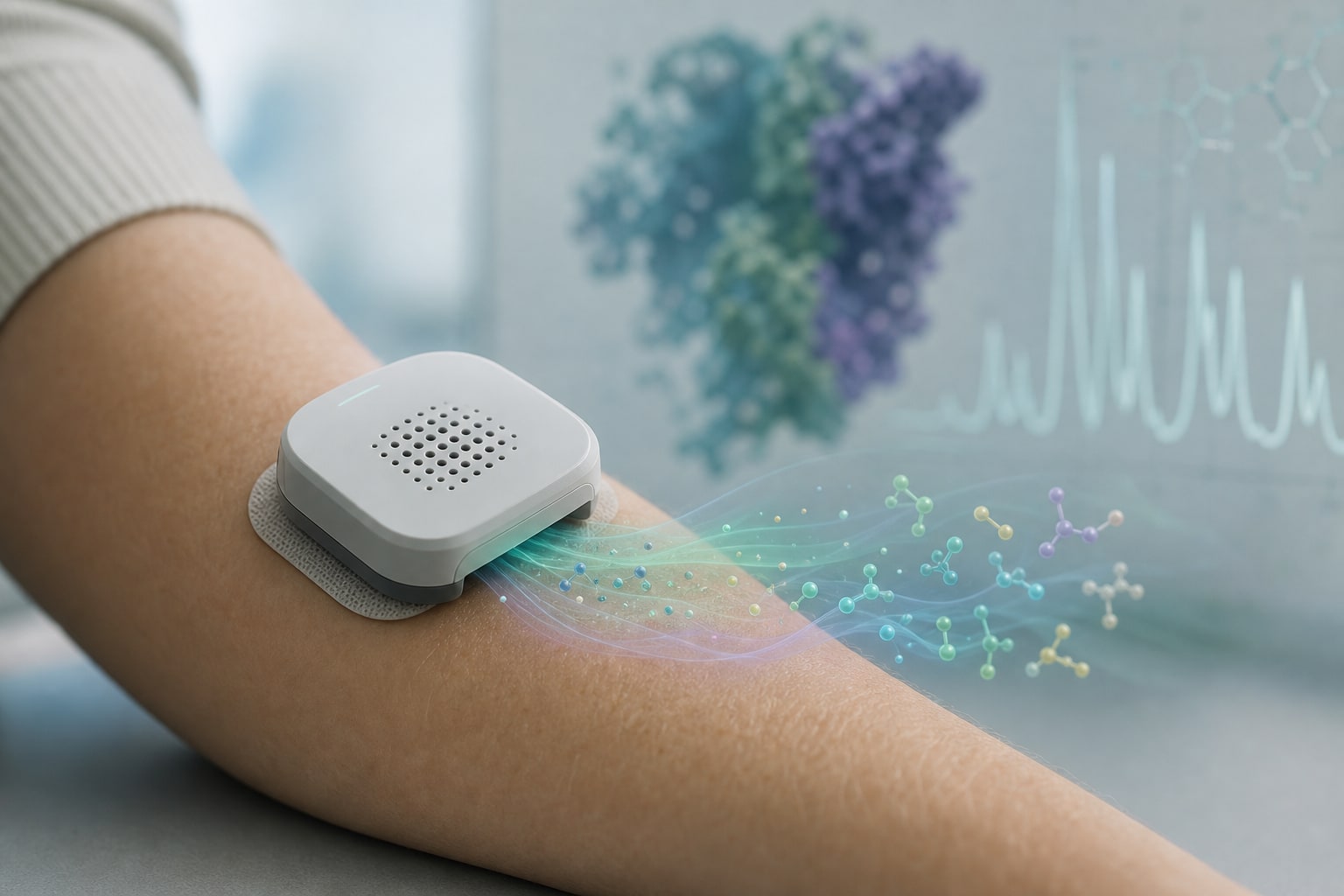
Recent advancements in electronic noses (e-noses) have shown potential for non-invasive cancer detection through the analysis of volatile organic compounds (VOCs) emitted from skin.
Background
Cancer remains a leading cause of mortality globally, largely due to difficulties in early diagnosis and treatment. Traditional diagnostic methods can be invasive or time-consuming.
Data Highlights
No numerical data provided in the source material.
Key Findings
E-noses can detect gaseous cancer biomarkers, including VOCs from skin emissions.
Studies indicate accuracy and sensitivity in using e-noses for cancer detection.
Complexity in VOC profiles from breath poses challenges for consistent cancer biomarker identification.
Machine learning algorithms are being developed to enhance the detection capabilities of e-noses.
Quantum-dot-based e-noses have been tested for detecting skin-emitted VOCs.
Clinical Implications
Continued research and validation are necessary to establish standardized protocols for the use of e-noses in routine practice.
Conclusion
Further studies are needed to validate the clinical utility of e-noses.