Hypoxia-driven tumor immune escape: mechanisms and therapeutic opportunities - Report - MDSpire

Hypoxia-driven tumor immune escape: mechanisms and therapeutic opportunities

  • By

  • Hongran Qin

  • Shuqiang Yang

  • Jiawei He

  • Meijia Zhao

  • Luqian Zhao

  • Jingjing Wang

  • Xiulin Jiang

  • Xiaowen Chen

  • Xin Xu

  • July 1, 2026

  • 0 min

Share

Mechanisms of Tumor Immune Evasion Induced by Hypoxia and Potential Therapeutic Strategies

Overview

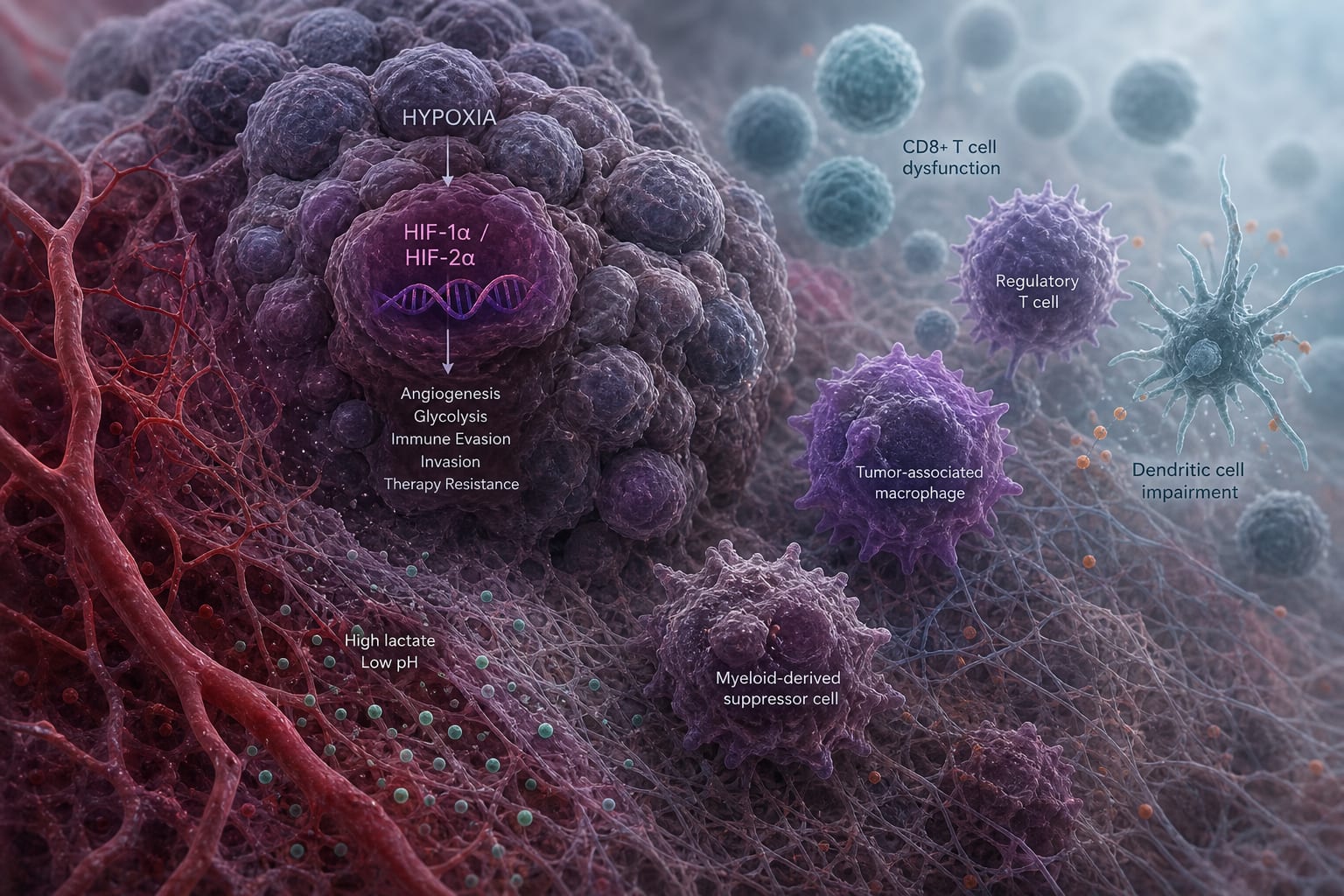
Hypoxia is a significant factor in tumor immune evasion, affecting both tumor behavior and immune cell function. This review discusses the mechanisms by which hypoxia alters the tumor microenvironment.

Background

Hypoxia is prevalent in solid tumors and contributes to immune escape by reshaping the tumor microenvironment. It affects the function of immune cells and promotes an immunosuppressive environment.

Data Highlights

No numerical data or trial data provided in the source material.

Key Findings

  • Hypoxia induces immune evasion by suppressing CD8+ T cells and natural killer cells.
  • HIF-1α and HIF-2α are key regulators of transcriptional programs that support tumor survival and immune suppression.
  • Hypoxia promotes the accumulation of regulatory T cells, tumor-associated macrophages, and myeloid-derived suppressor cells.
  • Metabolic changes driven by hypoxia, such as lactate accumulation and acidosis, create a hostile environment for effector immune cells.
  • RNA modifications like m6A and ac4C link hypoxia signaling with immune checkpoint regulation.
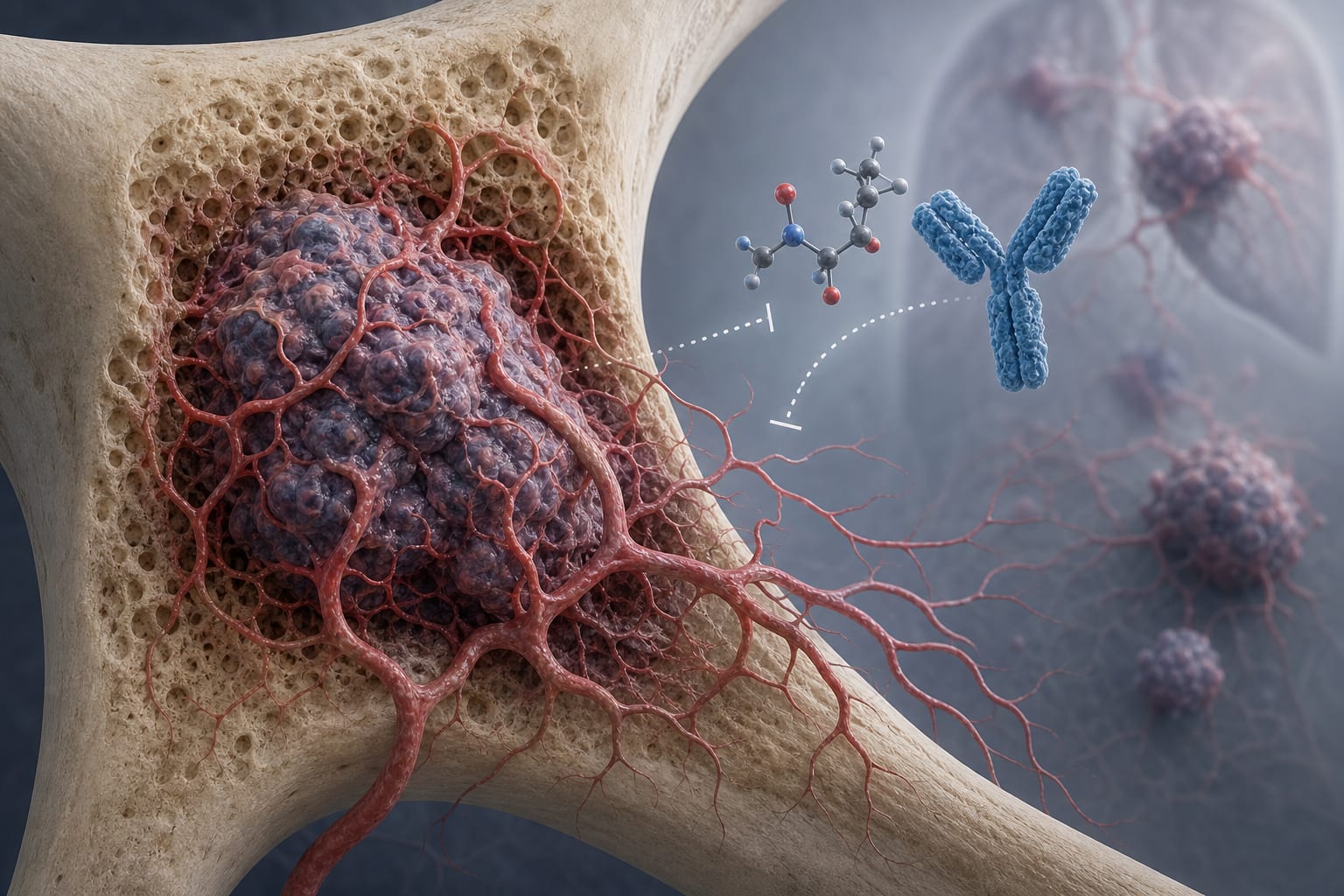
  • Targeting hypoxia-related pathways may enhance antitumor immunity, but combination therapies are likely necessary due to overlapping escape mechanisms.

Clinical Implications

Clinicians should consider the impact of hypoxia on tumor behavior and immune response.

Conclusion

Hypoxia plays a critical role in tumor immune evasion, and understanding its mechanisms is essential for developing effective therapeutic strategies. Future research should focus on integrating hypoxia modulation with existing cancer therapies.
Related Resources & Content

  1. Frontiers in Oncology, 2026 -- Immune-excluded and immune-suppressive tumor microenvironments: mechanisms, spatial biomarkers, and therapeutic rewiring
  2. Frontiers in Oncology, 2026 -- Metabolic sovereignty through oxidative hostility: a mechanistic perspective on how cancer engineers stromal dependency via ROS-mediated lysosomal reprogramming
  3. Frontiers in Oncology, 2026 -- Tumor microenvironment conversion through intelligent nanomedicine: a paradigm shift in overcoming chemoresistance
  4. Frontiers in Immunology, 2026 -- Editorial: Overcoming resistance to immune checkpoint inhibitors: mechanisms and strategies in cancer therapy
  5. ScienceDirect, 2025 -- A cell-specific computational framework reveals a pan-cancer hypoxia signature predicting overall survival and ICI response
  6. New England Journal of Medicine, 2024 -- Belzutifan versus Everolimus for Advanced Renal-Cell Carcinoma
  7. A cell-specific computational framework reveals a pan-cancer hypoxia signature predicting overall survival and ICI response - ScienceDirect
  8. Belzutifan versus Everolimus for Advanced Renal-Cell Carcinoma | New England Journal of Medicine
  9. https://d56bochluxqnz.cloudfront.net/documents/full-guideline/EAU-Guidelines-on-Renal-Cell-Carcinoma-2025_2025-04-17-105637_dkgm.pdf

Original Source(s)

Related Content