Clinical Report: Temporal Changes in Inflammatory Biomarkers Following ICH
Overview
This study investigates the dynamic changes in inflammatory biomarkers in patients with spontaneous intracerebral hemorrhage (ICH) and their association with 90-day functional outcomes and mortality. Findings indicate that elevated levels and changes in these biomarkers are linked to unfavorable outcomes and higher mortality rates.
Background
Spontaneous intracerebral hemorrhage (ICH) is a significant cause of stroke, characterized by high mortality and disability rates. Identifying reliable prognostic markers is crucial for optimizing clinical management and improving patient outcomes. Inflammatory responses play a key role in the secondary brain injury following ICH, making inflammatory biomarkers potential indicators of prognosis.
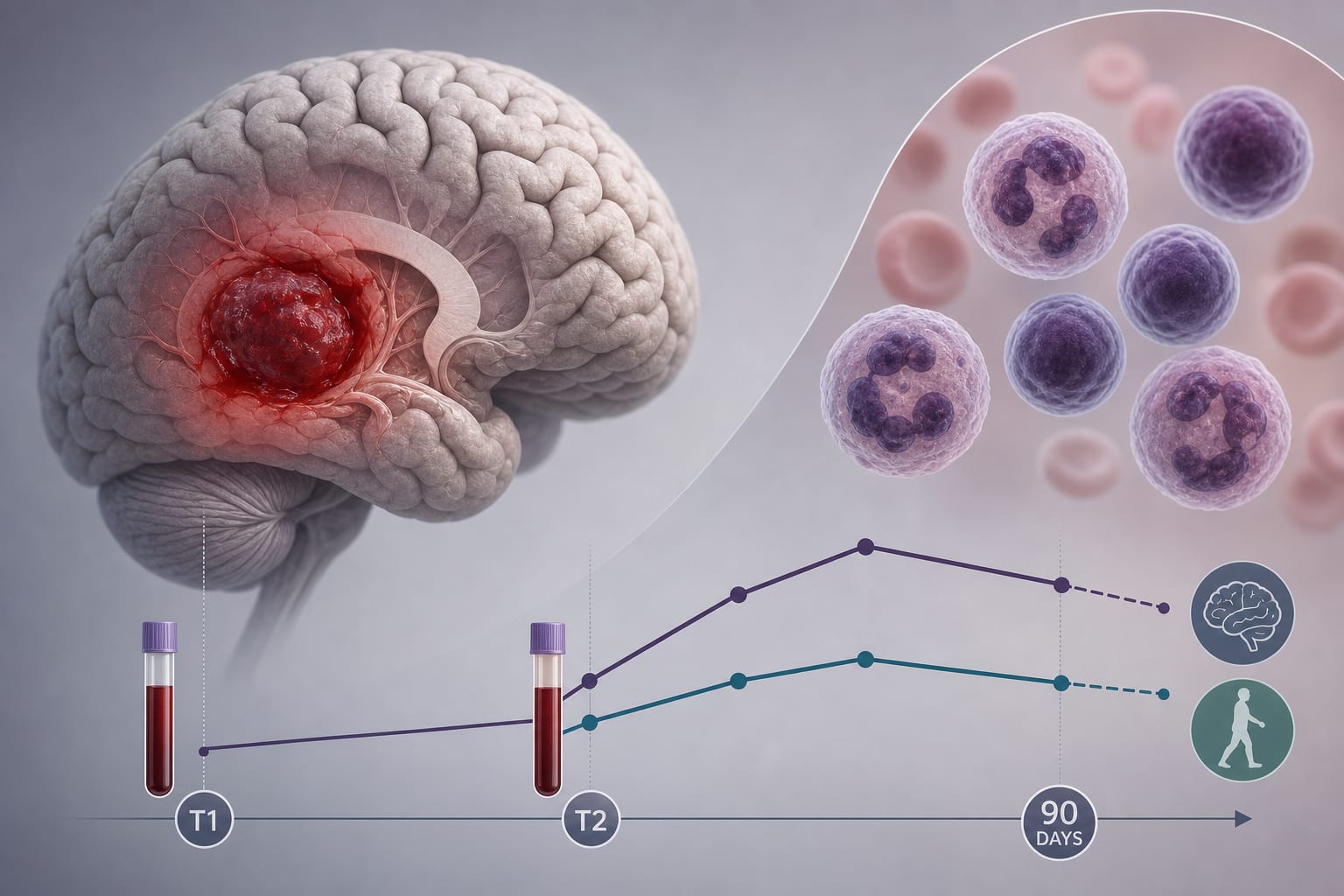
Higher levels of NLR, SII, SIRI, and IPI at day 7 (T2) correlate with unfavorable outcomes.
Dynamic changes in these biomarkers from T1 to T2 are more pronounced in non-survivors.
Multivariate analysis indicates T2 levels are significantly associated with 90-day outcomes.
Receiver operating characteristic analysis shows T2 indices have better predictive performance than T1 indices.
Clinical Implications
Clinicians should consider the dynamic assessment of inflammatory biomarkers in ICH patients for better prognostic evaluation. Monitoring these biomarkers can aid in risk stratification and inform clinical decision-making regarding patient management.
Conclusion
The study underscores the importance of dynamic inflammatory biomarkers in predicting outcomes after spontaneous ICH. These biomarkers may enhance clinical risk stratification and improve patient management strategies.