Machine learning-based prediction of dataset-defined myocardial infarction risk: A retrospective computational study for precision cardiovascular risk assessment - Report - MDSpire
Advertisement
Machine learning-based prediction of dataset-defined myocardial infarction risk: A retrospective computational study for precision cardiovascular risk assessment
Clinical Report: Predictive Modeling of Myocardial Infarction Risk Using Machine Learning
Overview
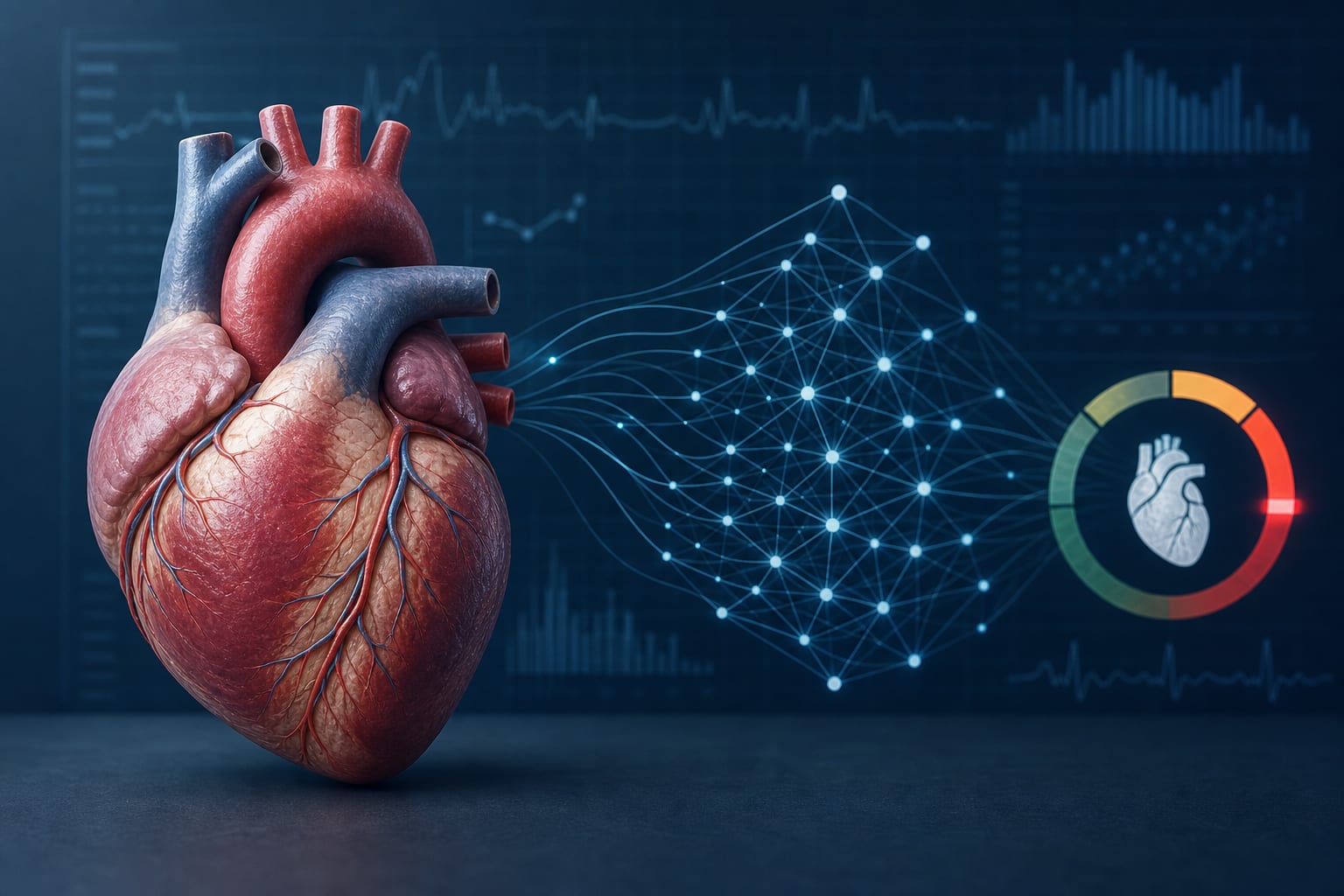
This study evaluates three machine learning models for predicting myocardial infarction risk using a merged public heart disease dataset.
Background
Myocardial infarction is a critical cardiovascular event that necessitates early identification of at-risk individuals to mitigate morbidity and mortality. Traditional risk assessment methods often rely on a combination of demographic and clinical factors, which may not be uniformly available.
Data Highlights
The study utilized a merged public heart disease dataset consisting of 1,888 records and 14 variables derived from five publicly available datasets.
Key Findings
Three machine learning models were evaluated: Random Forest, Support Vector Machine, and multilayer perceptron deep neural network.
The study emphasizes the importance of clinically meaningful metrics for model evaluation beyond accuracy.
Many existing models lack external validation and comparison with established clinical risk scores.
Machine learning methods can model complex nonlinear relationships among clinical variables.
Clinical Implications
The findings suggest that while machine learning models show promise in predicting myocardial infarction risk, careful consideration of evaluation metrics and validation processes is essential for clinical applicability. Clinicians should be aware of the limitations of current models when interpreting risk assessments.
Conclusion
This study contributes to the understanding of machine learning applications in cardiovascular risk prediction, highlighting both the potential benefits and the challenges that remain in translating these models into clinical practice.
New studies separate host and microbial metabolites, trace secreted proteins, identify a pro-regenerative cardiomyocyte state, and map macrophage lipid metabolism