Interpreting elevated FRAP in critical illness: beyond antioxidant capacity - Report - MDSpire

Interpreting elevated FRAP in critical illness: beyond antioxidant capacity

  • By

  • Xinru Tang

  • Sichu Liu

  • Hong Yuan

  • July 1, 2026

  • 0 min

Share

Clinical Report: Understanding Increased FRAP Levels in Critical Illness

Overview

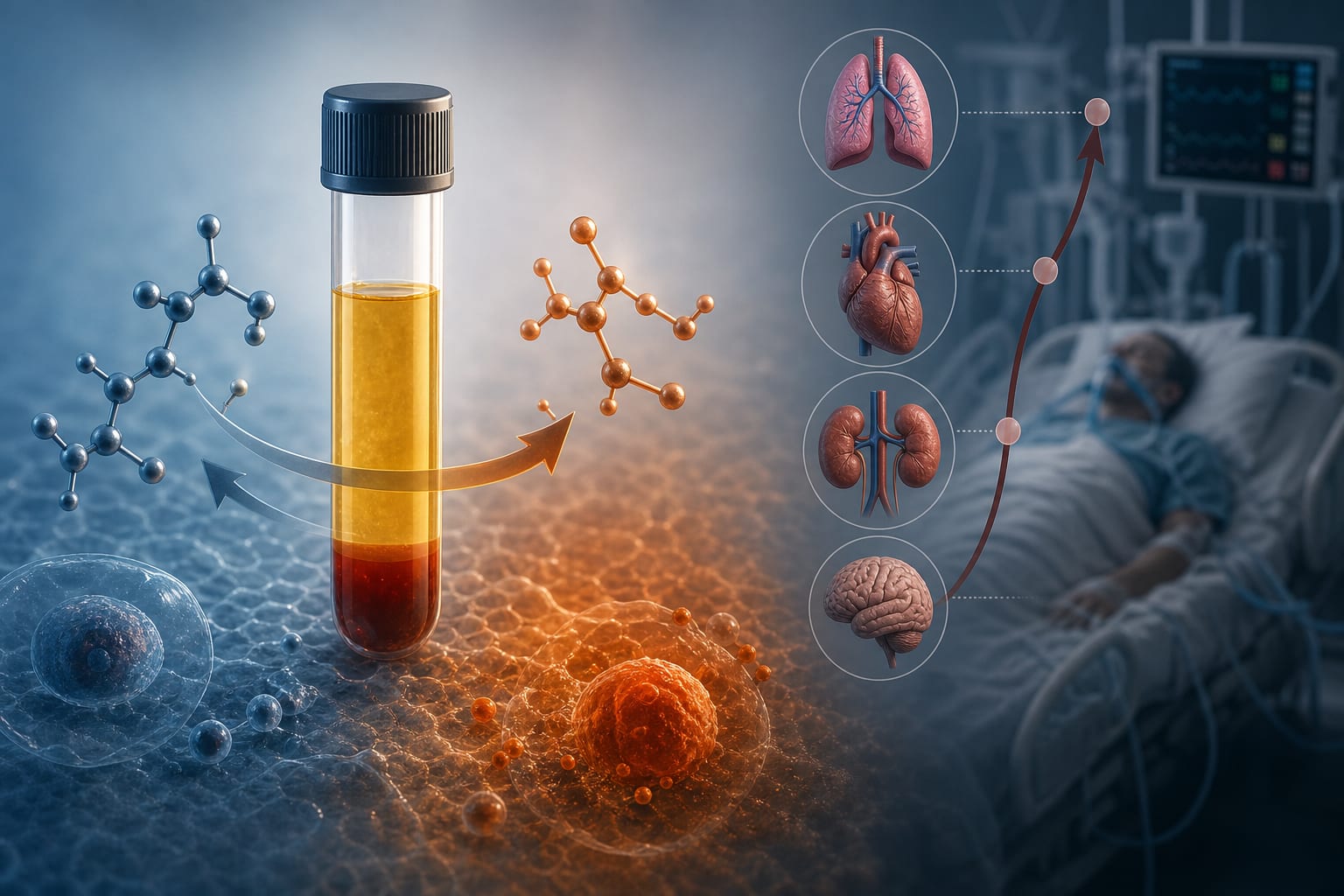
Elevated plasma ferric reducing antioxidant power (FRAP) levels in critically ill patients are associated with shock severity, endothelial dysfunction, and increased 90-day mortality.

Background

The assessment of biomarkers in critically ill patients is crucial for understanding disease severity and guiding treatment. Elevated FRAP levels have been linked to oxidative stress and organ dysfunction.

Data Highlights

ParameterFindings
Patient Cohort464 postoperative critically ill patients
Association with MortalityIndependent association with 90-day mortality
Shock SeverityHigher FRAP levels correlated with increased shock severity
Discriminative PerformanceComparable to APACHE II scores

Key Findings

  • Elevated FRAP levels are associated with shock severity and endothelial dysfunction.
  • FRAP levels independently predict 90-day mortality in critically ill patients.
  • The FRAP assay is influenced by various endogenous compounds such as uric acid and bilirubin.

Clinical Implications

Clinicians should interpret elevated FRAP levels with caution, considering their potential reflection of organ dysfunction.

Conclusion

The findings regarding FRAP levels in critically ill patients highlight its association with clinical outcomes.

Related Resources & Content

  1. Cobo-Zubia et al., Critical Care, 2026 -- Plasma antioxidant capacity as a predictor of mortality in critically ill patients
  2. Intensive Care Medicine — Adjuvant Vitamin Supplementation in Critically Ill Patients: Emphasis on Thiamine, Vitamin C, and Vitamin D
  3. Archives of Toxicology — Mechanisms Underlying the Pathophysiology of Reactive Oxygen Species (ROS)
  4. Archives of Toxicology — The Impact of Redox Signaling on Mitochondrial and Endoplasmic Reticulum Function in Kidney Disorders
  5. Surviving Sepsis Campaign Adult Guidelines | SCCM
  6. Basic Research in Cardiology — Mitigating Mitochondrial Reverse Electron Transport as a Cardioprotective Approach
  7. Surviving Sepsis Campaign Adult Guidelines | SCCM
  8. Plasma antioxidant capacity as a predictor of mortality in critically ill patients | Critical Care | Springer Nature Link

Original Source(s)

Related Content