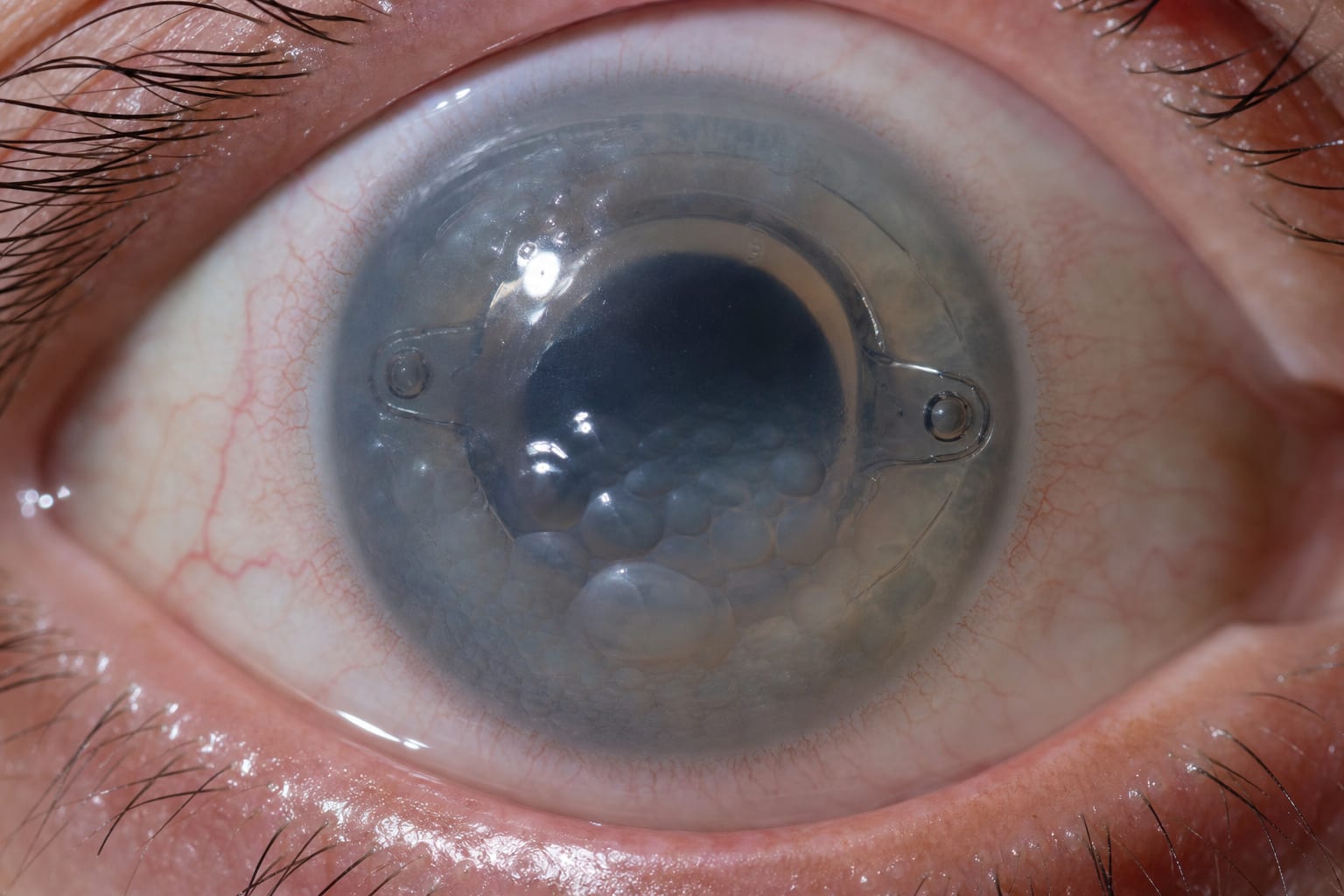
Bilateral Acute Angle Closure as an Uncommon Presentation of Relapsing Polychondritis
Overview
This case report describes a rare presentation of relapsing polychondritis (RP) manifesting as bilateral acute angle-closure glaucoma due to supraciliary effusion. The diagnosis was challenging due to the absence of classical RP features initially and the presence of systemic inflammatory signs and sensorineural hearing loss.
Background
Relapsing polychondritis is a rare immune-mediated disorder characterized by recurrent inflammation of cartilaginous structures such as the ears, nose, and trachea. Diagnosis is clinical, as no specific laboratory tests exist. Ocular involvement is common in RP but typically includes scleritis, episcleritis, and uveitis; bilateral angle-closure glaucoma with choroidal effusion is exceptionally rare. Early recognition is critical to prevent diagnostic delays and initiate appropriate immunosuppressive therapy.
Data Highlights
Parameter
Findings
Visual Acuity
Right eye 20/40, Left eye 20/60
Intraocular Pressure (IOP)
Right eye 30 mmHg, Left eye 42 mmHg
Anterior Chamber
Shallow bilaterally, no inflammation initially
Fundus Exam
Normal right eye; peripheral choroidal detachment left eye
Ultrasound Biomicroscopy
Supraciliary effusion both eyes
Blood Tests
Raised ESR and CRP; autoimmune and infectious panels negative
Audiometry
Severe sensorineural hearing loss left ear
Key Findings
Bilateral acute angle-closure glaucoma caused by supraciliary effusion was the initial ocular manifestation of RP in this patient.
Systemic inflammatory signs including intermittent fever, sensorineural hearing loss, and nasal cartilage inflammation preceded classical auricular chondritis.
Initial absence of anterior chamber inflammation and typical RP features delayed diagnosis.
Relapse of angle-closure glaucoma and anterior uveitis occurred on tapering steroids, highlighting disease activity.
Diagnosis was confirmed based on Modified Michet criteria after development of auricular chondritis, nasal cartilage inflammation, and laryngotracheal involvement.
Immunosuppressive therapy with corticosteroids and azathioprine led to resolution of ocular and systemic symptoms and maintained disease stability.
Clinical Implications
Clinicians should consider relapsing polychondritis in patients presenting with bilateral angle-closure glaucoma and systemic inflammatory symptoms even in the absence of classical cartilage inflammation. Early multidisciplinary evaluation and immunosuppressive treatment are essential to control ocular inflammation and prevent relapses. Awareness of this rare presentation can reduce diagnostic delays and improve patient outcomes.
Conclusion
Bilateral acute angle-closure glaucoma due to supraciliary effusion can be an uncommon initial manifestation of relapsing polychondritis. Recognition of systemic inflammatory signs and timely immunosuppressive therapy are critical for effective management.
Related Resources & Content
Cape et al. - First reported case of RP presenting as acute angle-closure glaucoma
Modified Michet criteria - Diagnostic criteria for relapsing polychondritis