Comparative Outcomes of Minimally Invasive vs Open Segmental Transverse Colectomy
Overview
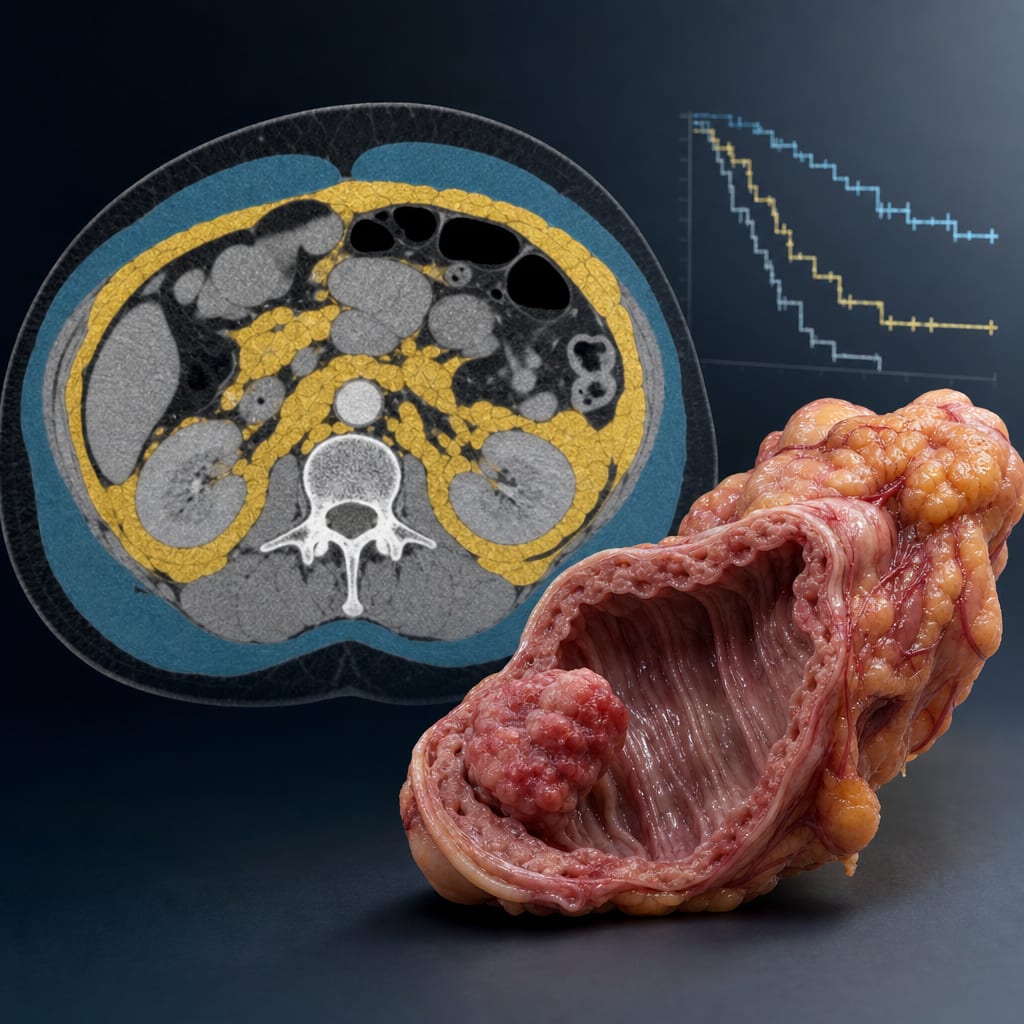
This multicenter study analyzed 388 patients undergoing segmental transverse colectomy for mid transverse colon cancer, comparing open surgery to minimally invasive approaches (laparoscopic and robotic). Minimally invasive surgery demonstrated faster postoperative recovery and similar oncological safety compared to open surgery. Subgroup analyses further explored laparoscopic versus robotic techniques and intracorporeal versus extracorporeal anastomosis.
Background
Laparoscopic resection for colorectal cancer is established for its recovery and oncological benefits, but its role in transverse colon cancer remains controversial due to technical challenges in lymph node dissection and reconstruction. Previous randomized trials often excluded transverse colon cancer, leaving the optimal surgical approach unclear. Advances in minimally invasive techniques have prompted comparative studies to evaluate short- and long-term outcomes versus open surgery. This study aims to clarify these outcomes in a large multicenter cohort.
Data Highlights
Parameter
Open Surgery (n=224)
Minimally Invasive (n=164)
p-value
Sex (% males)
53.57%
43.9%
0.2
Median Age (years)
72 (IQR 22.5)
72 (IQR 21.5)
0.1
Median BMI
19 (IQR 21)
19 (IQR 19)
0.1
Median ASA Score
2 (IQR 1)
2 (IQR 1)
0.5
Tumor Stage T (median)
3 (IQR 0)
3 (IQR 1)
0.1
Tumor Stage N (median)
0 (IQR 1)
0 (IQR 1)
0.8
Tumor Stage M (median)
0 (IQR 0)
0 (IQR 0)
0.3
Median Operative Time (minutes)
157 (IQR 80)
140 (IQR 75)
0.102
Key Findings
No significant demographic or tumor stage differences were observed between open and minimally invasive groups.
Median operative time was slightly shorter for minimally invasive surgery but did not reach statistical significance (140 vs 157 minutes; p=0.102).
Minimally invasive surgery showed statistically significant faster postoperative recovery outcomes compared to open surgery.
Among minimally invasive approaches, 89% were laparoscopic and 11% robotic, with intracorporeal anastomosis performed in 22.6% of cases.
Standardized surgical and perioperative protocols were applied across 28 high-volume centers to minimize bias.
Clinical Implications
Minimally invasive segmental transverse colectomy offers enhanced postoperative recovery without compromising oncological safety, supporting its use as a viable alternative to open surgery in experienced centers. Surgeons should consider patient selection and technical expertise when choosing between laparoscopic and robotic approaches, as well as anastomotic techniques. Adoption of standardized protocols and ERAS pathways can optimize outcomes.
Conclusion
This large multicenter study supports minimally invasive surgery as an effective approach for mid transverse colon cancer, providing faster recovery and comparable oncological outcomes to open surgery. Further research is warranted to define the optimal minimally invasive technique and anastomotic method.
References
Author/Source/Year -- Laparoscopic resection benefits in colorectal cancer
Author/Source/Year -- Challenges in transverse colon cancer surgery
Author/Source/Year -- Comparative studies of open vs minimally invasive transverse colectomy
Author/Source/Year -- ERAS perioperative care protocol
Author/Source/Year -- Clavien–Dindo classification for surgical complications