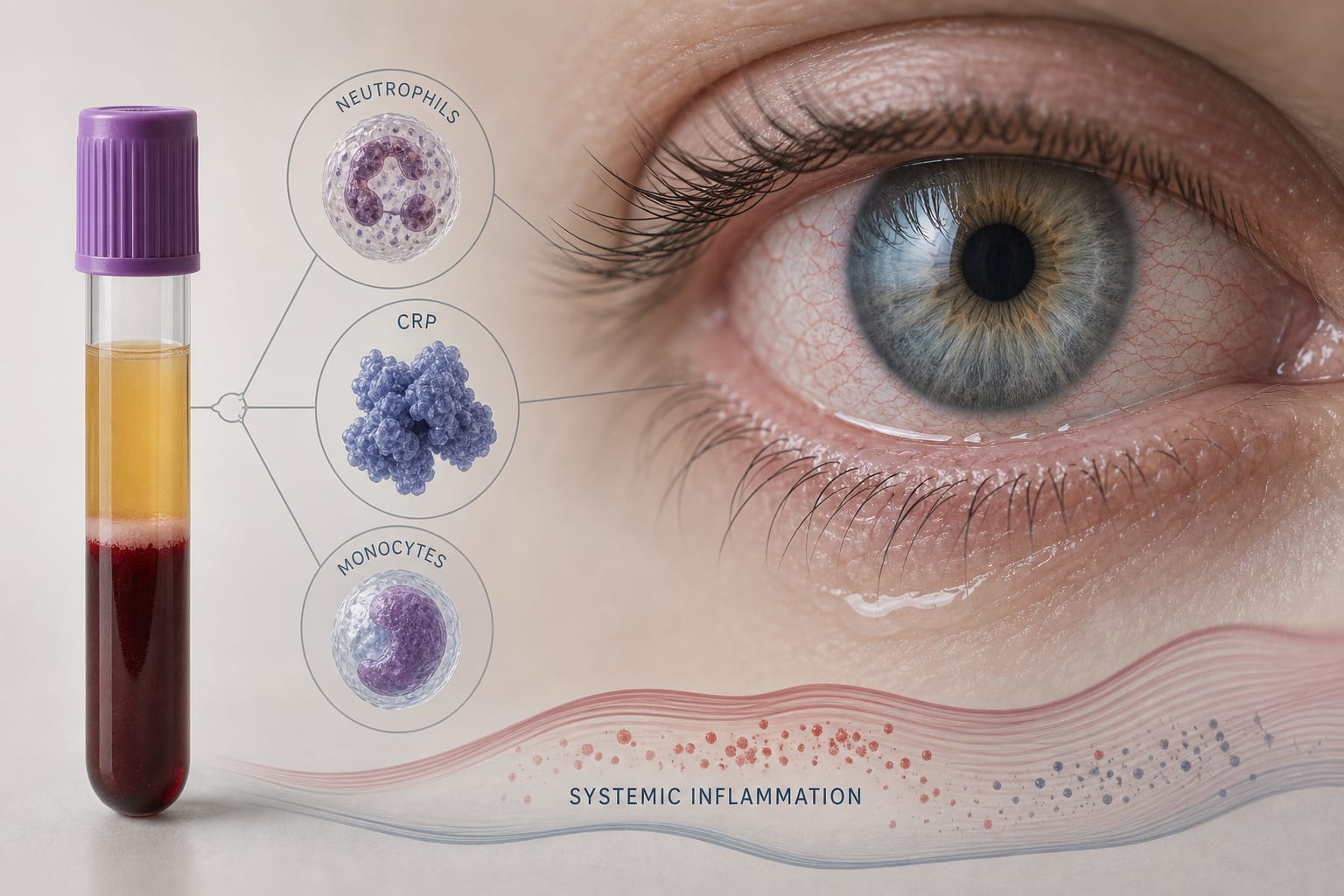
Evaluation of Safety Indicators for Perfluorohexyloctane Ophthalmic Solution in Individuals with Dry Eye Disease
-
By
-
Zhengtai Sun
-
Yuting Liu
-
Lijuan Que
-
May 28, 2026
Clinical Report: Evaluation of Safety Indicators for Perfluorohexyloctane Ophthalmic Solution
Overview
This study evaluated the safety of perfluorohexyloctane ophthalmic solution in individuals with dry eye disease using the FDA Adverse Event Reporting System. The findings indicate that reported adverse events are primarily related to the instillation process rather than the drug itself.
Background
Dry eye disease (DED) is a prevalent ocular surface disorder that significantly impacts patients' quality of life. Conventional therapies often fall short in providing long-term relief, highlighting the need for effective treatments. Perfluorohexyloctane ophthalmic solution represents a novel approach, but comprehensive safety data from real-world use are necessary for informed clinical decision-making.
Data Highlights
| Adverse Event | Count |
|---|---|
| Product delivery mechanism issue | Top 1 |
| Eye irritation | Top 2 |
| Inappropriate schedule of product administration | Top 3 |
| Vision blurred | Top 4 |
| Ocular hyperaemia | Top 5 |
Key Findings
- A total of 92 adverse event reports were identified for perfluorohexyloctane ophthalmic solution.
- The median time-to-onset for adverse events was 2 days.
- The top five adverse events included product delivery mechanism issues and eye irritation.
- Positive signal criteria were met for wrong dose and exposure via skin contact.
- Reported adverse events were primarily related to the instillation process and user experience.
Clinical Implications
The findings suggest that while perfluorohexyloctane ophthalmic solution is generally safe, clinicians should be aware of potential issues related to the administration process. Continuous monitoring and larger studies are recommended to further assess its safety profile.
Conclusion
The available data do not indicate major safety concerns for perfluorohexyloctane ophthalmic solution in treating dry eye disease, though further research is needed to fully characterize its long-term safety.
Related Resources & Content
- Contact Lens Spectrum, 1998 -- Detecting Dry Eye in Contact Lens Wearers
- Ophthalmology Management, 2025 -- The Profound Impact of Dry Eye Disease on Patients' Lives
- The Ophthalmologist, 2026 -- Optimizing the Ocular Surface Before and After Cataract Surgery
- Guideline Central, 2024 -- AAO Dry Eye Syndrome Guideline Summary 2024 Preferred Practice Pattern
- ScienceDirect, 2023 -- NOV03 for Signs and Symptoms of Dry Eye Disease Associated With Meibomian Gland Dysfunction: The Randomized Phase 3 MOJAVE Study
- PMC, 2023 -- Long-Term Safety and Efficacy of Perfluorohexyloctane Ophthalmic Solution for the Treatment of Patients With Dry Eye Disease: The KALAHARI Study
- Contact Lens Spectrum — Reader and Industry Forum
- AAO Dry Eye Syndrome Guideline Summary 2024 Preferred Practice Pattern - Guideline Central
- NOV03 for Signs and Symptoms of Dry Eye Disease Associated With Meibomian Gland Dysfunction: The Randomized Phase 3 MOJAVE Study - ScienceDirect
- Long-Term Safety and Efficacy of Perfluorohexyloctane Ophthalmic Solution for the Treatment of Patients With Dry Eye Disease: The KALAHARI Study - PMC
Based on findings from:
Safety signals of perfluorohexyloctane ophthalmic solution in patients with dry eye disease
Zhengtai Sun, Yuting Liu, Lijuan Que. Frontiers In Medicine, 2026.
https://www.frontiersin.org/journals/medicine/articles/10.3389/fmed.2026.1832619/full
This content is an AI-generated, fully rewritten summary based on a published scholarly article. It does not reproduce the original text and is not a substitute for the original publication. Readers are encouraged to consult the source for full context, data, and methodology.