Rural-urban differences and association of sexual autonomy with uptake of breast and cervical cancer screening services among women of reproductive age in Ghana - Report - MDSpire

Rural-urban differences and association of sexual autonomy with uptake of breast and cervical cancer screening services among women of reproductive age in Ghana

  • By

  • Benjamin Ansah Dortey

  • Stanley Kofi Alor

  • Emmanuel Anongeba Anaba

  • Charlotte Abra Esime Ofori

  • Yula Salifu

  • Henry Ekow Yanney

  • James Akazili

  • July 2, 2026

  • 0 min

Share

Variations in Sexual Autonomy and Their Impact on Cancer Screening in Ghana

Overview

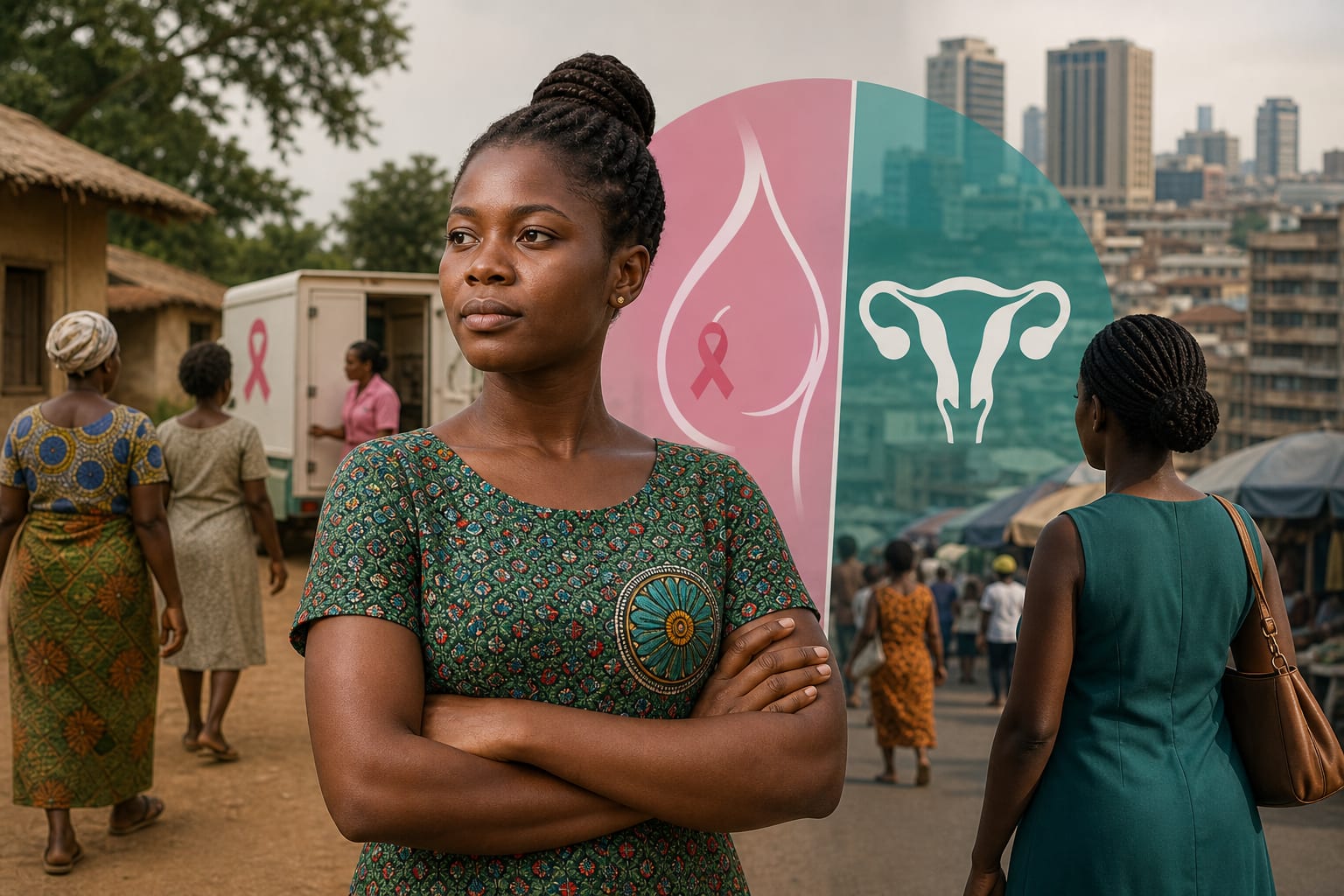
This study investigates the relationship between sexual autonomy and breast and cervical cancer screening participation among women in Ghana's rural and urban areas.

Background

Breast and cervical cancers are major health concerns for women in sub-Saharan Africa, with low screening uptake contributing to high morbidity and mortality rates. This study highlights the disparities in screening behaviors between rural and urban populations in Ghana.

Data Highlights

OutcomeAOR95% CILocation
Breast Cancer Screening2.101.68–2.63Overall
Breast Cancer Screening2.161.57–2.98Urban
Breast Cancer Screening1.921.40–2.63Rural
Cervical Cancer Screening1.951.32–2.88Overall
Cervical Cancer Screening2.061.22–3.48Urban

Key Findings

  • Women with sexual autonomy are more likely to screen for breast cancer (AOR = 2.10).
  • Urban women with sexual autonomy have higher odds of breast cancer screening (AOR = 2.16) compared to rural women (AOR = 1.92).
  • Cervical cancer screening is significantly associated with sexual autonomy only in urban areas (AOR = 2.06).
  • Only 18.4% of women of reproductive age in Ghana have ever screened for breast cancer.
  • Only 5% of women of reproductive age in Ghana have ever screened for cervical cancer.

Clinical Implications

Healthcare providers should consider the role of sexual autonomy in promoting cancer screening among women. Interventions must be tailored to address the specific barriers faced by women in rural areas to enhance screening uptake.

Conclusion

The study reveals significant rural-urban disparities in cancer screening participation linked to sexual autonomy.

Related Resources & Content

  1. Frontiers in Oncology, 2026 -- Breast and Cervical Cancer Screening in a Semi-Urban African Setting: Evidence from Franceville, Gabon (2015–2021)
  2. Frontiers in Cancer Control and Society, 2026 -- Her Health, Her Choice: A PEN-3 Exploration on Facilitators, and Preferences for HPV Vaccinations and HPV Self-Collection among Nigerian Girls and Women
  3. DIGITAL HEALTH, 2021 -- Determinants of mHealth adoption for sexual and reproductive health services among university students in Ghana: A UTAUT and health belief model analysis
  4. The ASCO Post, 2021 -- Study Examines Rates of Breast and Colorectal Cancer Screening Among Rural Women KEY POINTS
  5. WHO guideline for screening and treatment of cervical pre-cancer lesions for cervical cancer prevention - NCBI Bookshelf
  6. Global breast cancer initiative implementation framework
  7. Executive summary - WHO guideline for screening and treatment of cervical pre-cancer lesions for cervical cancer prevention - NCBI Bookshelf
  8. Invitation strategy of vaginal HPV self-sampling to improve participation in cervical cancer screening: a systematic review and meta-analysis of randomized trials | BMC Public Health | Springer Nature Link

Original Source(s)

Related Content