Fetal sex shapes maternal immune adaptation: placental extracellular vesicles differentially reprogram the phenotype, metabolism, and function of circulating monocytes - Report - MDSpire
Advertisement
Maternal Immune Response Influenced by Fetal Sex: Distinct Effects of Placental Extracellular Vesicles on the Phenotype, Metabolism, and Function of Circulating Monocytes
Maternal Immune Response Influenced by Fetal Sex: Distinct Effects of pEVs
Overview
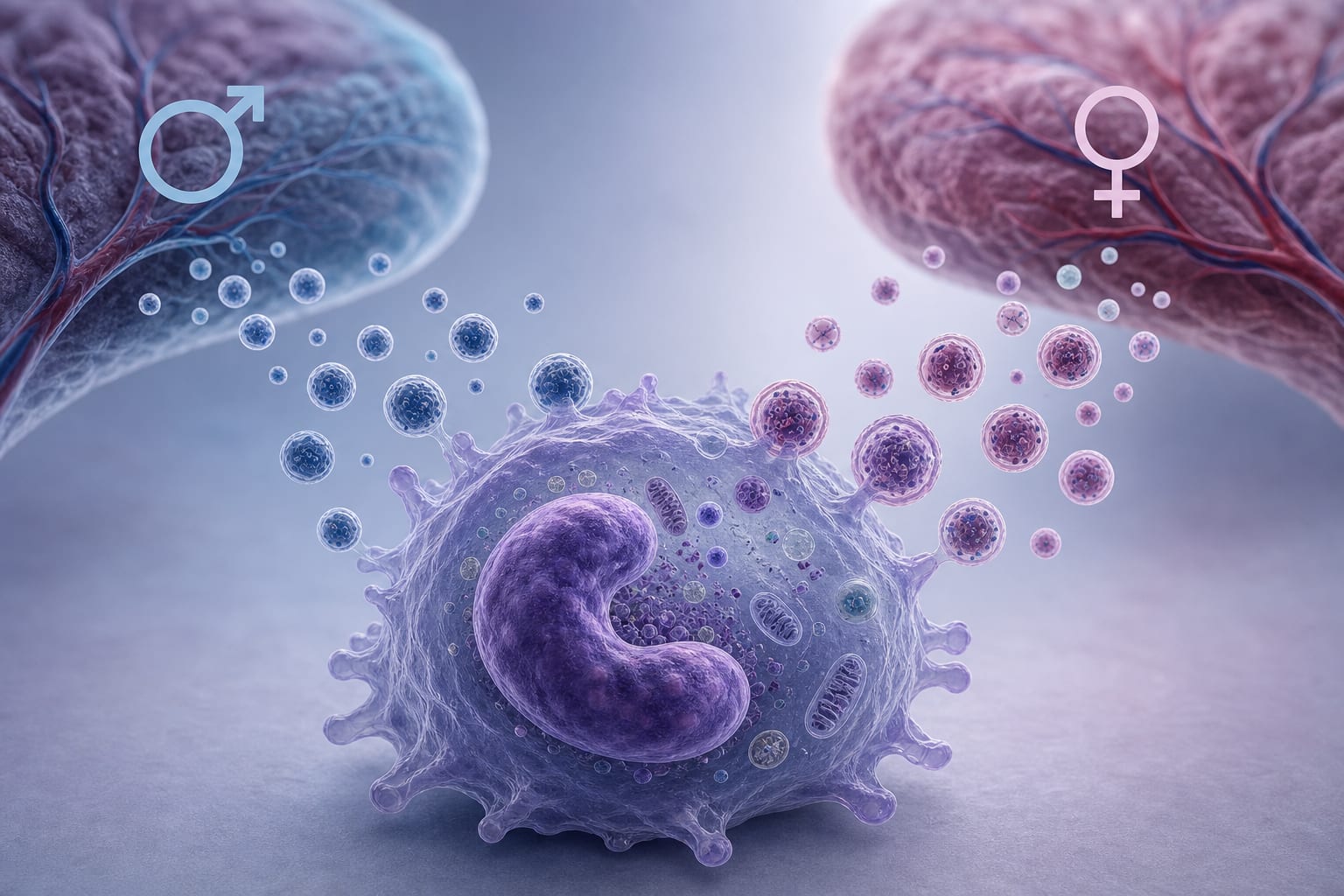
This study investigates the role of placental extracellular vesicles (pEVs) in modulating maternal immune responses based on fetal sex. Findings indicate that pEVs derived from male and female fetuses induce distinct changes in the phenotype, metabolism, and function of circulating monocytes.
Background
Understanding maternal immune adaptation during pregnancy is crucial. Placental extracellular vesicles (pEVs) are key mediators of maternal-fetal communication, influencing immune responses. The differential effects of pEVs based on fetal sex highlight the importance of sex-specific mechanisms in maternal immunometabolic responses.
pEVs induce distinct activation profiles in circulating monocytes based on fetal sex.
F-pEVs reduce CD11b and CD11c expression while increasing CD14, CD39, and IL-10 production.
M-pEVs increase CD14 expression and enhance IL-1β secretion.
Both pEV populations promote a shift toward classical monocytes (CD14+CD16-).
Metabolic analyses reveal that M-pEVs promote lactate and reactive oxygen species production, while F-pEVs enhance mitochondrial activity without increasing ROS.
Both pEVs increase efferocytosis with varying sensitivity to metabolic inhibitors.
Clinical Implications
The findings indicate that fetal sex may influence maternal immune responses through pEVs.
Conclusion
The study provides evidence that placental extracellular vesicles differentially modulate maternal immune responses based on fetal sex, highlighting the complexity of maternal-fetal interactions.
by Julieta Avalos, Florencia Sabbione, Daiana Rios, Daniel H. Grasso, M. Noe Garcia, Franco Aguilera, Fatima Merech, Horacio Aiello, Cesar Meller, Rosanna Ramhorst, Vanesa Hauk, Soledad Gori, Claudia Pérez Leirós, Daiana M. Vota, Daniel E. Paparini