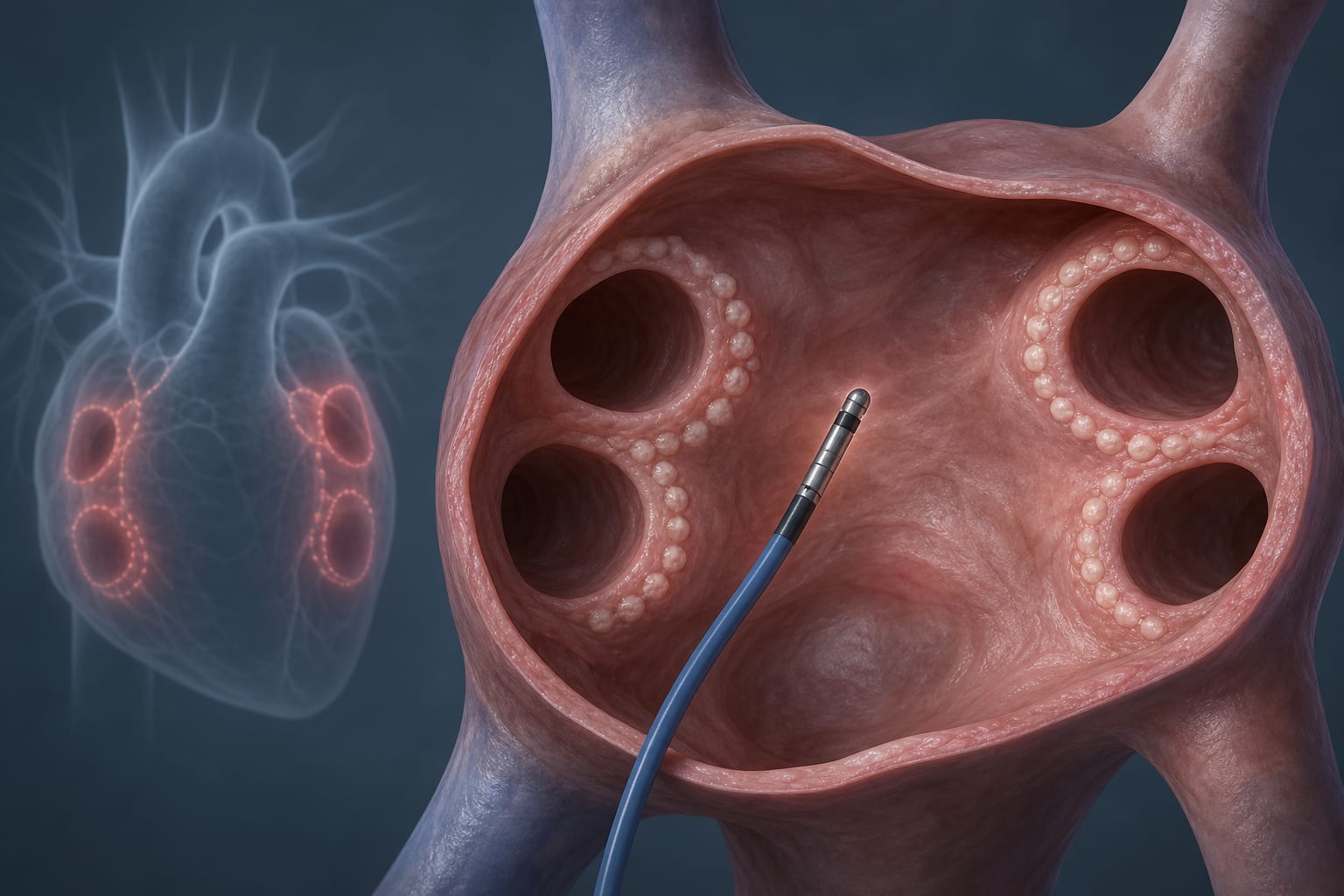
Clinical Report: Does Weight Loss Intervention Improve Persistent AF?
Overview
An 8-month low-calorie diet and behavioral support program resulted in significant weight loss among older patients with persistent atrial fibrillation (AF). No significant differences were observed in AF severity, burden, cardiac remodeling, quality of life, or the need for additional rhythm-control procedures between the intervention and control groups.
Background
Atrial fibrillation is a common arrhythmia that can lead to significant morbidity and mortality. Weight management is often recommended for overweight or obese patients with AF. Understanding the impact of weight loss interventions on AF is crucial for optimizing patient care.
Data Highlights
Outcome
Intervention Group
Control Group
Weight Loss at 8 Months
10%
3%
AF Severity Scale Score at 8 Months
7.9
8.9
Free of AF at Follow-Up
42%
49%
Key Findings
118 patients aged 60 to 85 years were enrolled in the LOSE-AF trial.
Mean BMI was approximately 34 in both groups at baseline.
Despite significant weight loss, AF symptom severity scores did not differ significantly between groups.
No significant differences in AF burden or rates of repeat cardioversion and AF ablation were observed.
Cardiac MRI showed no significant differences in atrial or ventricular structure and function between groups.
The intervention did not worsen physical function or frailty-related measures.
Clinical Implications
The findings suggest that while weight loss can be achieved through a structured diet and behavioral program, it may not translate into improved AF outcomes in older patients. Clinicians should consider these results when discussing weight management strategies with patients suffering from persistent AF.
Conclusion
In older patients with persistent AF, a low-calorie diet and behavioral support program led to significant weight loss without improving AF symptoms or burden.