Clinical effect evaluation of postoperative complications of papillary thyroid carcinoma based on individualized intervention and prognostic analysis of precision nursing intervention - Report - MDSpire

Clinical effect evaluation of postoperative complications of papillary thyroid carcinoma based on individualized intervention and prognostic analysis of precision nursing intervention

  • By

  • Yu Sun

  • Gang Pu

  • July 7, 2026

  • 0 min

Share

Clinical Report: Assessment of Postoperative Complications in PTC Patients

Overview

This study evaluates the impact of individualized nursing interventions on postoperative complications in patients with papillary thyroid carcinoma (PTC).

Background

Papillary thyroid carcinoma (PTC) is the most prevalent form of thyroid cancer, with a rising incidence globally. While surgical resection is the primary treatment, postoperative complications can adversely affect patient recovery and quality of life.

Data Highlights

GroupPostoperative ComplicationsSignificance
Study Group (SG)Lower incidence of complicationsP < 0.001
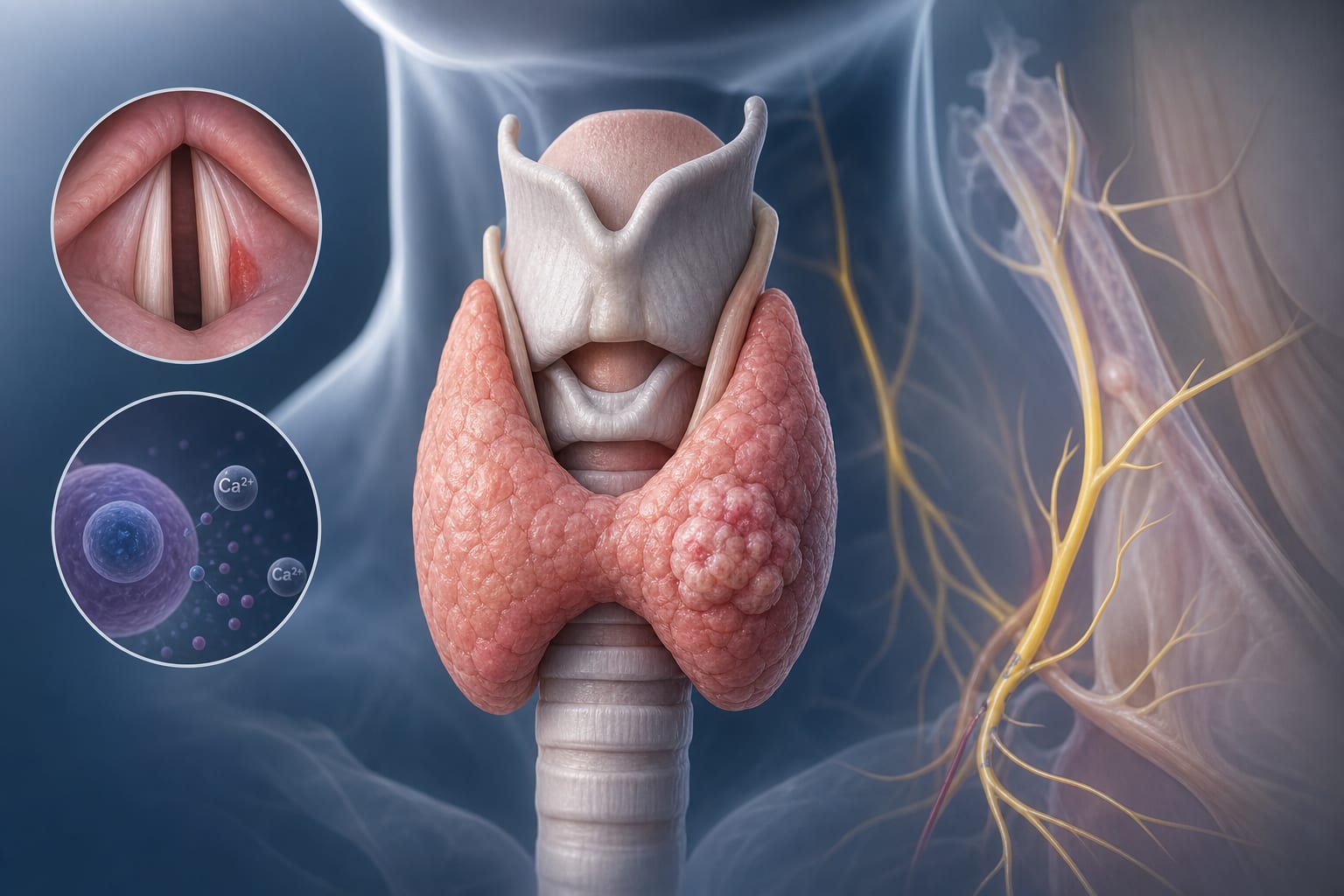
SGTransient recurrent laryngeal nerve injuryP = 0.010
SGTransient hypocalcemiaP = 0.007
SGHigher quality of life scores at 6 monthsP < 0.05
SGHigher rate of complete voice recovery at 1 yearP = 0.011

Key Findings

  • The SG had a significantly lower overall incidence of postoperative complications compared to the CG (P < 0.001).
  • Transient recurrent laryngeal nerve injury was significantly lower in the SG (P = 0.010).
  • Transient hypocalcemia incidence was reduced in the SG (P = 0.007).
  • Patients in the SG reported lower VAS pain scores and achieved earlier ambulation and feeding (P < 0.05).
  • At 6 months, the SG had significantly higher scores in thyroid symptoms, mental health, and overall quality of life (P < 0.05).

Clinical Implications

The findings suggest that implementing a multidisciplinary perioperative nursing protocol can significantly reduce postoperative complications in PTC patients. This approach may enhance recovery metrics and overall patient satisfaction.

Conclusion

The study examines individualized nursing interventions in relation to postoperative complications and quality of life for patients with papillary thyroid carcinoma.

Related Resources & Content

  1. Expert Commentary: The Importance of Lymph Node Ratio and Ki-67 Levels in Papillary Thyroid Carcinoma, 2021
  2. Recurrence of Lateral Neck Lymph Nodes Following Total Thyroidectomy with Prophylactic Central Neck Dissection in Patients with Papillary Thyroid Carcinoma, 2013
  3. Conformal Thyroidectomy as a Viable Approach for Papillary Thyroid Microcarcinoma: A Retrospective Cohort Analysis with a Decade of Follow-Up Data, 2024
  4. Executive Summary of the 2025 American Thyroid Association Management Guidelines for Adult Patients with Differentiated Thyroid Cancer, 2025
  5. Long-term Surgical Outcomes and Prognostic Indicators in Differentiated Thyroid Carcinoma: A Two-Decade Review
  6. Executive Summary of the 2025 American Thyroid Association Management Guidelines for Adult Patients with Differentiated Thyroid Cancer
  7. Clinical Validation of NerveTrend Versus NerveAssure Mode of Intraoperative Neuromonitoring in Prevention of Recurrent Laryngeal Nerve Injury During Thyroid Surgery: A Randomized Controlled Trial - PMC
  8. Preoperative Vitamin D Supplementation to Reduce Hypocalcemia Following Total Thyroidectomy: Systematic Review and Meta‐Analysis of Randomized Clinical Trials - Canali - 2025 - Head & Neck - Wiley Online Library

Original Source(s)

Related Content