Clinical Report: Genetic Framework of Congenital Heart Defects in a Small Patient Cohort
Overview
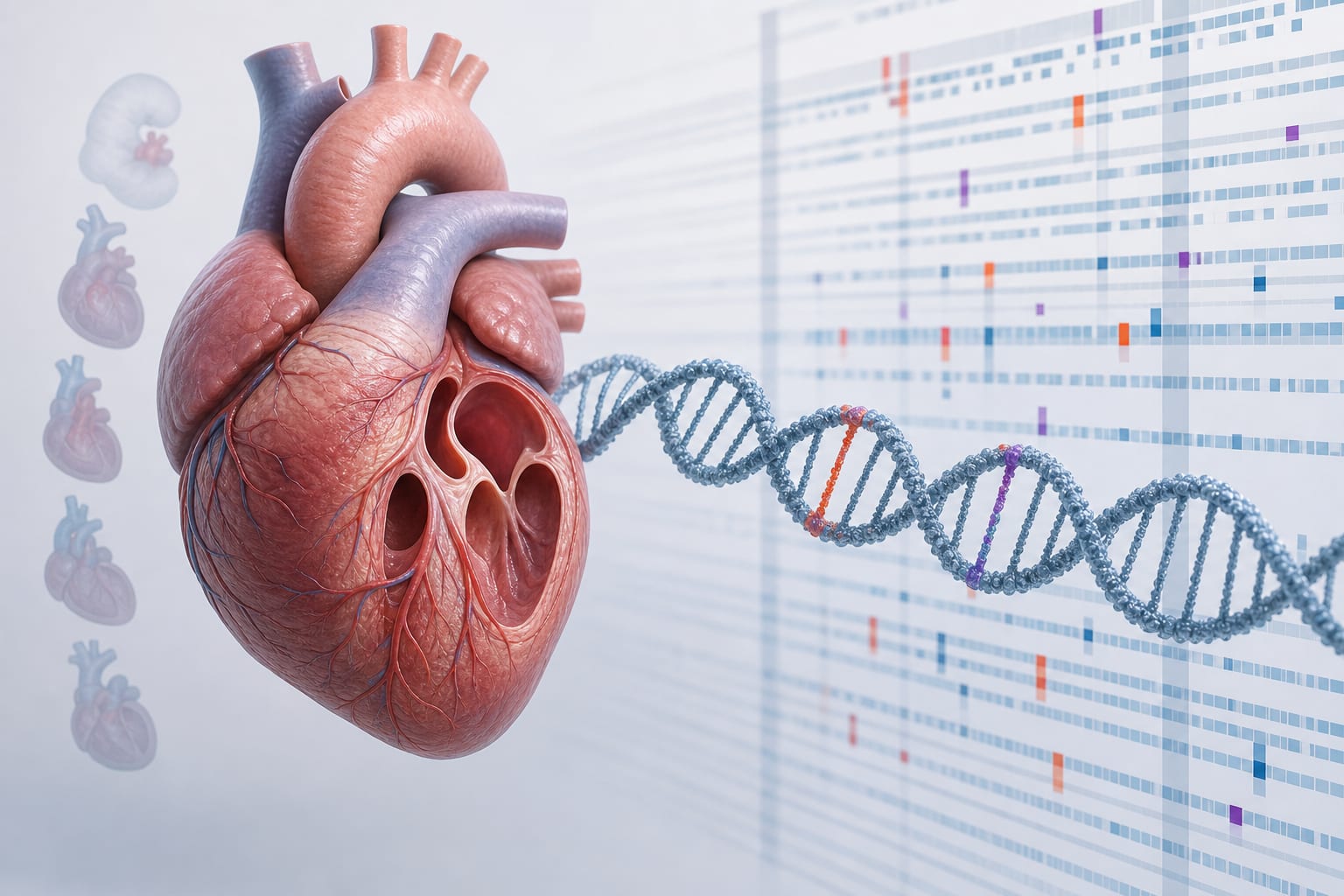
This study investigates the genetic architecture of congenital heart defects (CHD) through whole-genome sequencing in a cohort of 50 patients. It identifies novel genetic variants associated with specific CHD subtypes.
Background
Congenital heart defects are among the most common congenital anomalies, affecting approximately 1% of newborns and leading to significant morbidity and mortality. Understanding the genetic factors contributing to CHD is crucial. Despite advances in genetic research, many cases remain without identified genetic causes.
Data Highlights
No numerical data or trial data provided in the source material.
Key Findings
Whole-genome sequencing identified novel coding and non-coding variants linked to CHD.
Specific genetic associations were found for CHD subtypes: JARID2 with PDA, GOSR2/TBX18 with VSD, PCDHA9 with ASD, and a multi-gene signature with atrioventricular septal defects.
COL11A2 and PCOLCE2 were identified as potential collagen-related candidates for CHD pathogenesis.
The study highlights the limited discriminatory capacity of current genomic annotation databases.
Clinical Implications
The findings suggest that integrating clinical classifications with genomic data may enhance genetic risk assessments for CHD. This approach could lead to better identification of at-risk individuals and inform clinical decision-making.
Conclusion
This research expands the understanding of the genetic factors underlying congenital heart anomalies.
by Anna V. Korobeinikova, Ekaterina S. Petriaikina, Dmitry I. Tychinin, Vladimir S. Yudin, Naida I. Bulaeva, Sayaly M. Gyulmamedova, Georgy A. Khugaev, Tatiana V. Sukhacheva, Ekaterina A. Snigir, Sergey I. Mitrofanov, Antonina M. Rumyantseva, Dmitry V. Svetlichnyy, Sergey M. Yudin, Elena Z. Golukhova, Veronika I. Skvortsova