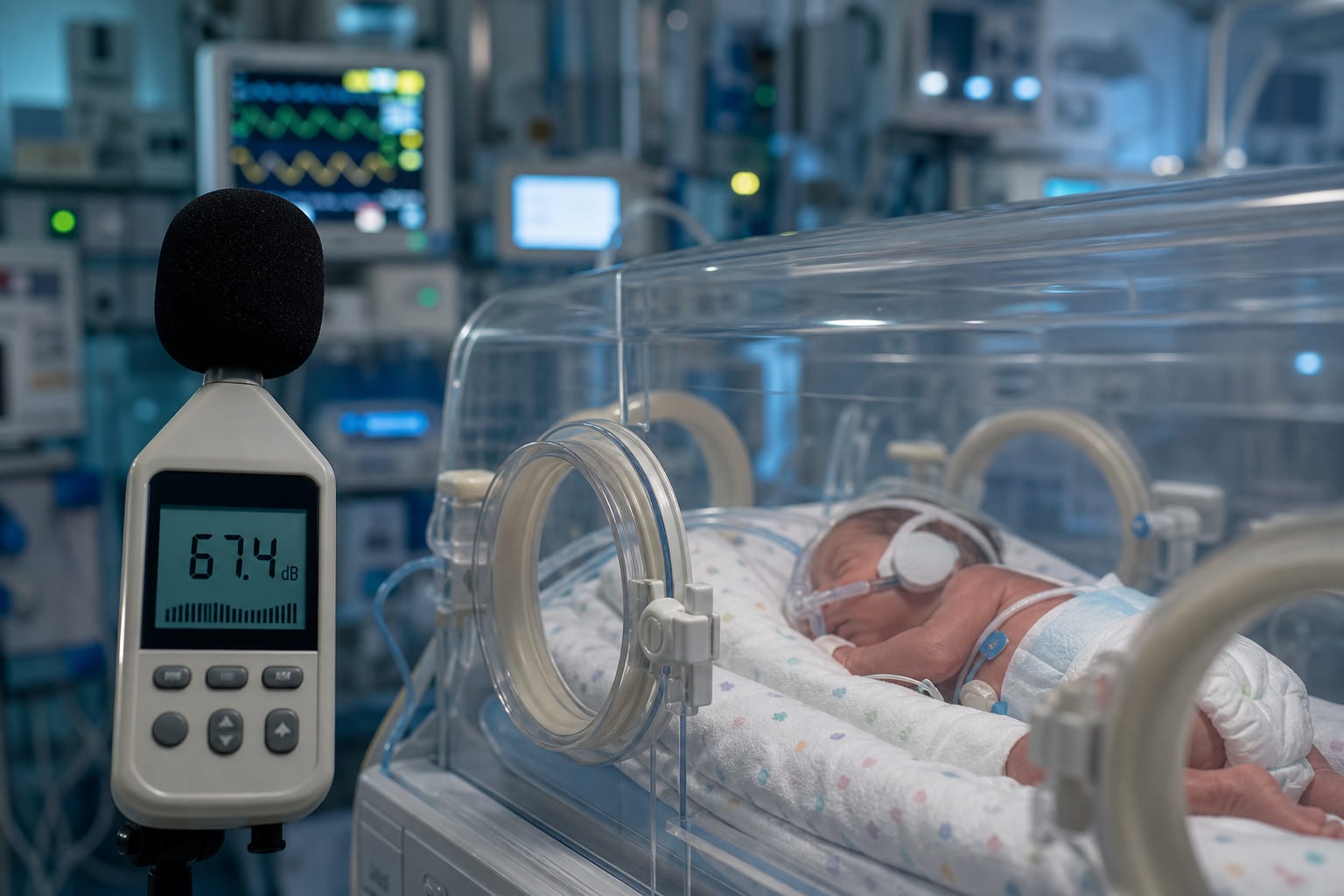
Clinical Report: Addressing Noise Pollution in the Neonatal Intensive Care Unit
Overview
This systematic review highlights the significant prevalence of noise pollution in neonatal intensive care units (NICUs) and its detrimental effects on preterm infants. Major noise sources include alarms, staff conversations, and incubator equipment, often exceeding recommended sound levels.
Background
Preterm infants are particularly vulnerable to environmental stressors, including noise, which can interfere with their auditory and neurodevelopmental maturation. The NICU environment presents a stark contrast to the regulated acoustic conditions of the womb, exposing infants to unpredictable and high-intensity soundscapes. Understanding and mitigating noise pollution is crucial for promoting optimal developmental outcomes in this sensitive population.
Data Highlights
Study Count
Noise Levels
Major Contributors
113
Above recommended limits
Alarms, staff conversations, incubator equipment
Key Findings
Most studies reported NICU sound levels significantly exceeding AAP recommendations.
Respiratory support devices produced the highest internal noise levels.
Short-term interventions showed limited effectiveness in sustaining noise reduction.
Excessive shielding may lead to auditory deprivation in infants.
Environmental modifications and staff training are essential for improving acoustic conditions.
Clinical Implications
Healthcare professionals should prioritize strategies to reduce noise pollution in NICUs, including staff education and environmental design improvements. Continuous monitoring of sound levels can help identify high-noise zones and inform interventions to create a more supportive environment for preterm infants.
Conclusion
Addressing noise pollution in NICUs is vital for safeguarding the developmental health of preterm infants. Future efforts should focus on integrating innovative solutions to enhance the acoustic environment.
by Vito Giordano, Sophie Mandl, Lisa Bartha-Doering, Christoph Reuter, Matthias Bertsch, Brigitte Wildner, Sophie Stummer, Katrin Klebermass-Schrehof, Marcus Maeder, Angelika Berger, Philipp Deindl
Children exposed to higher-dose prenatal vitamin D scored modestly higher on verbal and visual memory tests at age 10 years, although overall intelligence and most cognitive measures did not differ significantly.