Beyond Functional Independence: Symptom Burden and Emotional Difficulties in Pediatric Long COVID — A Cross-Sectional Exploratory Study - Report - MDSpire
Clinical Report: Exploring the Impact of Symptom Burden and Emotional Challenges in Pediatric Long COVID
Overview
This exploratory cross-sectional study highlights the significant symptom burden faced by children and adolescents with Long COVID. Participants exhibited substantial restrictions in school and recreational activities.
Background
Pediatric Long COVID presents unique challenges that can significantly impact the daily functioning of affected children and adolescents. Understanding the real-world implications of this condition is crucial.
85.2% had withdrawn from previously enjoyed activities
SDQ Total Score
12.07 ± 5.04 (normal range)
Emotional Symptoms Score
5.59 ± 2.34 (slightly elevated)
Key Findings
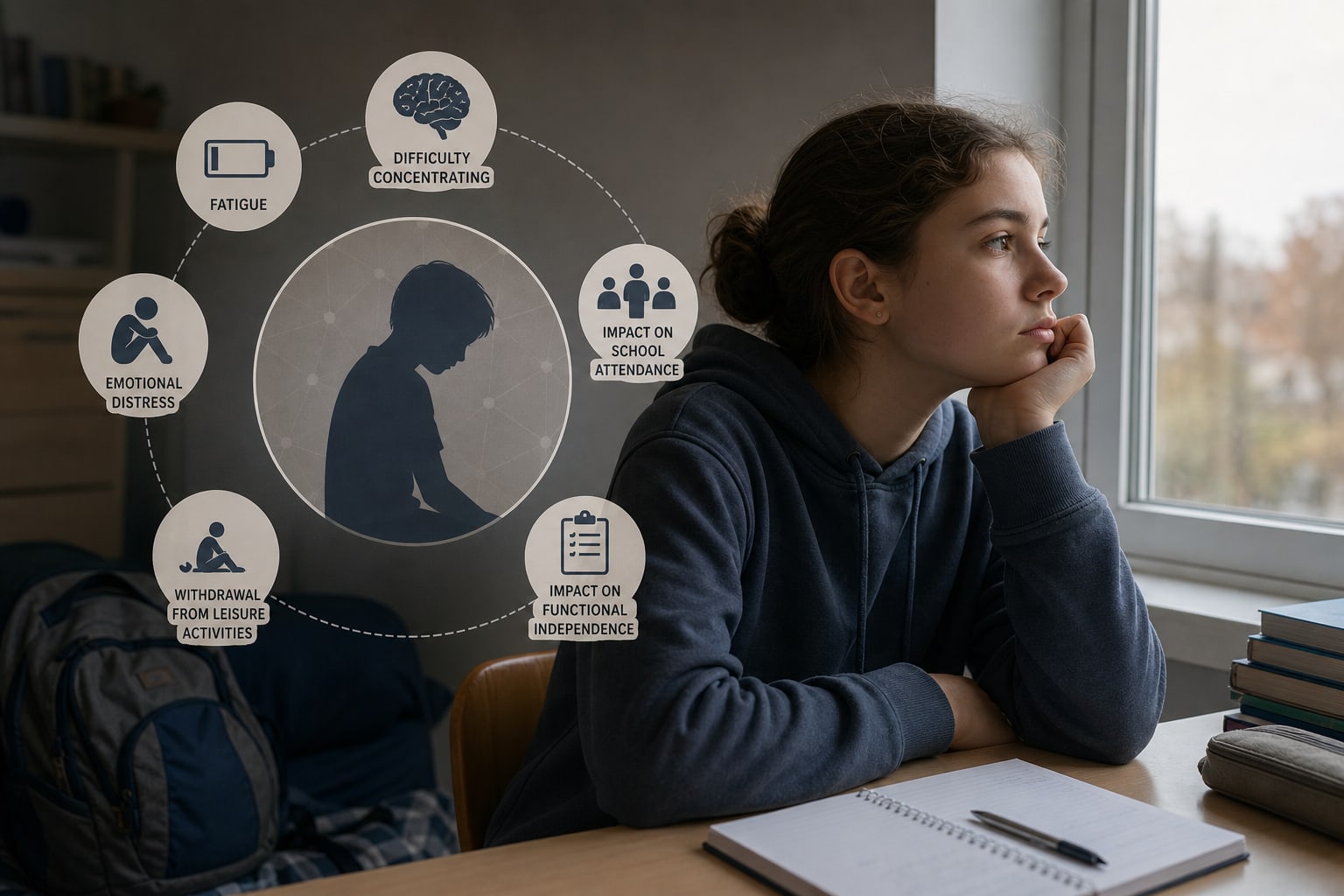
High symptom burden with fatigue (81.5%), difficulty concentrating (63.0%), and malaise (55.6%) reported.
88.9% of participants experienced symptoms lasting over 24 months.
Despite high symptom burden, WeeFIM scores indicated near-ceiling functional independence.
Only 18.5% of participants attended school regularly, with 11.1% repeating an academic year.
85.2% of participants withdrew from previously enjoyed recreational activities.
A significant negative correlation was found between SDQ total score and WeeFIM cognition (rho = −0.570, p = 0.0019).
Clinical Implications
Standard functional independence measures may not adequately reflect the real-world impact of Long COVID in pediatric patients.
Conclusion
Children and adolescents with Long COVID may experience significant emotional and functional challenges. Further research is needed to explore these impacts.