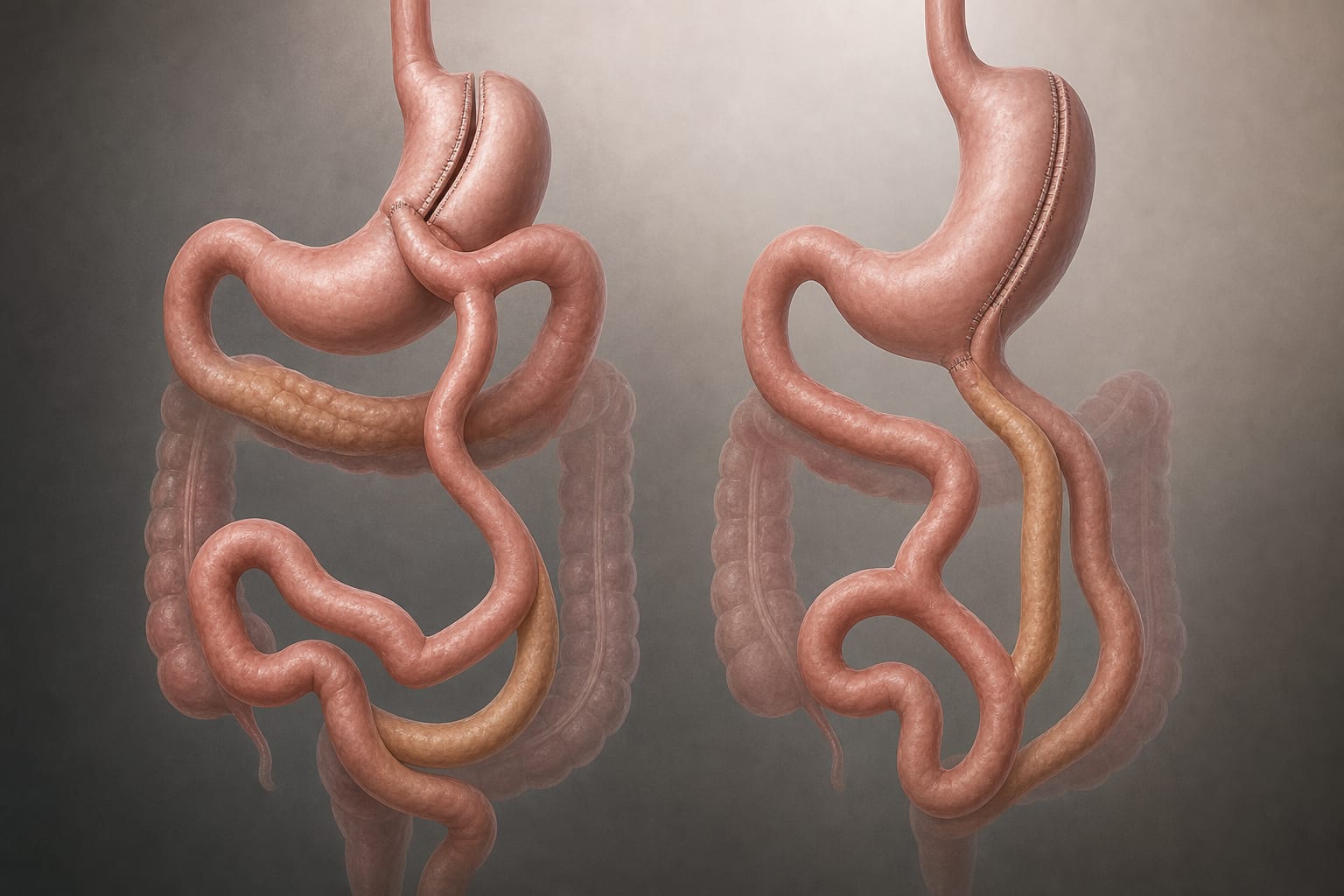
Iron Metabolism Disorders and Anemia After Single Anastomosis Sleeve Ileal Bypass
Overview
This study evaluates the impact of single anastomosis sleeve ileal (SASI) bypass on weight loss, anemia, and iron deficiency in patients with morbid obesity. Findings highlight that while SASI bypass is effective for weight reduction, it poses a significant risk for iron metabolism disorders and anemia postoperatively.
Background
Obesity is a global epidemic with over half the world’s population overweight or obese. Bariatric surgery, including sleeve gastrectomy and Roux-en-Y gastric bypass, is the most effective treatment for obesity and its comorbidities but is associated with nutritional deficiencies, particularly iron deficiency. SASI bypass is a novel bariatric procedure combining sleeve gastrectomy with a gastro-ileal anastomosis, offering both restrictive and malabsorptive effects. However, its impact on iron metabolism and anemia remains under investigation.
Data Highlights
The study retrospectively analyzed patients undergoing SASI bypass between January 2020 and February 2022, with at least 12 months follow-up. Anemia was defined as hemoglobin <12 g/dL in females and <13 g/dL in males; iron deficiency was defined as iron levels <37 µg/dL. Oral iron supplementation was given preoperatively to normalize iron parameters. The common limb length was set between 250–300 cm. Patients received standardized vitamin and mineral supplementation postoperatively.
Key Findings
SASI bypass effectively induces significant weight loss in patients with morbid obesity.
Postoperative iron deficiency and anemia are significant concerns due to the malabsorptive component of SASI bypass.
Preoperative normalization of iron status with oral supplementation is critical before surgery.
Routine postoperative supplementation with multivitamins and minerals is recommended to mitigate nutritional deficiencies.
Careful patient selection and counseling about potential nutritional risks are essential due to the investigational nature of SASI bypass.
Clinical Implications
Clinicians should monitor iron status and hemoglobin levels closely in patients undergoing SASI bypass, both pre- and postoperatively. Proactive management with iron supplementation and comprehensive nutritional support is necessary to prevent anemia and related complications. Patient education regarding the risks of nutritional deficiencies and adherence to follow-up protocols is vital for optimal outcomes.
Conclusion
SASI bypass is an effective bariatric procedure for weight loss but carries a significant risk of iron metabolism disorders and anemia. Vigilant monitoring and supplementation strategies are essential to address these nutritional challenges.
References
World Health Organization 2021 -- Global Obesity Trends
International Federation for the Surgery of Obesity and Metabolic Disorders 2021 -- Bariatric Surgery Statistics
Santoro et al. -- Description of SASI Bypass Technique
by Joanna Parkitna, Artur Binda, Agnieszka Gonciarska, Paweł Jaworski, Emilia Kudlicka, Krzysztof Barski, Karolina Wawiernia, Piotr Jankowski, Michał Wąsowski, Alina Kuryłowicz, Wiesław Tarnowski