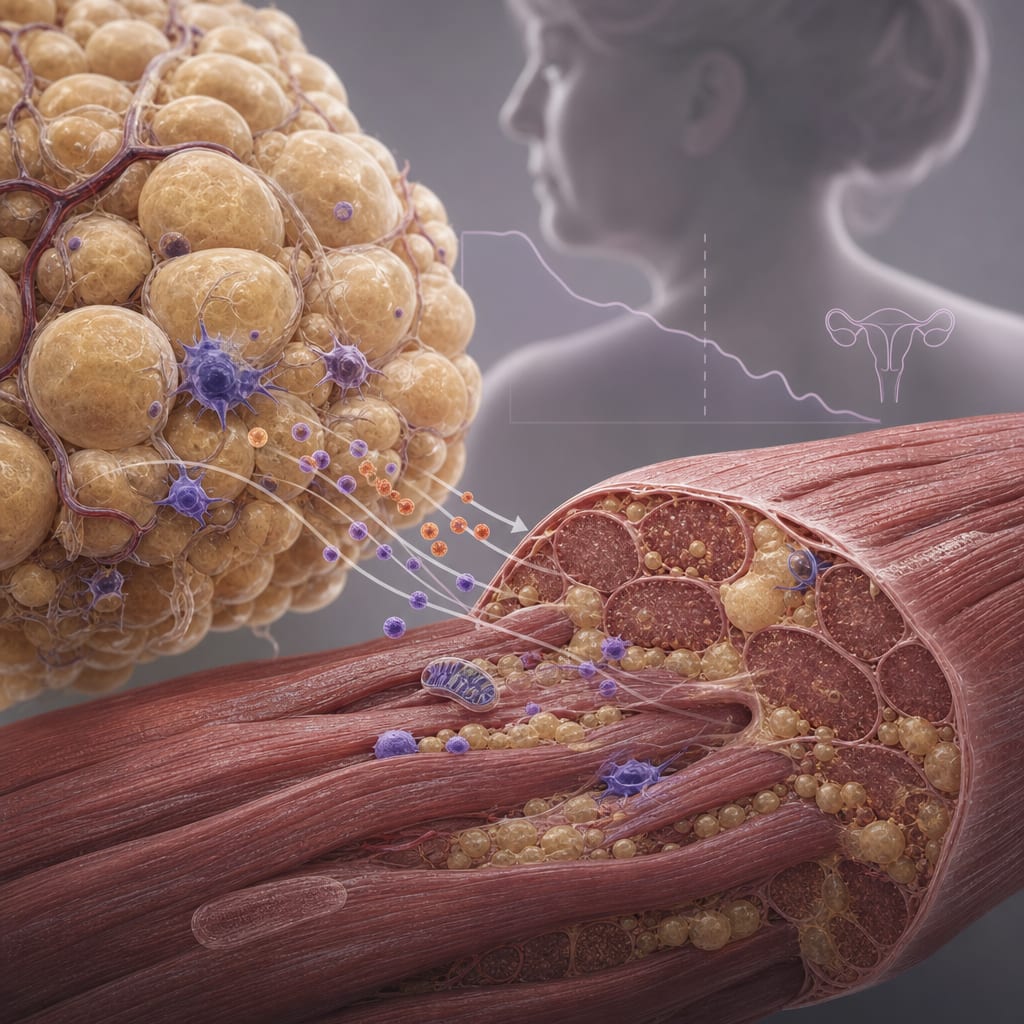
Clinical Report: Rethinking Menopause Hormone Therapy
Overview
Enhance the explanation of FDA label changes and their potential impact on MHT usage.
Background
The decline in MHT use has left many women without effective treatment for menopausal symptoms, despite evolving evidence supporting its safety and efficacy. The recent removal of black box warnings by the FDA highlights the need for clinicians to reassess their approach to menopause management. Furthermore, gaps in education and screening practices among healthcare providers contribute to inadequate care for middle-aged women experiencing menopausal symptoms.
Data Highlights
No numerical data presented in the article.
Key Findings
- MHT use dropped from over 20% to under 5% after the Women’s Health Initiative.
- FDA label changes in 2025 removed several black box warnings related to MHT risks.
- Initiating MHT before age 60 or within 10 years of menopause is associated with a favorable benefit-risk profile.
- Many clinicians may not be systematically screening for menopausal symptoms.
- Access to MHT can vary significantly across insurance plans.
- There is a growing demand for menopause care among both patients and clinicians.
Clinical Implications
Clinicians treating middle-aged women should incorporate routine symptom assessments and individualized risk-benefit discussions regarding MHT. Familiarity with various treatment options, including nonhormonal alternatives, is essential for providing comprehensive care.
Conclusion
The recent FDA updates on MHT present an important opportunity for clinicians to improve care for menopausal women. By addressing educational gaps and enhancing screening practices, healthcare providers can better support their patients during this critical life stage.
Related Resources & Content
- Associated Press Health, AP News, 2023 -- A look at nonhormonal options for menopause symptoms
- The ASCO Post, ASCO Post, 2022 -- Use of Menopausal Hormone Therapy and Breast Cancer Mortality KEY POINTS
- Clinical Research in Cardiology, Springer, 2014 -- Impact of Estrogen and Progestin Therapy on Hemodynamics and Metabolism in Hypertensive Postmenopausal Women Undergoing ACE-Inhibitor or Diuretic Treatment
- The ASCO Post, ASCO Post, 2025 -- Does Menopausal Hormone Therapy Increase the Risk of Death in Women With BRCA-Mutated Breast Cancer?
- ESE, ESE Press Release, 2025 -- ESE announces new Clinical Practice Guideline for Management and Evaluation of Menopause and the Perimenopause
- JAMA Internal Medicine, JAMA Network, 2025 -- Menopausal Hormone Therapy and Cardiovascular Diseases in Women With Vasomotor Symptoms: A Secondary Analysis of the Women’s Health Initiative Randomized Clinical Trials
- Climacteric, Taylor & Francis, 2025 -- Safety of menopause hormone therapy in postmenopausal women at higher risk of venous thromboembolism: a systematic review
- Press release: ESE announces new Clinical Practice Guideline for Management and Evaluation of Menopause and the Perimenopause | ESE
- Menopausal Hormone Therapy and Cardiovascular Diseases in Women With Vasomotor Symptoms: A Secondary Analysis of the Women’s Health Initiative Randomized Clinical Trials | Reproductive Health | JAMA Internal Medicine | JAMA Network
- Safety of menopause hormone therapy in postmenopausal women at higher risk of venous thromboembolism: a systematic review: Climacteric: Vol 28 , No 5 - Get Access
This content is an AI-generated, fully rewritten summary based on a published scholarly article. It does not reproduce the original text and is not a substitute for the original publication. Readers are encouraged to consult the source for full context, data, and methodology.