Enrollment in Integrated Special Needs Plans Among Dually Eligible Beneficiaries With Serious Mental Illness - Report - MDSpire

Enrollment in Integrated Special Needs Plans Among Dually Eligible Beneficiaries With Serious Mental Illness

  • By

  • Emma E. McGinty

  • Gail L. Daumit

  • Manyao Zhang

  • Yongkang Zhang

  • June 1, 2026

  • 0 min

Share

Participation in Integrated Special Needs Plans Among Beneficiaries with Serious Mental Illnesses

Overview

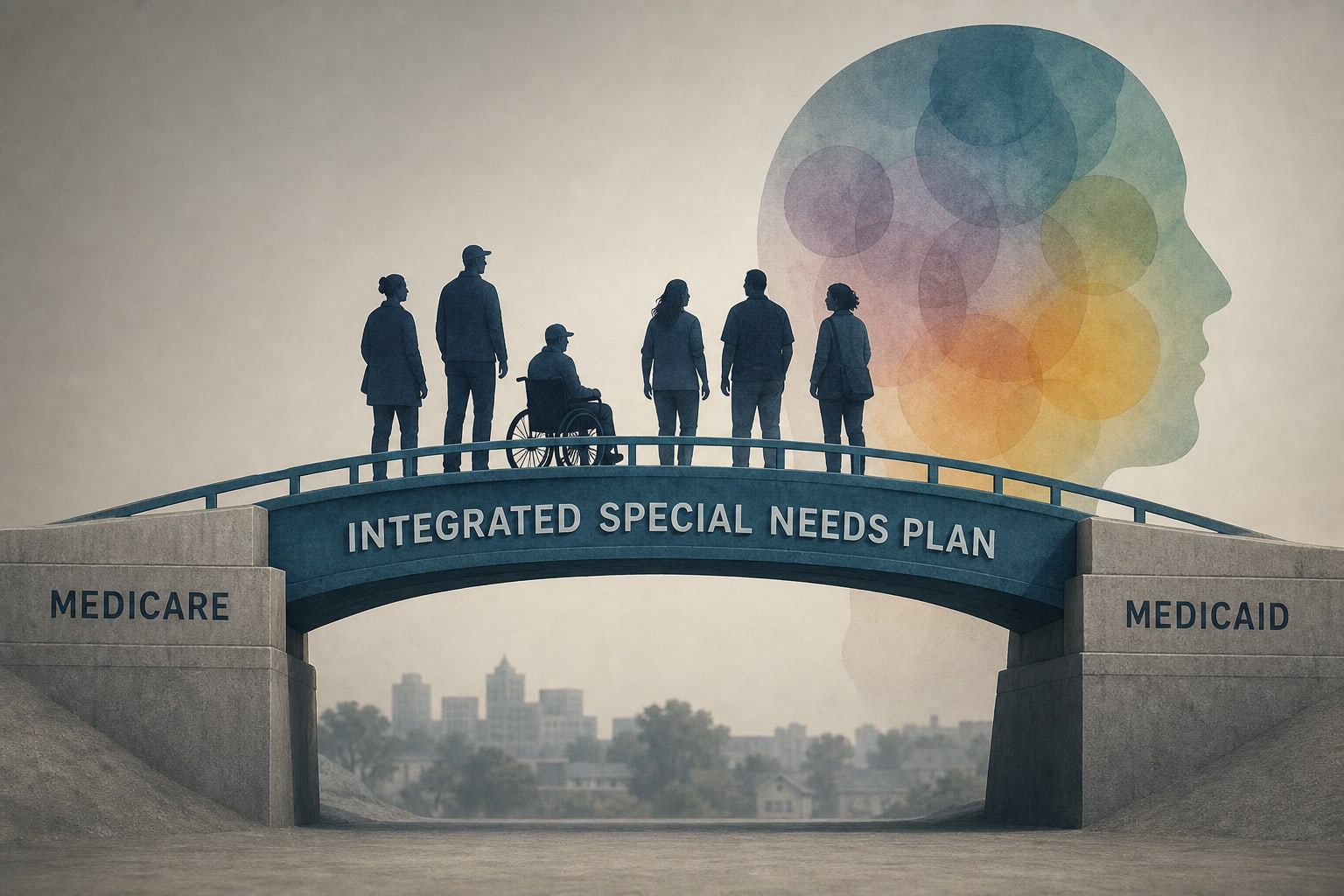
This study investigates enrollment patterns in integrated Dual-Eligible Special Needs Plans (D-SNPs) among dually eligible beneficiaries with serious mental illnesses (SMIs) from 2019 to 2022.

Background

Serious mental illnesses, such as schizophrenia and bipolar disorder, disproportionately affect dually eligible beneficiaries who qualify for both Medicare and Medicaid.

Data Highlights

No numerical data provided in the source material.

Key Findings

['Approximately 30% of dually eligible beneficiaries in the US have serious mental illnesses.', 'Fragmentation between Medicare and Medicaid creates barriers to care for individuals with SMI.', 'Medicare Advantage plans may restrict access to care through limited clinician networks.', 'Integrated D-SNPs are designed to coordinate Medicare and Medicaid benefits for dually eligible beneficiaries.', 'Policy changes have been introduced to strengthen behavioral health integration requirements for D-SNPs.']

Clinical Implications

Healthcare providers should be aware of the complexities faced by dually eligible beneficiaries with SMI when navigating Medicare and Medicaid services.

Conclusion

The study examines enrollment patterns in integrated care models for dually eligible beneficiaries with SMI.
Related Resources & Content

  1. Kaiser Family Foundation (KFF), KFF, 2023 -- Medicaid Mental Health and Substance Use: Expansion Trends and the Fiscal Pressure Ahead
  2. CMS, D-SNPs: Integration & Unified Appeals & Grievance Requirements | CMS, 2023 -- D-SNPs: Integration & Unified Appeals & Grievance Requirements
  3. VA/DoD, Psychosocial Management of First-Episode Psychosis and Schizophrenia: Synopsis of the US Department of Veterans Affairs and US Department of Defense Clinical Practice Guidelines, 2025 -- Psychosocial Management of First-Episode Psychosis and Schizophrenia
  4. Journal of General Internal Medicine — Structural Ableism and Healthcare Transition for Adults with Intellectual and/or Developmental Disabilities
  5. Frontiers in Psychiatry — Outcomes of Academic and Social Participation for Autistic Students in Mainstream Classrooms: Addressing Challenges in Implementing Inclusive Practices to Improve Quality of Life
  6. Drugs - Real World Outcomes — Association Between Antipsychotic Medication and Nursing Home Placement in Dual-Eligible Medicare Recipients: A Propensity Score Analysis
  7. D-SNPs: Integration & Unified Appeals & Grievance Requirements | CMS
  8. Psychosocial Management of First-Episode Psychosis and Schizophrenia: Synopsis of the US Department of Veterans Affairs and US Department of Defense Clinical Practice Guidelines
  9. Effective Components of Collaborative Care for Depression in Primary Care: An Individual Participant Data Meta-Analysis - PubMed

Original Source(s)

Related Content