Conexiant’s news site is now MDSpire News. Learn more
Advertisement
Knock-in Mice with Aquaporin-5 Heavy Chain VDJ Modification Uncover the Role of Molecular Mimicry in Initiating and Diversifying Autoreactive B-Cell Responses
Clinical Report: Knock-in Mice with Aquaporin-5 Heavy Chain VDJ Modification
Overview
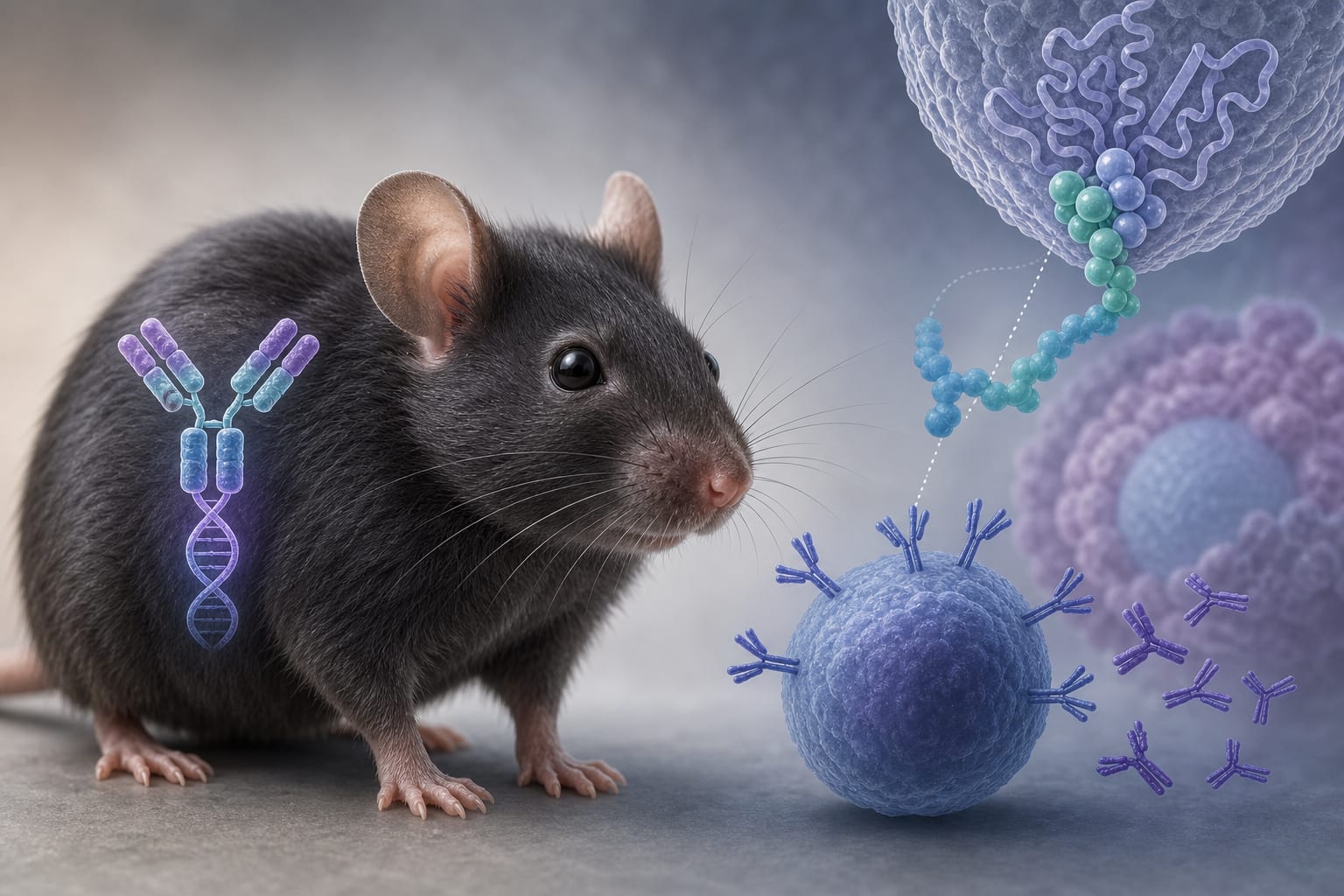
This study introduces A5H mice, a knock-in model that reveals how molecular mimicry can initiate and diversify autoreactive B-cell responses. A5H mice demonstrate normal B-cell development while producing anti-PmE-L antibodies and generating anti-AQP5E autoantibodies upon immunization.
Background
Molecular mimicry is a significant factor in the development of autoimmune diseases, where foreign antigens resemble self-antigens, triggering autoantibody production. The A5H mouse model provides insights into how mimic-reactive B cells can contribute to autoimmune responses.
Data Highlights
No numerical data or trial data provided in the source material.
Key Findings
A5H mice exhibited normal B-cell development with reduced anergy-associated B-cell compartment.
These mice produced anti-PmE-L antibodies at steady state, but anti-AQP5E autoantibodies were undetectable by ELISA.
Immunization with PmE-L led to robust production of anti-AQP5E autoantibodies that cross-reacted with AQP4 and AQP1.
Allelic inclusion enhanced autoreactive B-cell activation, with stronger responses in heterozygous mice compared to homozygous mice.
Minimal tissue deposition of autoantibodies and salivary gland pathology was observed.
Clinical Implications
The findings from A5H mice may help elucidate the mechanisms behind the initiation of autoimmune responses.
Conclusion
The A5H mouse model is a valuable tool for studying the role of molecular mimicry in autoimmune disease initiation and the diversification of autoreactive B-cell responses.