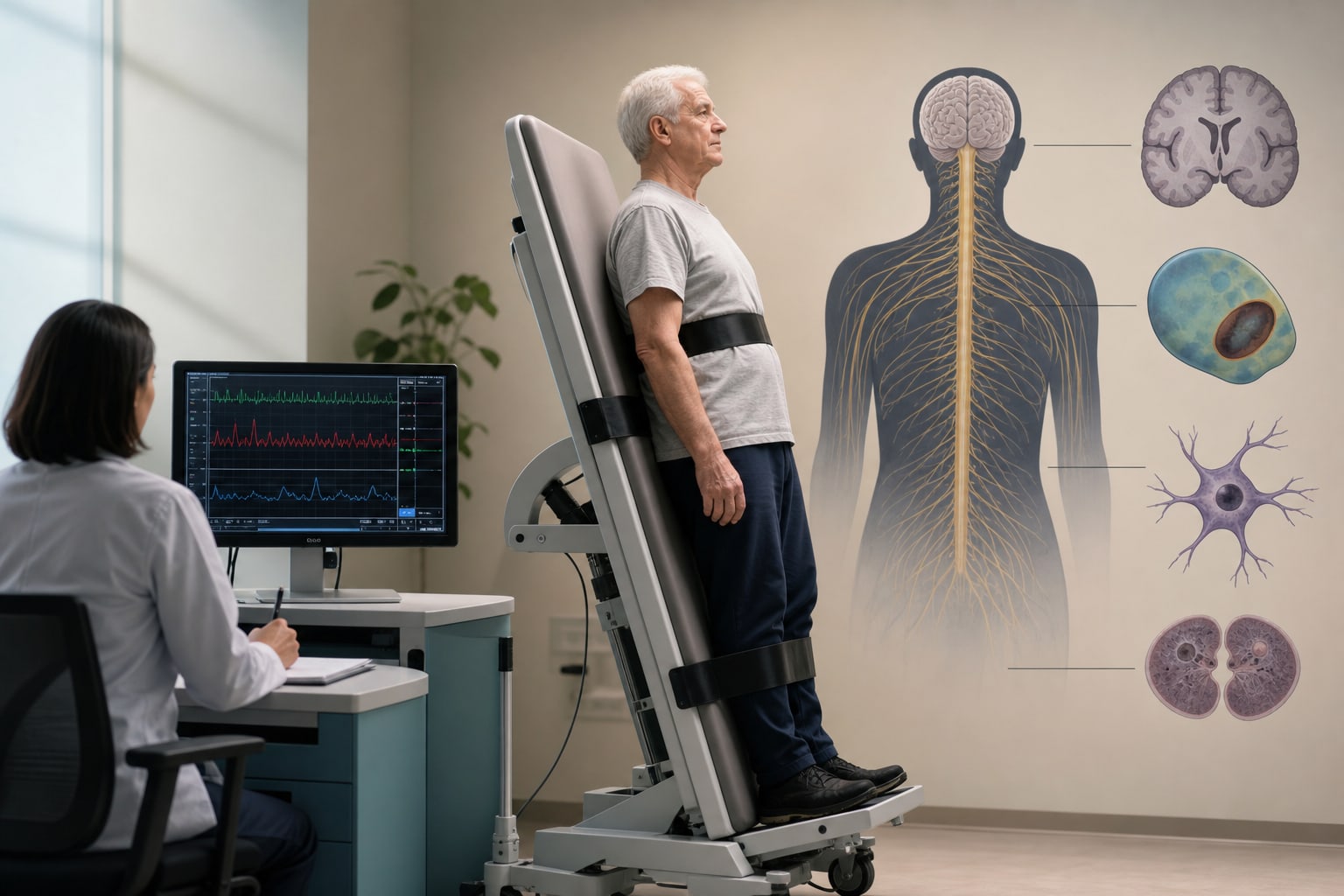
Evaluation of orthostatic dizziness and lightheadedness in older adults: symptoms not to be taken lightly
-
By
-
Svetlana Blitshteyn
-
July 15, 2026
Clinical Report: Assessment of Orthostatic Dizziness and Lightheadedness in Seniors
Overview
Orthostatic dizziness and lightheadedness are prevalent in seniors, often linked to various etiologies including autonomic dysfunction. Comprehensive evaluations are essential to identify underlying causes and guide management.
Background
Orthostatic dizziness is a common complaint among older adults, often resulting from a complex interplay of age-related physiological changes, comorbidities, and medication effects. Understanding the multifactorial nature of this symptom is crucial for effective diagnosis and treatment.
Data Highlights
No numerical data or trial data presented in the article.
Key Findings
- Orthostatic dizziness is frequently reported by patients aged 60 and above.
- Common causes include medication side effects, cardiovascular issues, and neurologic disorders.
- Autonomic dysfunction is a significant etiology that requires thorough medical evaluation.
- Symptoms may improve with sitting or supine positions, indicating orthostatic intolerance.
- Delayed orthostatic hypotension is increasingly recognized and can lead to serious complications.
Clinical Implications
Healthcare providers should conduct comprehensive evaluations for older patients presenting with orthostatic dizziness, including detailed medication reviews and assessments of comorbid conditions.
Conclusion
A thorough understanding of orthostatic dizziness in seniors is critical for effective management and prevention of complications.
Related Resources & Content
- Atlantic Health System, A Smarter Path for Dizziness: When and Why to Refer for Vestibular Therapy
- Frontiers in Digital Health, Smartphone-based vestibular & gait analysis for remote fall risk assessment
- Drugs - Real World Outcomes, Examining Inappropriate Use of Bladder Antimuscarinics in Dementia Patients: Findings from a Retrospective Cohort Analysis
- Frontiers in Neurology, Editorial: Mechanisms of functional dizziness: a window for understanding space-motion cognition
- 2025 AHA/ACC/AANP/AAPA/ABC/ACCP/ACPM/AGS/AMA/ASPC/NMA/PCNA/SGIM Guideline for the Prevention, Detection, Evaluation, and Management of High Blood Pressure in Adults: A Report of the American College of Cardiology/American Heart Association Joint Committee on Clinical Practice Guidelines | JACC
- Management of Orthostatic Hypotension: A Review - PubMed
- 2025 AHA/ACC/AANP/AAPA/ABC/ACCP/ACPM/AGS/AMA/ASPC/NMA/PCNA/SGIM Guideline for the Prevention, Detection, Evaluation, and Management of High Blood Pressure in Adults: A Report of the American College of Cardiology/American Heart Association Joint Committee on Clinical Practice Guidelines | JACC
- https://academic.oup.com/ajh/article/38/7/514/8163928
- Management of Orthostatic Hypotension: A Review - PubMed
This content is an AI-generated, fully rewritten summary based on a published scholarly article. It does not reproduce the original text and is not a substitute for the original publication. Readers are encouraged to consult the source for full context, data, and methodology.