Embolization of the Middle Meningeal Artery for Chronic Subdural Hematoma: Integrating Surgical Advances with Molecular Insights
-
By
-
Rasit Dinc
-
Nurittin Ardic
-
July 2, 2026
Clinical Report: Embolization of the Middle Meningeal Artery for Chronic Subdural Hematoma
Background
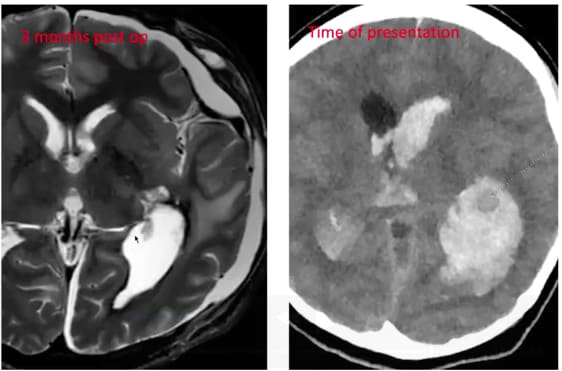
Chronic subdural hematoma (CSDH) is a prevalent condition among the elderly, with increasing incidence rates expected due to demographic shifts. Standard surgical treatments, such as burr-hole craniotomy, have significant recurrence rates, prompting interest in alternative therapies like MMAE.
Data Highlights
Recent randomized controlled trials have shown mixed results regarding the efficacy of MMAE in reducing recurrence rates of CSDH. Some studies reported lower rates of treatment failure, while others did not achieve significant primary endpoints.
Key Findings
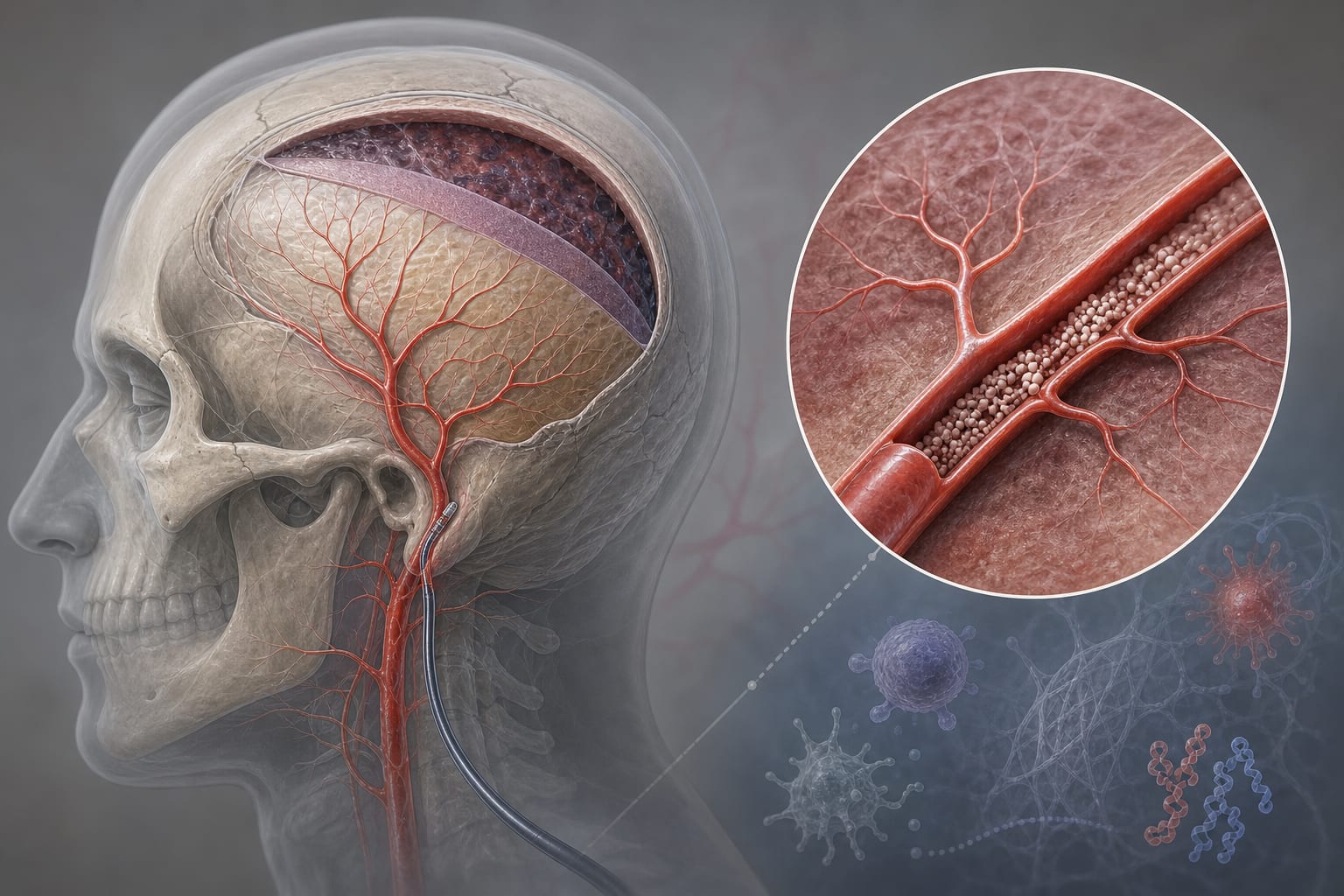
- MMAE has emerged as a minimally invasive treatment option for CSDH, targeting the arterial supply to pathological neomembranes.
- Recurrence rates after standard burr-hole craniotomy remain high, necessitating alternative treatment strategies.
- Recent trials, such as EMBOLISE and STEM, showed varying results for MMAE, while MAGIC-MT did not demonstrate significant reductions in recurrence.
- The pathophysiology of CSDH involves inflammation, angiogenesis, and coagulation.
Clinical Implications
MMAE may serve as an adjunctive or alternative treatment for CSDH, particularly in patients at high risk for recurrence after standard surgical interventions. Understanding the biological mechanisms of CSDH can aid in patient selection and treatment planning.
Conclusion
MMAE represents a promising approach for managing CSDH, although current evidence is heterogeneous. Continued research is essential to establish its role in routine clinical practice.
Related Resources & Content
- Society of Vascular and Interventional Neurology, PMC, 2026 -- Consensus Statement on Middle Meningeal Artery Embolization in Chronic Subdural Hematoma Treatment
- New England Journal of Medicine, 2025 -- Adjunctive Middle Meningeal Artery Embolization for Subdural Hematoma
- JAMA Neurology, 2026 -- Middle Meningeal Artery Embolization With n-Butyl Cyanoacrylate in Patients With Chronic Subdural Hematoma: A Randomized Clinical Trial
- European Radiology — Middle meningeal artery embolization in chronic subdural hematoma: a paradigm shift?
- Frontiers in Surgery — Modified surgical technique for recurrent organized chronic subdural hematoma: a preliminary retrospective case series
- Embolization of the Middle Meningeal Artery and Placement of Subdural Evacuating Port Systems for Chronic Subdural Hematomas: A Procedural Overview
- Frontiers in Neurology — Triple-modality management of complex septated chronic subdural hematoma: a preliminary technical note on feasibility and safety
- Middle meningeal artery embolization in chronic subdural hematoma: a paradigm shift?
- Modified surgical technique for recurrent organized chronic subdural hematoma: a preliminary retrospective case series
- Embolization of the Middle Meningeal Artery and Placement of Subdural Evacuating Port Systems for Chronic Subdural Hematomas: A Procedural Overview
- Consensus Statement on Middle Meningeal Artery Embolization in Chronic Subdural Hematoma Treatment: A Guideline from the Society of Vascular and Interventional Neurology Guidelines and Practice Standards Committee - PMC
- Adjunctive Middle Meningeal Artery Embolization for Subdural Hematoma | New England Journal of Medicine
- Middle Meningeal Artery Embolization With n-Butyl Cyanoacrylate in Patients With Chronic Subdural Hematoma: A Randomized Clinical Trial | Trials | JAMA Neurology | JAMA Network
Based on findings from:
Middle meningeal artery embolization in chronic subdural hematoma: bridging surgical innovations and molecular mechanisms
Rasit Dinc, Nurittin Ardic. Frontiers In Surgery, 2026.
https://www.frontiersin.org/journals/surgery/articles/10.3389/fsurg.2026.1756744/full
This content is an AI-generated, fully rewritten summary based on a published scholarly article. It does not reproduce the original text and is not a substitute for the original publication. Readers are encouraged to consult the source for full context, data, and methodology.