Clinical Report: Exploring the Omics Profiles in Hepatic Echinococcosis
Overview
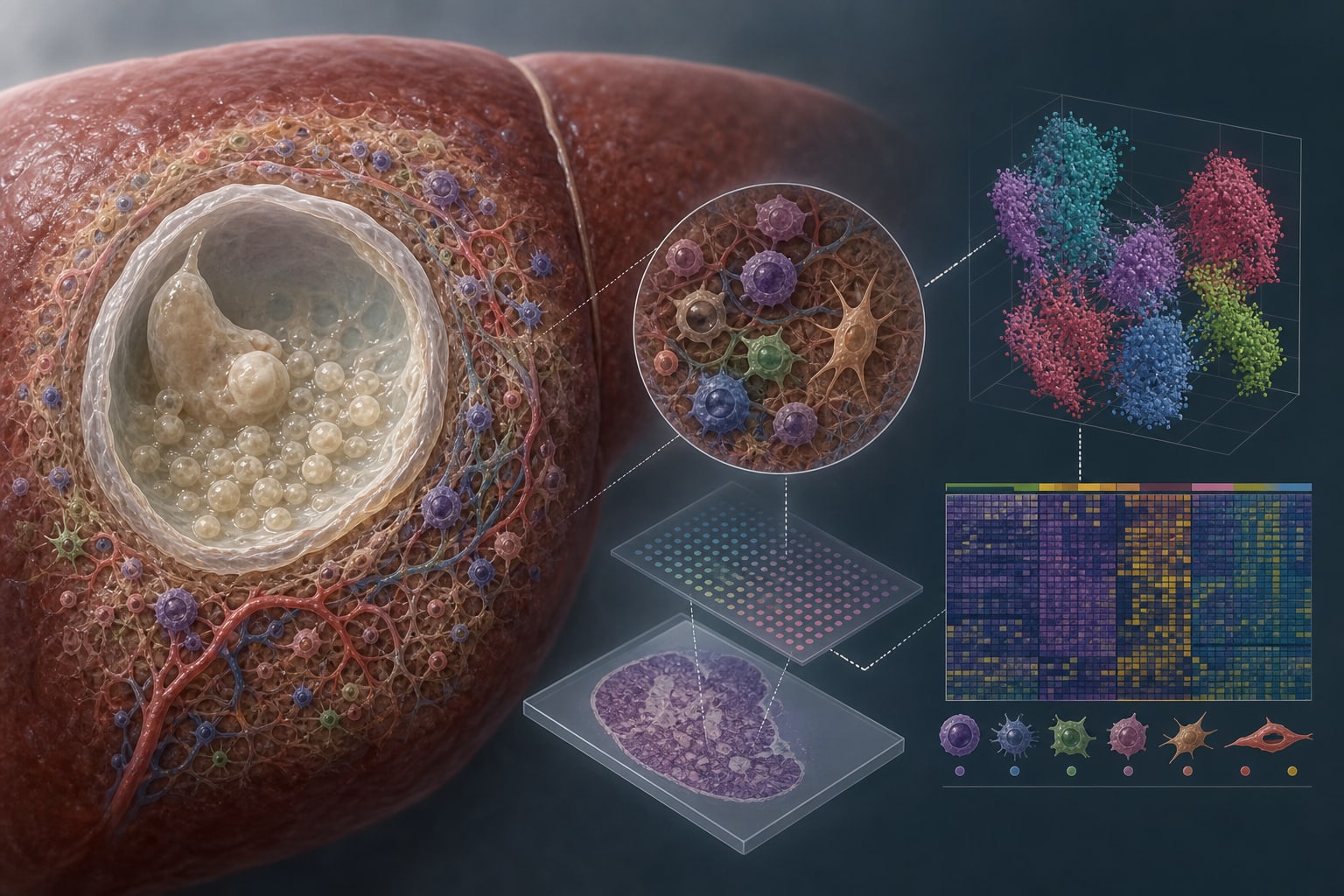
This report reviews the advancements in single-cell RNA sequencing and spatial transcriptomics in understanding hepatic echinococcosis (HE). It highlights the cellular interactions and mechanisms that sustain chronic lesions in HE, emphasizing the importance of niche-aware profiling.
Background
Hepatic echinococcosis is a significant zoonotic disease caused by Echinococcus species, primarily affecting the liver. The disease often remains asymptomatic for years, complicating diagnosis and treatment. Understanding the cellular dynamics and immune responses in HE is crucial for developing effective therapeutic strategies.
Data Highlights
No numerical or trial data available in the source material.
Key Findings
Single-cell RNA sequencing (scRNA-seq) and spatial transcriptomics (ST) provide insights into the cellular diversity in HE lesions.
Late-stage expansion of SPP1+ macrophages and exhausted T-cell programs have been implicated in HE.
Pro-angiogenic myeloid-endothelial crosstalk is a key feature of fibrovascular remodeling in HE.
Traditional bulk omics approaches average signals across heterogeneous lesions, limiting resolution.
Stage-aware and lesion-zone-aware interpretations are essential for understanding HE pathology.
Clinical Implications
The findings suggest that integrating single-cell and spatial omics approaches can enhance the understanding of HE pathology. This knowledge may guide future multi-omic investigations and therapeutic strategies targeting specific cellular interactions in HE.
Conclusion
Advancements in omics technologies are crucial for elucidating the complex cellular interactions in hepatic echinococcosis, paving the way for more targeted therapeutic approaches.