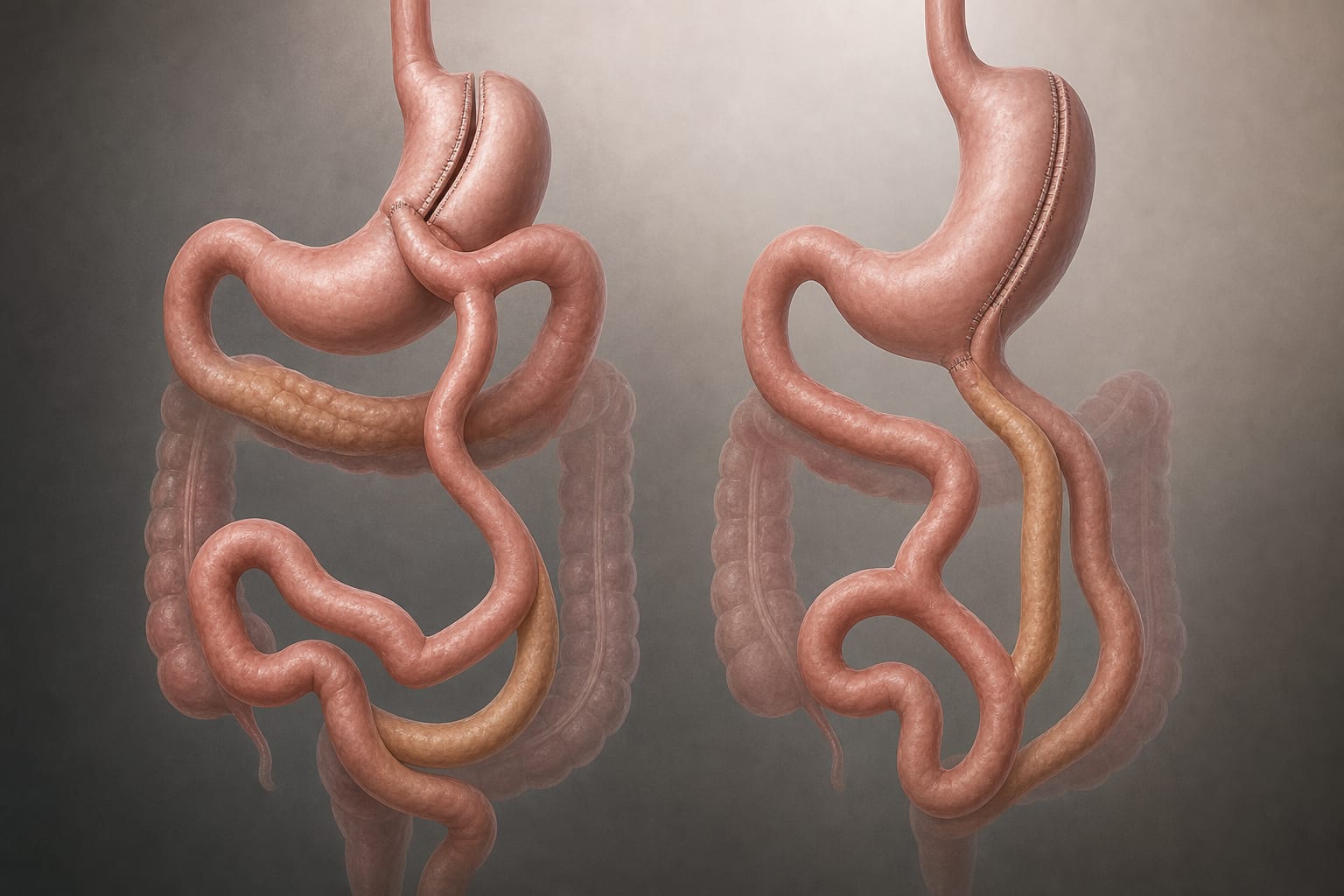
Long-term Outcomes of RYGB vs OAGB Conversion After Failed LSG
Overview
This retrospective case-control study compared the long-term effectiveness and safety of Roux-en-Y gastric bypass (RYGB) and one anastomosis gastric bypass (OAGB) as conversion surgeries following failed laparoscopic sleeve gastrectomy (LSG). Both procedures demonstrated significant weight loss and improvement in comorbidities over a minimum 5-year follow-up, with distinct considerations for patient selection and complication profiles.
Background
Laparoscopic sleeve gastrectomy (LSG) is the most popular bariatric procedure but can fail due to inadequate weight loss, weight regain, or reflux. Conversion surgery to gastric bypass is a common treatment for failed LSG. Roux-en-Y gastric bypass (RYGB) is the gold standard, especially for patients with diabetes, while one anastomosis gastric bypass (OAGB) is a newer, simpler alternative but carries concerns about biliary reflux. There is limited research comparing RYGB and OAGB as conversion options after LSG failure.
Data Highlights
Parameter
RYGB Group
OAGB Group
Follow-up Duration
≥5 years
≥5 years
Biliopancreatic Limb Length
100–150 cm
180–250 cm
Excess Weight Loss (%EWL)
Significant improvement post-conversion
Significant improvement post-conversion
Type 2 Diabetes Remission
Evaluated by fasting glucose & HbA1c
Evaluated by fasting glucose & HbA1c
Postoperative Diet
Liquid diet 1 week, then solids with protein supplements
Liquid diet 1 week, then solids with protein supplements
Thromboprophylaxis
Low-molecular-weight heparin for 21 days
Low-molecular-weight heparin for 21 days
Peptic Ulcer Prophylaxis
Pantoprazole 40 mg daily for 6 months
Pantoprazole 40 mg daily for 6 months
Key Findings
Both RYGB and OAGB conversions after failed LSG resulted in significant and sustained weight loss over at least 5 years.
RYGB is preferred in patients with Barrett’s esophagus or severe esophagitis to reduce reflux risk.
OAGB involves a longer biliopancreatic limb (180–250 cm) compared to RYGB (100–150 cm), potentially impacting malabsorption and weight loss.
Both procedures showed improvement in type 2 diabetes mellitus, with remission defined by strict glycemic criteria.
Postoperative management included standardized diet progression, thromboprophylaxis, and peptic ulcer prophylaxis for both groups.
Patient and surgeon preference influenced the choice of conversion procedure, highlighting the importance of individualized treatment planning.
Clinical Implications
Clinicians should consider both RYGB and OAGB as effective conversion options after failed LSG, tailoring the choice based on patient-specific factors such as esophageal pathology and preference. Long-term follow-up is essential to monitor weight loss maintenance, diabetes remission, and potential complications. Standardized postoperative care protocols support optimal recovery and outcomes.
Conclusion
RYGB and OAGB are both viable and effective conversion surgeries following failed LSG, offering sustained weight loss and metabolic benefits over a 5-year period. Individualized patient selection and adherence to postoperative management protocols are key to optimizing long-term outcomes.
References
Medical University of Gdansk Bariatric Surgery Study 2009–2020 -- Evaluating Long-term Results of RYGB Versus OAGB as Conversion Options Following Failed LSG