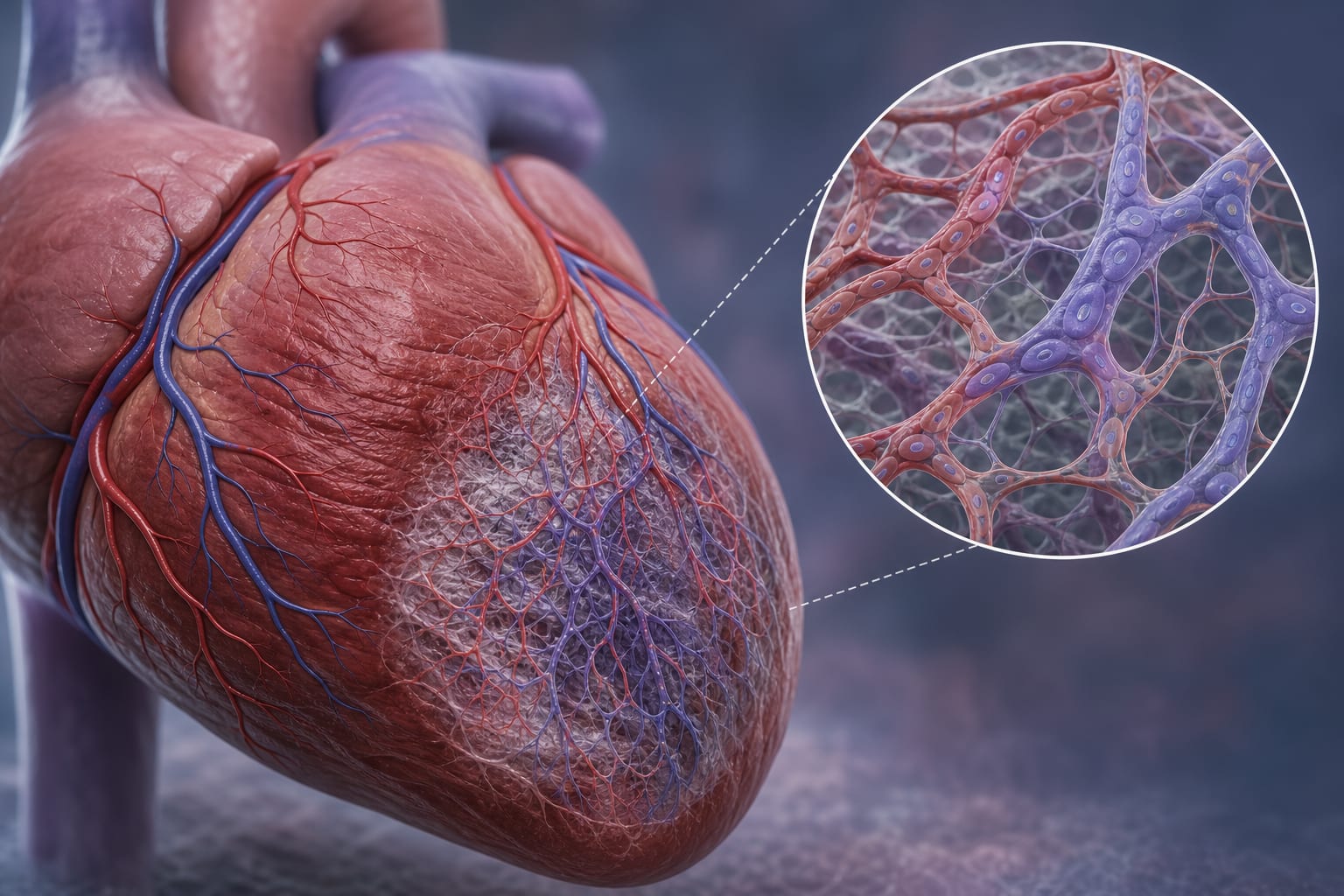
This study investigates the maturation dynamics of coronary endothelial cells following myocardial infarction, revealing that venous enrichment occurs during the neovascularization process. Understanding these changes is crucial for addressing the mechanisms underlying ischemic heart disease and heart failure.
Background
Acute myocardial infarction is a leading cause of ischemic heart disease, which significantly contributes to global mortality. The remodeling of cardiac tissue post-infarction involves complex interactions among various cell types, including endothelial cells, which are essential for vascular regeneration. However, the maturation status of these endothelial cells and its implications for coronary microvascular function remain poorly understood, necessitating further investigation.
Data Highlights
No numerical data or trial data were provided in the source material.
Key Findings
Coronary endothelial cells undergo phenotypic changes in response to ischemia, contributing to neovascularization.
Despite the regeneration of coronary blood vessels post-infarction, patients often experience microvascular dysfunction.
The arterial-venous specification of endothelial cells is critical for the functionality of the new vascular plexus.
Pathways such as Notch, WNT/β-Catenin, and TGF/BMP signaling play significant roles in endothelial cell maturation.
Understanding endothelial dynamics may provide insights into therapeutic strategies for ischemic heart disease.
Clinical Implications
Clinicians should be aware of the potential for altered endothelial cell maturation following myocardial infarction, which may contribute to microvascular dysfunction. Targeting the signaling pathways involved in endothelial specification could offer new therapeutic avenues to improve outcomes in patients with ischemic heart disease.
Conclusion
The study highlights the importance of understanding coronary endothelial cell maturation in the context of myocardial infarction, as it may influence the development of heart failure. Further research is needed to elucidate the mechanisms underlying these changes and their clinical significance.