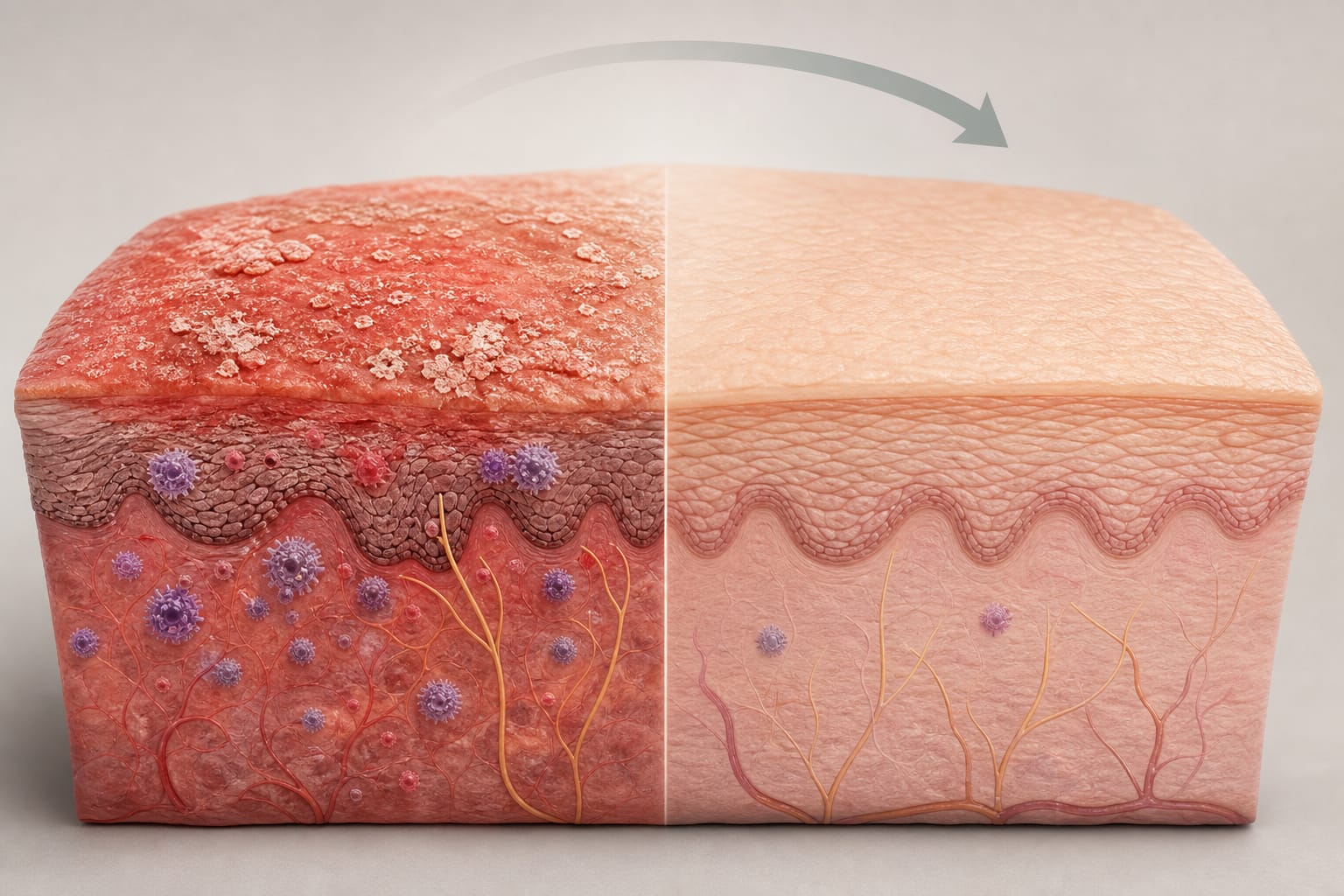
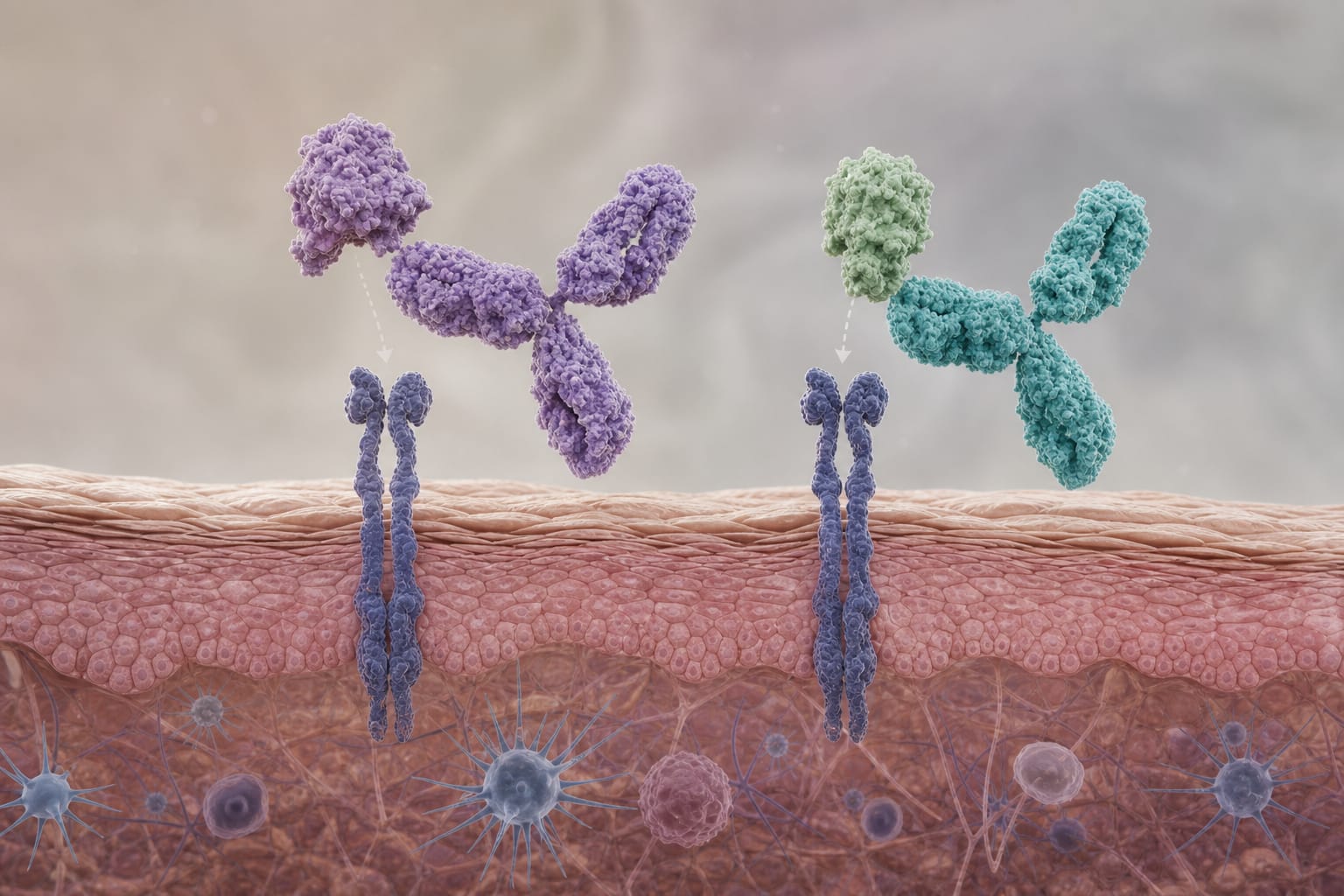
Biologic therapies, particularly IL-17 and IL-23 inhibitors, are associated with the highest likelihood of achieving near-complete skin clearance in patients with moderate to severe plaque psoriasis. Serious adverse events were similar across treatments, including placebo, indicating a favorable safety profile.
Background
Psoriasis is a chronic inflammatory skin condition that significantly impacts patients' quality of life. The emergence of biologic therapies targeting specific interleukins has transformed the management of moderate to severe plaque psoriasis. Understanding the efficacy and safety of these treatments is crucial for optimizing patient outcomes.
Data Highlights
Therapy
PASI 90 Response
Serious Adverse Events
IL-17 Inhibitors
Specific PASI 90 response rate needed
Similar to placebo
IL-23 Inhibitors
Specific PASI 90 response rate needed
Similar to placebo
TNF Inhibitors
Lower efficacy
Similar to placebo
Key Findings
IL-17 inhibitors ranked highest for efficacy in achieving PASI 90, with specific rates needed.
Serious adverse events were uncommon and similar across all systemic treatments.
Infliximab, bimekizumab, ixekizumab, and risankizumab showed the highest PASI 90 response rates, with specific rates needed.
Differences in onset of action were noted, with IL-17 inhibitors showing more rapid responses.
Oral systemic therapies demonstrated lower PASI 90 response rates compared to biologics.
Clinical Implications
Clinicians should consider IL-17 and IL-23 inhibitors as first-line biologic options for patients with moderate to severe plaque psoriasis, particularly for those seeking rapid skin clearance. Ongoing assessment of long-term safety and efficacy is essential, as current data primarily reflect short-term outcomes and may not capture long-term effects.
Conclusion
The findings support the use of IL-17 and IL-23 inhibitors as effective treatments for achieving short-term skin clearance in psoriasis, reshaping expectations for disease management, but limitations regarding the short-term nature of the findings should be acknowledged.