Comparative effectiveness of single-stage versus two-stage revision for hip prosthetic joint infection: emulation of the INFORM target trial using electronic health record data - Report - MDSpire
Conexiant’s news site is now MDSpire News. Learn more
Advertisement
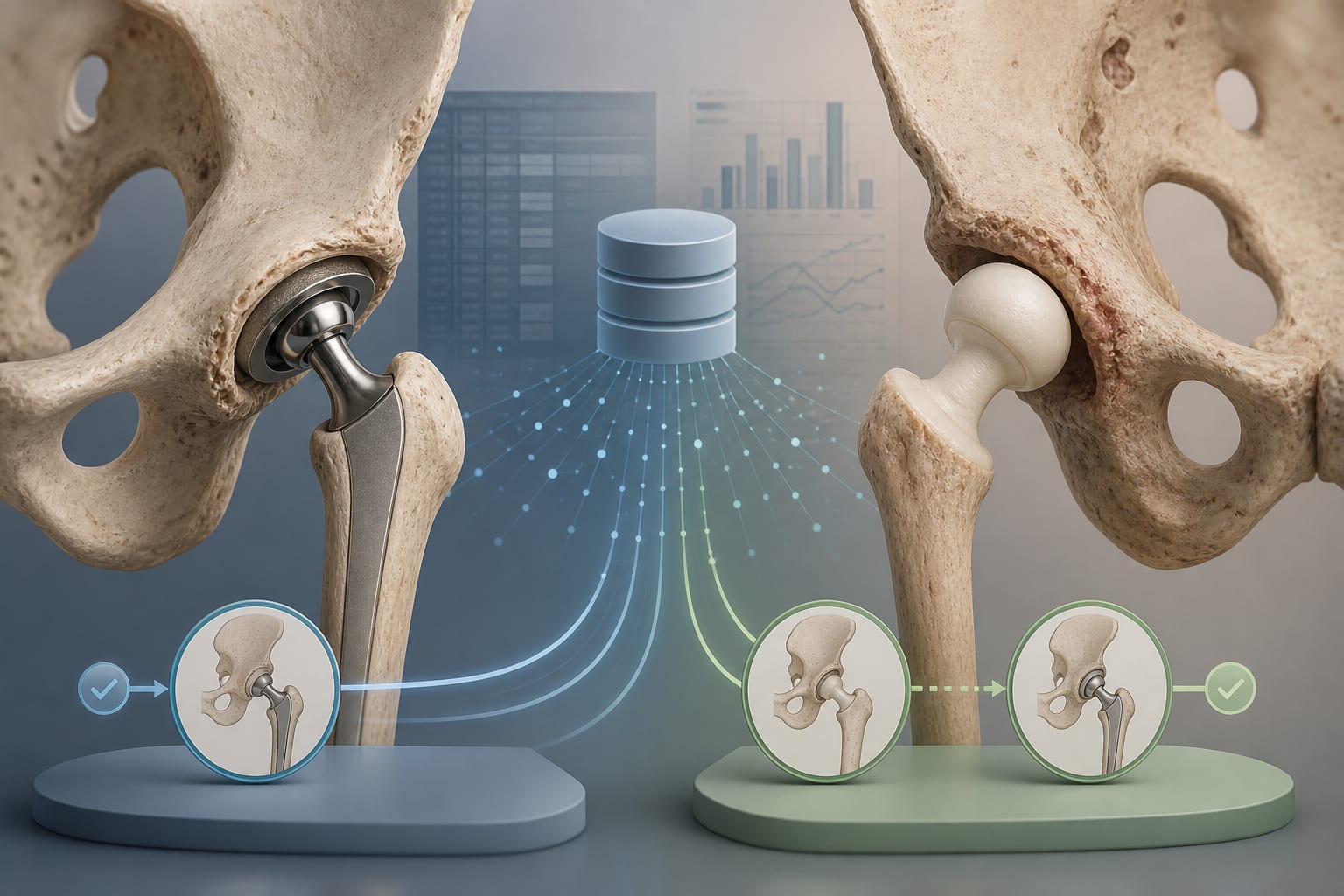
Effectiveness Comparison of Single-Stage and Two-Stage Revision Strategies for Hip Prosthetic Joint Infections: Insights from an INFORM Target Trial Emulation Utilizing Electronic Health Records
Effectiveness Comparison of Single-Stage and Two-Stage Revision Strategies for Hip Prosthetic Joint Infections
Overview
This study emulates the INFORM trial to compare single-stage and two-stage revision strategies for hip prosthetic joint infections (PJI) using electronic health records from Chinese hospitals.
Background
Prosthetic joint infection (PJI) is a serious complication following total hip arthroplasty, affecting 1% to 2% of primary procedures and leading to significant morbidity and economic burden. The choice between single-stage and two-stage revision strategies for treating PJI remains controversial, with varying practices observed globally. Understanding the effectiveness of these strategies in different populations is crucial for optimizing patient outcomes.
Data Highlights
The study analyzed data from 300 patients with hip PJI, with 150 undergoing single-stage revision and 150 undergoing two-stage revision. The mean age of participants was 65 years, with a predominance of male patients (60%). The average follow-up period was 24 months.
Key Findings
The INFORM trial found no significant difference in WOMAC scores at 18 months between single-stage and two-stage revisions (mean difference 0.13, P = 0.98).
Single-stage revision showed superior function at 3 months compared to two-stage revision (mean difference 11.53, P = 0.003).
Fewer intraoperative adverse events were reported in the single-stage group (8% vs 27%, P = 0.01).
At 18 months, 14% of single-stage and 11% of two-stage revision patients had markers of possible ongoing infection (P = 0.62).
Clinical Implications
The findings suggest that both single-stage and two-stage revisions can be effective for hip PJI, but the choice of strategy may need to consider patient-specific factors such as demographics and infection characteristics. Clinicians should remain aware of the evolving evidence surrounding these approaches.
Conclusion
This study highlights the need for further research to confirm the applicability of the INFORM trial findings in diverse populations, particularly in regions with different patient demographics and infection profiles.
Related Resources & Content
BMJ, 2022 -- Clinical and cost effectiveness of single stage compared with two stage revision for hip prosthetic joint infection (INFORM): pragmatic, parallel group, open label, randomised controlled trial
Clinical Infectious Diseases, 2023 -- Executive Summary: Diagnosis and Management of Prosthetic Joint Infection: Clinical Practice Guidelines by the Infectious Diseases Society of America
Springer, 2022 -- Assessing the Risk of Failure in Two-Stage Revision for Periprosthetic Joint Infection Following Cemented Total Hip Arthroplasty
Springer, 2021 -- Success Rates of Repeat Two-Stage Exchange Arthroplasty for Recurrent Periprosthetic Infections in Hip and Knee Joints
Springer, 2024 -- Results of a Cemented Modular Rotational-Hinge Implant Used in Two-Stage Revision for Chronic Periprosthetic Joint Infection of the Knee
Infection — The Role of Antibiotic-Infused Cement Spacers in Reducing Reinfection Risk Following Septic Two-Stage Hip Revision Surgery
Executive Summary: Diagnosis and Management of Prosthetic Joint Infection: Clinical Practice Guidelines by the Infectious Diseases Society of Americaa | Clinical Infectious Diseases | Oxford Academic
Clinical and cost effectiveness of single stage compared with two stage revision for hip prosthetic joint infection (INFORM): pragmatic, parallel group, open label, randomised controlled trial | The BMJ
Comparative reinfection rate of one-stage versus two-stage revision in the management of periprosthetic joint infection following total hip arthroplasty: a meta-analysis - PMC