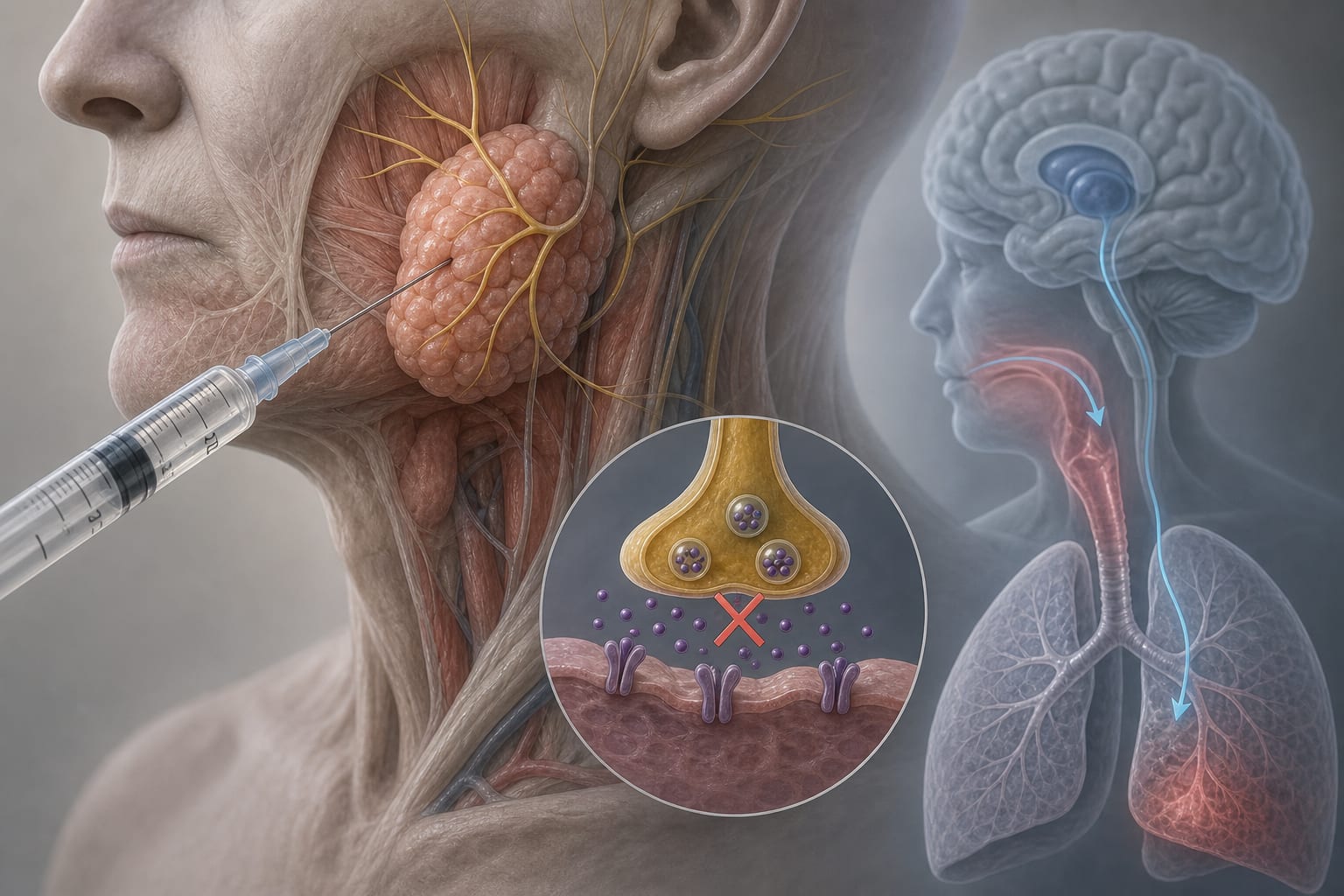
Botulinum Toxin Type A for Managing Sialorrhea in Adults with Neurological Conditions
Overview
This review evaluates the use of botulinum neurotoxin type A (BoNT-A) for managing sialorrhea in adults with neurological conditions. While BoNT-A is effective in reducing sialorrhea, evidence linking it to reduced aspiration pneumonia (AP) risk is limited.
Background
Sialorrhea is a common complication in patients with neurological disorders, leading to significant clinical burdens and increased risk of aspiration pneumonia. The management of sialorrhea is crucial as it can exacerbate respiratory complications. Botulinum toxin type A has emerged as a treatment option, but its effects on aspiration pneumonia risk require further investigation.
Data Highlights
No numerical data or trial data provided in the source material.
Key Findings
BoNT-A effectively reduces sialorrhea in pediatric patients with neurological conditions.
In adults, BoNT-A has shown benefits in managing sialorrhea associated with conditions like Parkinson's disease and brain injuries.
Evidence directly linking BoNT-A to reduced aspiration pneumonia risk in adults is lacking.
Salivary pooling due to sialorrhea can lead to aspiration and respiratory complications.
Current literature highlights a gap in studies investigating the impact of BoNT-A on aspiration pneumonia risk in adults.
Clinical Implications
Clinicians should consider the efficacy of BoNT-A in managing sialorrhea in adults with neurological conditions while being aware of the limited evidence regarding its impact on aspiration pneumonia risk.
Conclusion
BoNT-A is supported for managing sialorrhea in adults, but more studies are necessary to determine its effect on aspiration pneumonia risk.