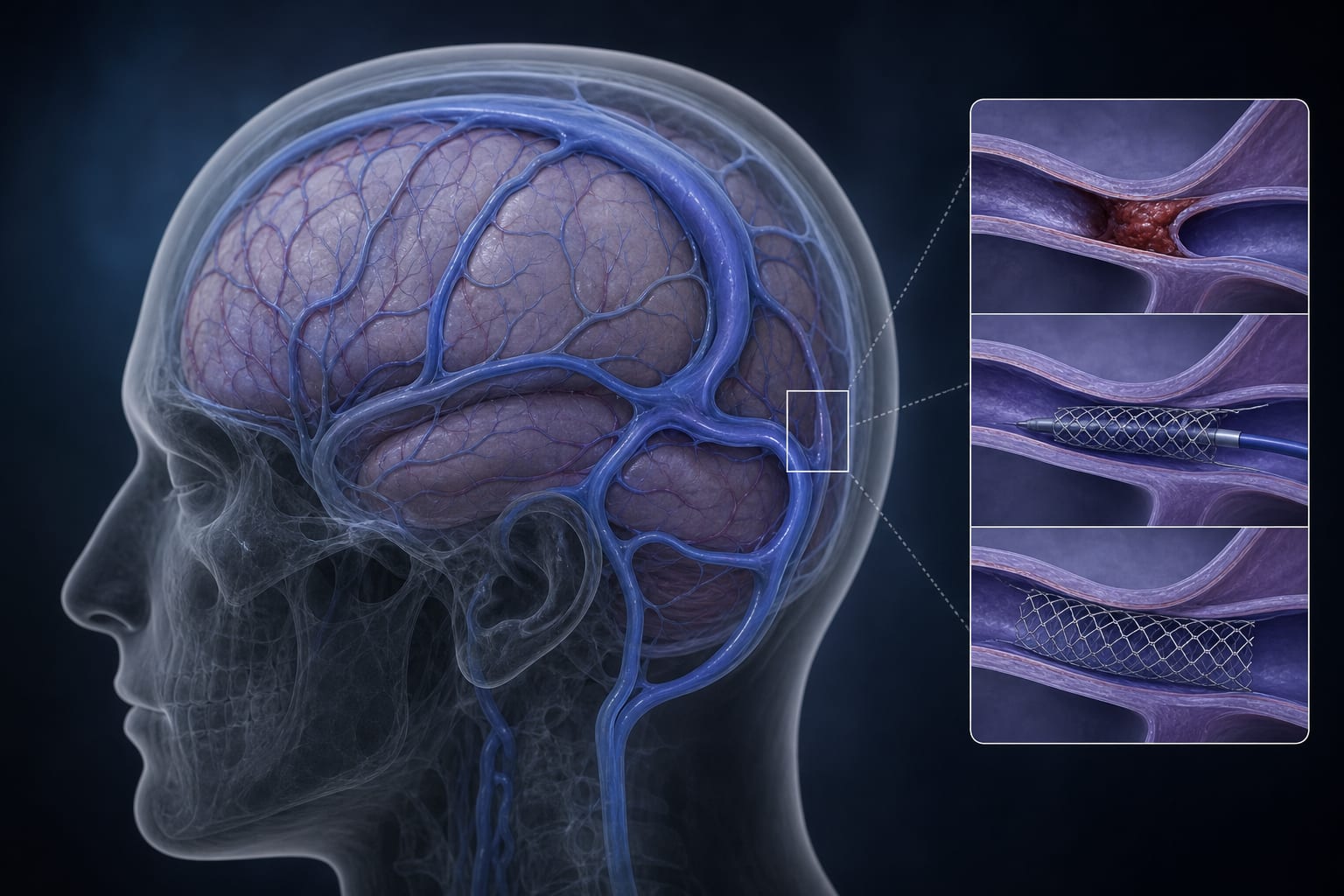
Clinical Features, Diagnostic Approaches, and Modern Treatment of Cerebral Venous Disorders
Overview
Cerebral venous disorders, including acute cerebral venous thrombosis and chronic intracranial venous hypertension, are increasingly recognized. This review discusses the pathophysiology, clinical presentation, diagnostic evaluation, and treatment strategies for these conditions.
Background
Cerebral venous disorders are a diverse group of conditions that can lead to significant morbidity. Improved imaging techniques and endovascular therapies have enhanced the diagnosis and management of these disorders.
Data Highlights
No specific numerical data or trial data provided in the source material.
Key Findings
Cerebral venous disorders include conditions such as acute cerebral venous thrombosis and chronic intracranial venous hypertension.
Advancements in imaging techniques, including CT and MR venography, have improved diagnostic capabilities.
Endovascular therapies, including venous sinus stenting, are emerging as treatment options for certain patients.
Controversies exist regarding diagnostic thresholds and the clinical significance of venous stenosis.
A multidisciplinary approach is essential for optimizing patient selection and outcomes in cerebral venous disorders.
Clinical Implications
Healthcare professionals should be aware of the evolving diagnostic and treatment strategies for cerebral venous disorders.
Conclusion
As the understanding of cerebral venous disorders evolves, ongoing research is necessary to address existing knowledge gaps.