Case Report: Treating obstructive sleep apnea with maxillomandibular advancement surgery in a case with a previously reconstructed mandible - Report - MDSpire
Maxillomandibular Advancement Surgery for OSA Post Mandibular Reconstruction
Overview
This case study reports successful maxillomandibular advancement (MMA) surgery in a 53-year-old male with severe obstructive sleep apnea (OSA) and prior mandibular reconstruction using a fibula flap. Virtual surgical planning with patient-specific guides enabled precise advancement, reducing the apnea hypopnea index (AHI) from 35.2 to 17.6 and improving symptoms with minimal complications.
Background
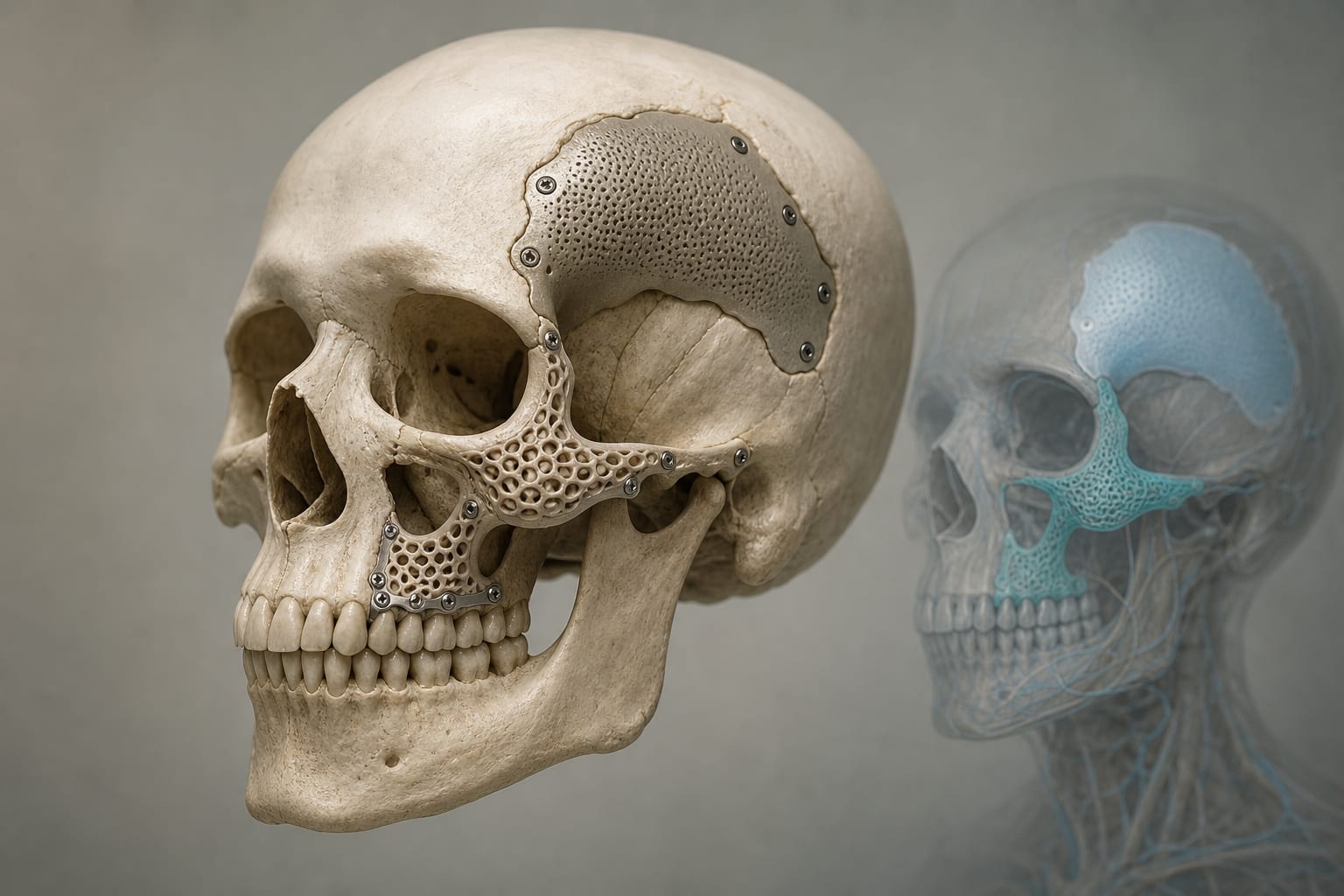
Obstructive sleep apnea (OSA) is characterized by repeated upper airway collapse during sleep, leading to serious health risks if untreated. Maxillomandibular advancement (MMA) surgery enlarges the pharyngeal airway by advancing the maxilla and mandible, traditionally planned with 3D virtual techniques and surgical splints. However, in patients with complex anatomy such as prior mandibular reconstruction, splint-based methods may be unreliable, necessitating patient-specific osteotomy guides and customized osteosynthesis plates to improve surgical accuracy and outcomes.
Data Highlights
Parameter
Pre-MMA
Post-MMA
Apnea Hypopnea Index (AHI) (events/hour)
35.2
17.6
Epworth Sleepiness Scale (ESS) score
15
Improved (exact post-op score not specified)
Key Findings
MMA was successfully performed in a patient with prior mandibular reconstruction using a fibula osteocutaneous flap.
Virtual surgical planning with patient-specific osteotomy guides and osteosynthesis plates enabled precise 10 mm advancement of maxilla and mandible.
Postoperative AHI decreased from 35.2 to 17.6 events/hour, indicating marked improvement in OSA severity.
Daytime sleepiness improved significantly as measured by the Epworth Sleepiness Scale.
Complications were minimal, limited to transient paraesthesia and removal of osteosynthesis material.
The approach avoided altering occlusion despite complex anatomy and partial edentulism.
Clinical Implications
MMA using patient-specific guides and plates can be a feasible and effective surgical option for OSA patients with prior mandibular reconstruction, overcoming challenges posed by altered anatomy. Careful virtual planning and customized instrumentation improve surgical accuracy and safety, potentially expanding treatment options for complex cases intolerant to conventional therapies.
Conclusion
This case demonstrates that MMA with patient-specific surgical tools is a viable and safe treatment for severe OSA in patients with reconstructed mandibles, achieving significant symptomatic and polysomnographic improvements.
References
Case Study Source 2024 -- Maxillomandibular Advancement Surgery for Obstructive Sleep Apnea in a Patient with Prior Mandibular Reconstruction