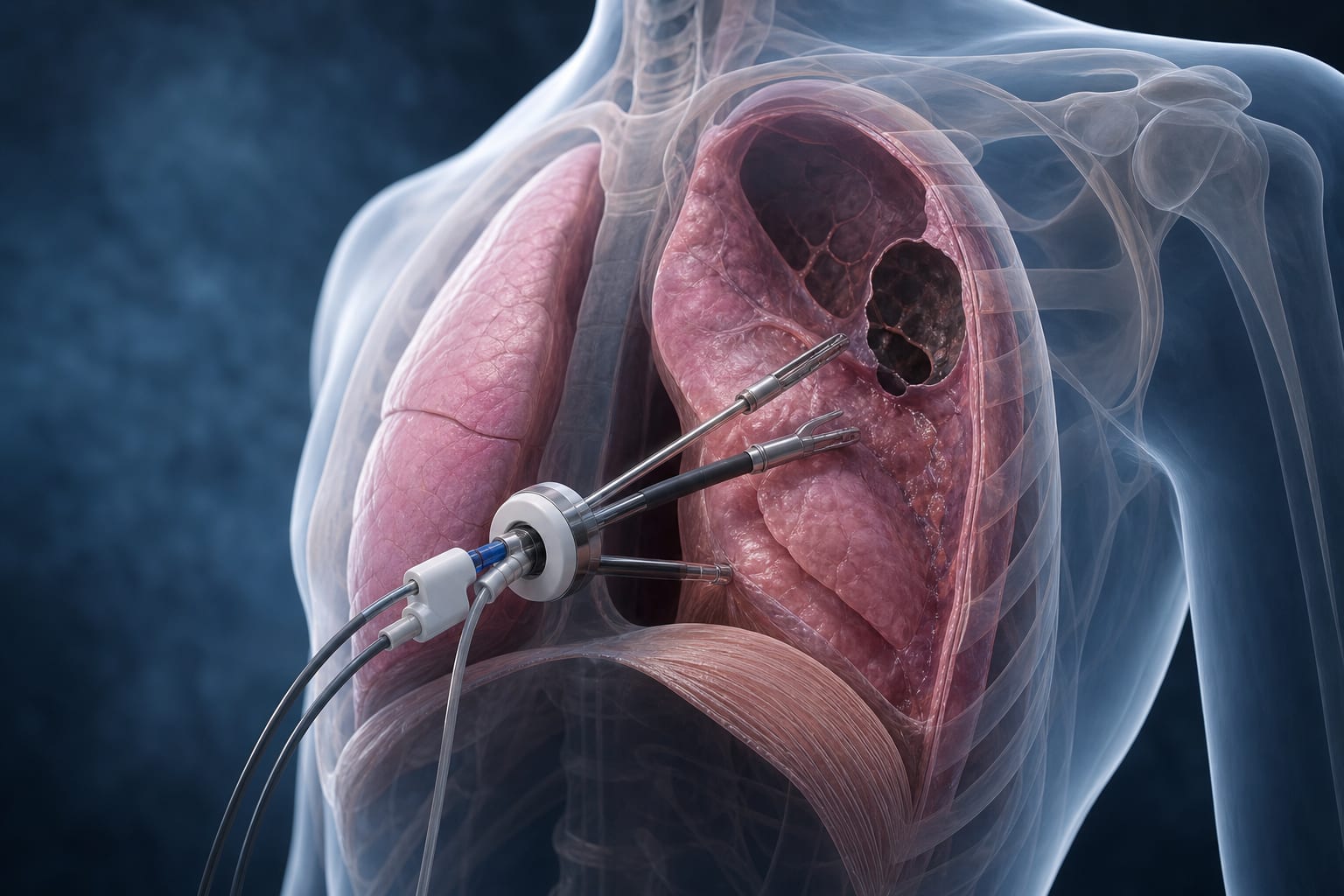
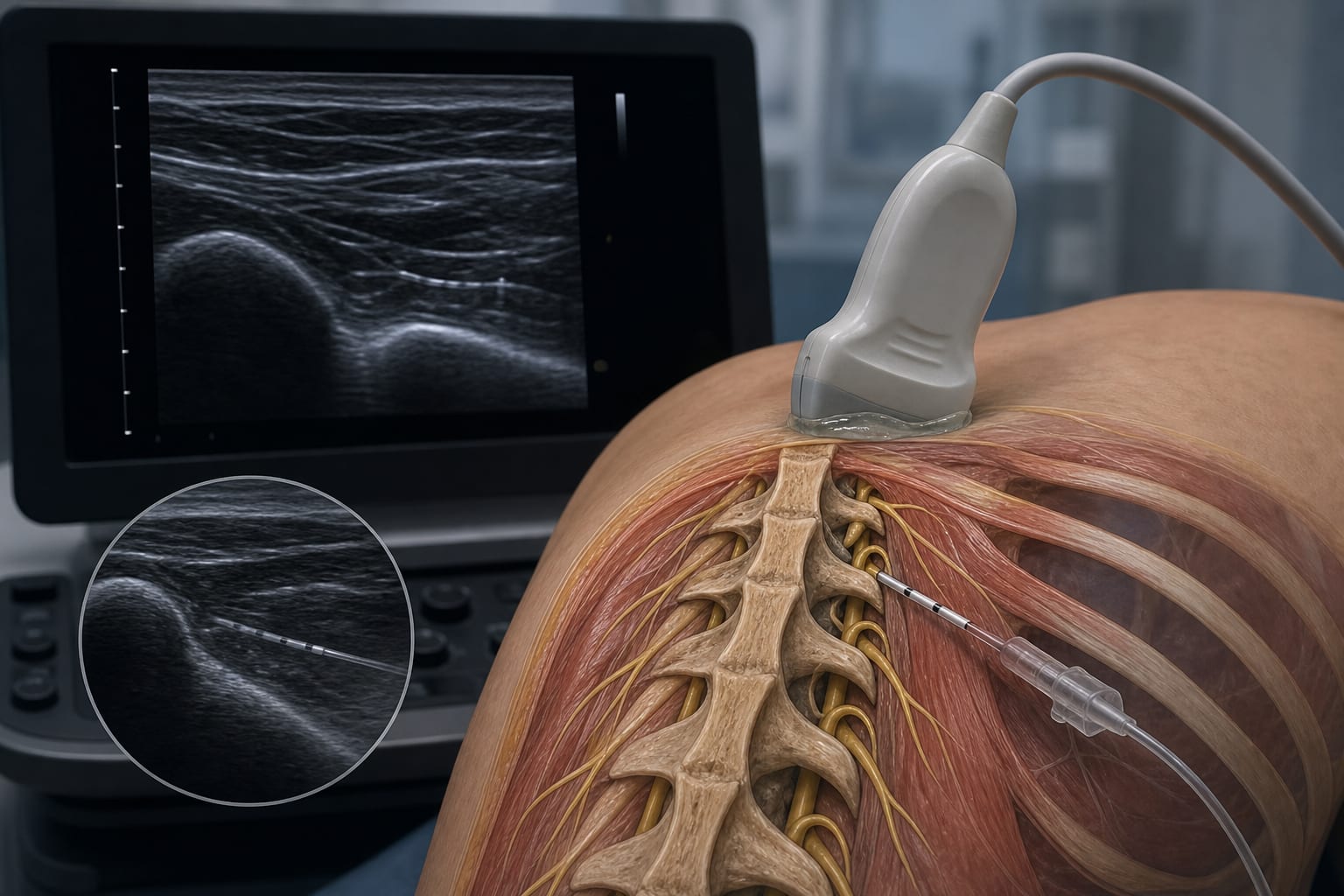
Comparative Analysis of Safety and Effectiveness of Single-Port versus Multi-Port Video-Assisted Thoracoscopic Surgery for Bullous Lung Resection: A Systematic Review and Meta-Analysis
-
By
-
Ting Gao
-
Xiaopeng He
-
Peiwen Zhao
-
May 29, 2026
Clinical Report: Safety and Effectiveness of Single-Port vs Multi-Port VATS
Overview
This meta-analysis evaluates the perioperative safety and effectiveness of single-port versus multi-port video-assisted thoracoscopic surgery (VATS) for bullous lung resection. Findings indicate that single-port VATS leads to shorter hospital stays, reduced postoperative pain, and lower incidence of chest wall paresthesia without increasing operative time or complication rates.
Background
Primary spontaneous pneumothorax (PSP) is a common thoracic condition, particularly in males, characterized by the rupture of lung bullae. Surgical intervention is often required to prevent recurrence, as conservative management has high failure rates. Video-assisted thoracoscopic surgery (VATS) has emerged as a less invasive alternative to traditional open thoracotomy, but the comparative advantages of single-port versus multi-port techniques remain under investigation.
Data Highlights
{'MD': 'Mean Difference', 'RR': 'Risk Ratio'}Key Findings
- Single-port VATS significantly reduces hospital stay compared to multi-port VATS.
- Postoperative pain is lower in patients undergoing single-port VATS.
- The incidence of chest wall paresthesia is reduced with single-port VATS.
- No significant differences in operative time, chest tube duration, or complication rates were observed between the two techniques.
- Conventional single-port techniques primarily drive the reduction in hospital stay.
Clinical Implications
Single-port VATS may offer a safer and more effective option for bullous lung resection, leading to quicker recovery and less postoperative discomfort. Clinicians should consider this approach, especially for patients at risk of prolonged hospital stays or significant postoperative pain.
Conclusion
Single-port VATS represents a viable alternative to multi-port techniques for bullous lung resection, providing benefits in recovery and pain management without compromising safety. Further randomized trials are warranted to confirm these findings.
Related Resources & Content
- Frontiers in Medicine, 2026 -- Clinical efficacy of video double-lumen tube for one-lung ventilation in thoracic surgery: a meta-analysis of randomized controlled trials
- Comparison of Single-Incision Plus One-Port Laparoscopic Surgery and Traditional Multi-Port Laparoscopic Surgery for Colorectal Cancer: A Systematic Review and Meta-Analysis
- Surgical Endoscopy, 2023 -- Comparative Analysis of Single-Port Laparoscopic Appendectomy and Traditional Three-Port Technique: A Systematic Review and Meta-Analysis of Randomized Trials
- Evaluating the Viability and Benefits of Subxiphoid Uniportal Video-Assisted Thoracoscopic Surgery for Pulmonary Lobectomy
- Joint ERS/EACTS/ESTS clinical practice guidelines on adults with spontaneous pneumothorax | European Respiratory Society
- Conservative versus Interventional Treatment for Spontaneous Pneumothorax | New England Journal of Medicine
- Frontiers | Clinical Efficacy and Safety of Different Video-Assisted Thoracoscopic Surgery Approaches for Bullous Lung Resection: A Systematic Review and Meta-Analysis
- Joint ERS/EACTS/ESTS clinical practice guidelines on adults with spontaneous pneumothorax | European Respiratory Society
- Conservative versus Interventional Treatment for Spontaneous Pneumothorax | New England Journal of Medicine
- Frontiers | Clinical Efficacy and Safety of Different Video-Assisted Thoracoscopic Surgery Approaches for Bullous Lung Resection: A Systematic Review and Meta-Analysis
Based on findings from:
Clinical efficacy and safety of different video-assisted thoracoscopic surgery approaches for bullous lung resection: a systematic review and meta-analysis
Ting Gao, Xiaopeng He, Peiwen Zhao. Frontiers In Surgery, 2026.
https://www.frontiersin.org/journals/surgery/articles/10.3389/fsurg.2026.1838672/full
This content is an AI-generated, fully rewritten summary based on a published scholarly article. It does not reproduce the original text and is not a substitute for the original publication. Readers are encouraged to consult the source for full context, data, and methodology.