Case Report: sustained five-year remission in eosinophilic granulomatosis with polyangiitis with intestinal perforation after surgery and rituximab-based therapy without glucocorticoid escalation - Report - MDSpire

Case Report: sustained five-year remission in eosinophilic granulomatosis with polyangiitis with intestinal perforation after surgery and rituximab-based therapy without glucocorticoid escalation

  • By

  • Yuriko Yamamura

  • Yoshinori Matsumoto

  • Keiji Ohashi

  • Keigo Hayashi

  • Yoshia Miyawaki

  • Haruki Watanabe

  • Eri Katsuyama

  • Takayuki Katsuyama

  • Mariko Takano-Narazaki

  • Jun Wada

  • July 1, 2026

  • 0 min

Share

Long-term Remission Achieved in Eosinophilic Granulomatosis with Polyangiitis

Overview

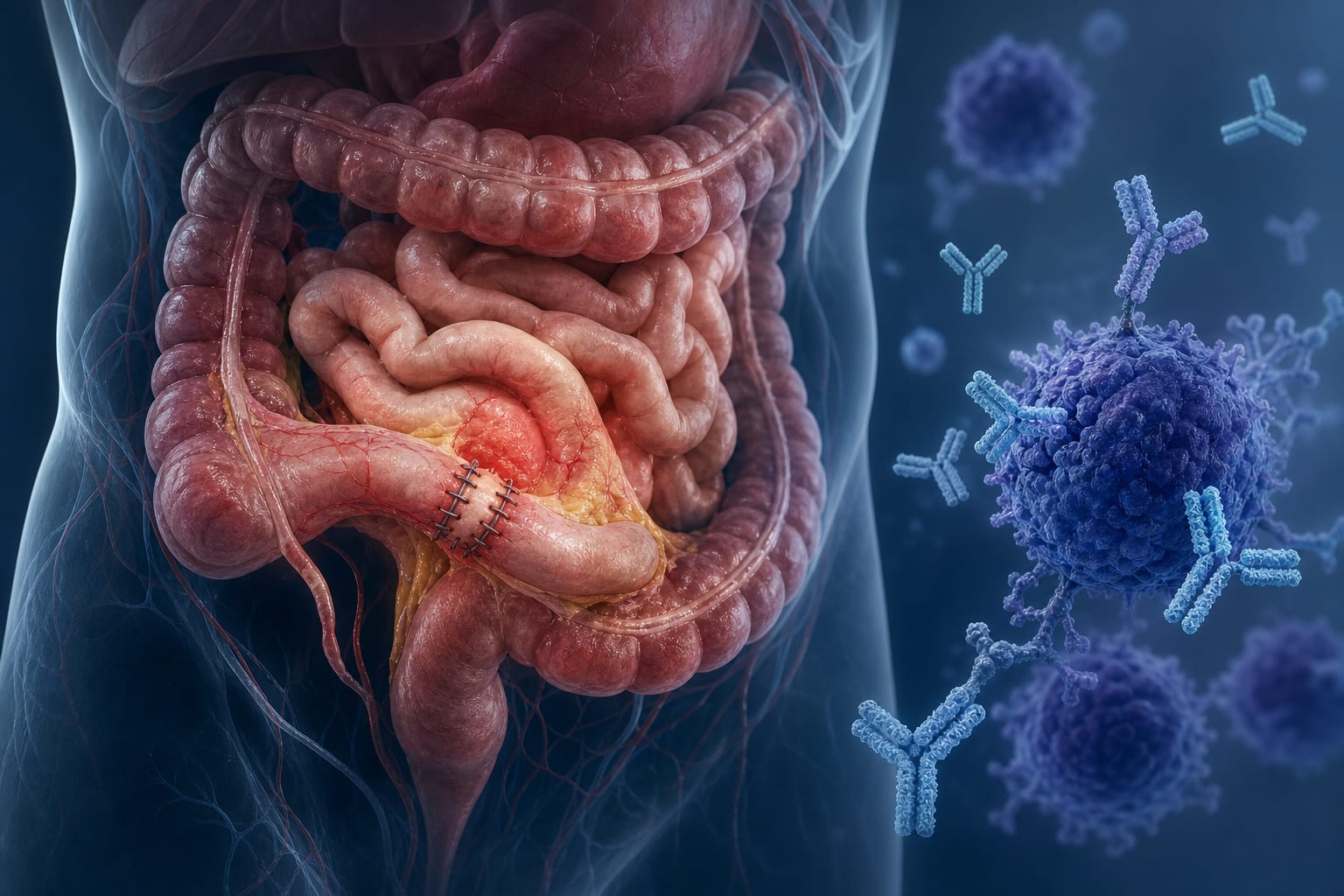
This case study reports a 5-year follow-up of a patient with eosinophilic granulomatosis with polyangiitis (EGPA) who achieved long-term remission following surgical intervention and rituximab therapy without increased glucocorticoid use. The patient had severe gastrointestinal involvement, including intestinal perforation and multiple jejunal ulcers.

Background

Eosinophilic granulomatosis with polyangiitis (EGPA) is a systemic vasculitis that can lead to significant morbidity, particularly when gastrointestinal involvement occurs. Standard treatment typically involves high-dose glucocorticoids, which can pose risks during surgical interventions.

Data Highlights

No numerical data or trial data is presented in the article.

Key Findings

  • EGPA can present with severe gastrointestinal symptoms, including ulceration and perforation.
  • Standard treatment often involves high-dose glucocorticoids, which may not be safe in perioperative settings.
  • This case demonstrates successful long-term remission using rituximab without increasing glucocorticoid doses.
  • The patient maintained remission with a gradual reduction of prednisolone from 17.5 mg/day to 1 mg/day over two years.

Clinical Implications

This approach could minimize the risks associated with glucocorticoid escalation during surgical interventions.

Conclusion

This case highlights the potential usefulness of rituximab in achieving sustained remission in severe EGPA without the need for increased glucocorticoid therapy.

Related Resources & Content

  1. The New Gastroenterologist, 2025 -- Extended Treatment for Eosinophilic Esophagitis Reduces Relapse Risk Without Increased Complications
  2. Frontiers in Immunology, 2026 -- Comparative real-world effectiveness and safety of benralizumab and two mepolizumab dosing regimens in eosinophilic granulomatosis with polyangiitis: a 24-month prospective single-center cohort study
  3. The New Gastroenterologist, 2025 -- Long-Term Findings Endorse Reduced-Dose Maintenance Therapy for Eosinophilic Esophagitis
  4. Clinical Rheumatology -- Assessment of rituximab's effectiveness and safety as a maintenance treatment for relapsing granulomatosis with polyangiitis: A case series analysis
  5. Clinical characteristics and long-term outcome of patients with gastrointestinal involvement in eosinophilic granulomatosis with polyangiitis - PMC
  6. British Society for Rheumatology Guidelines on EGPA
  7. FDA Label for Benralizumab
  8. Clinical characteristics and long-term outcome of patients with gastrointestinal involvement in eosinophilic granulomatosis with polyangiitis - PMC

Original Source(s)

Related Content