Health-related quality of life, psychological well-being and physical activity in patients with mild-to-moderate ascending aortic dilation - a cross-sectional case-control study - Report - MDSpire
Conexiant’s news site is now MDSpire News. Learn more
Advertisement
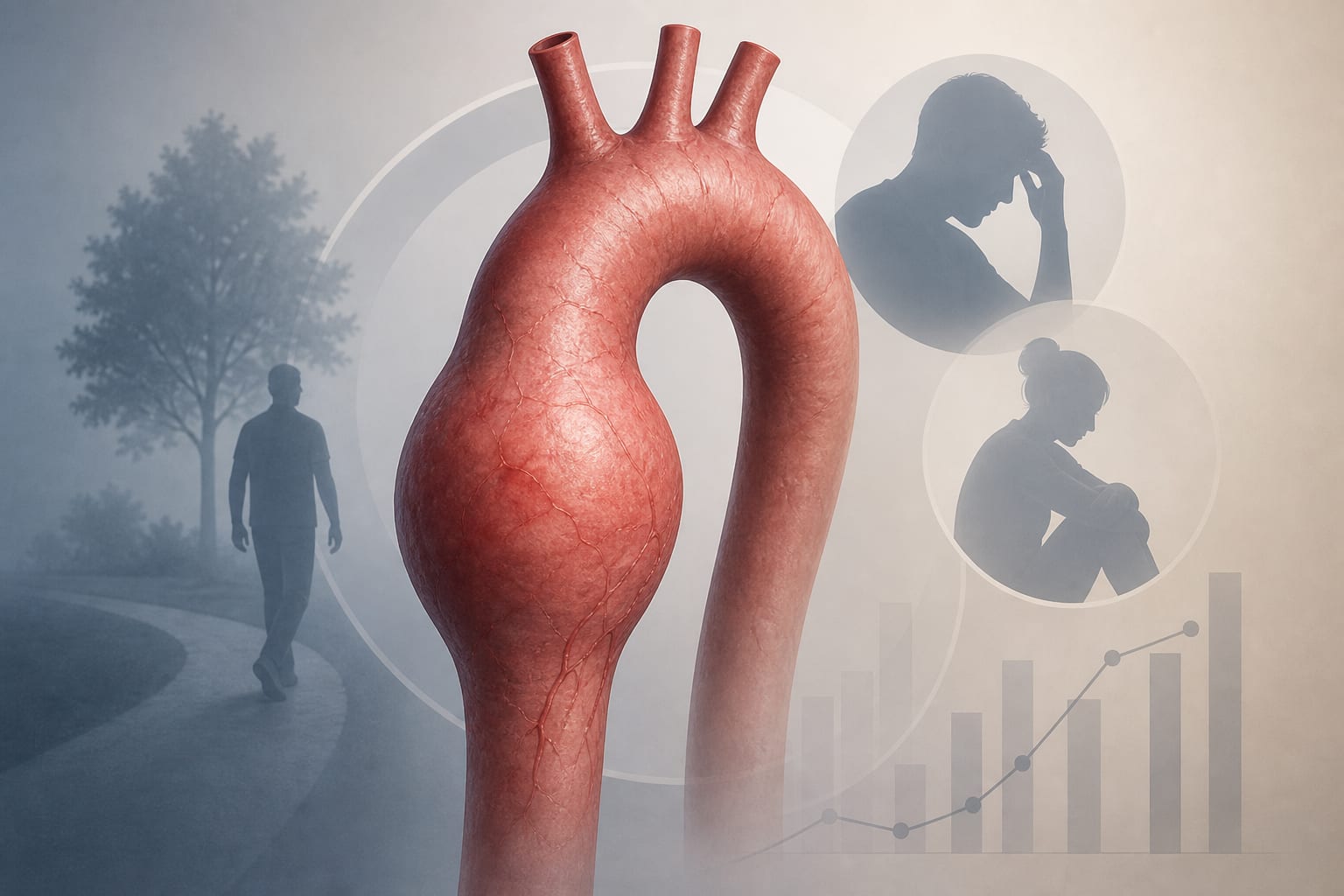
Quality of Life, Mental Health, and Exercise Levels in Individuals with Mild to Moderate Ascending Aortic Dilation: A Cross-Sectional Case-Control Analysis
Quality of Life, Mental Health, and Exercise Levels in Individuals with Mild to Moderate Ascending Aortic Dilation
Overview
This study investigates health-related quality of life (HRQoL), psychological status, and physical activity levels in patients with mild to moderate ascending aortic dilation.
Background
Ascending aortic dilation poses significant health risks, including potential aortic dissection and rupture, necessitating ongoing surveillance and management. While surgical outcomes for thoracic aneurysms have been studied, the HRQoL and psychological impacts on conservatively managed patients with mild to moderate dilation remain underexplored.
Data Highlights
No numerical data or trial data provided in the source material.
Key Findings
Patients with mild to moderate ascending aortic dilation report lower HRQoL compared to age- and sex-matched controls.
Psychological distress, including anxiety and depression, is prevalent among individuals with ascending aortic dilation.
Physical activity levels are affected by the condition.
Existing guidelines provide limited clarity on exercise restrictions for patients with mild to moderate dilation.
There is a relationship between cardiovascular disease and mental health.
Clinical Implications
Regular assessments of HRQoL and mental health may be beneficial in this patient population.
Conclusion
The study highlights the psychological and quality of life impacts of mild to moderate ascending aortic dilation.
by Fredrik Nilsson, Marcus Lindenberger, Sabina Borg, David Kylhammar, Petter Dyverfeldt, Filip Hammaréus, Lena Jonasson, Aleksandra Krzynska-Trzebiatowska, Lennart Nilsson, Chiara Trenti, Jan Engvall, Eva Swahn