Disease-specific data augmentation enhances deep learning classification of age-related macular degeneration, diabetic retinopathy, and glaucoma - Report - MDSpire
Conexiant’s news site is now MDSpire News. Learn more
Advertisement
Augmentation of Disease-Specific Data Improves Deep Learning Accuracy in Classifying Age-Related Macular Degeneration, Diabetic Retinopathy, and Glaucoma
Clinical Report: Augmentation of Disease-Specific Data Improves Deep Learning Accuracy
Overview
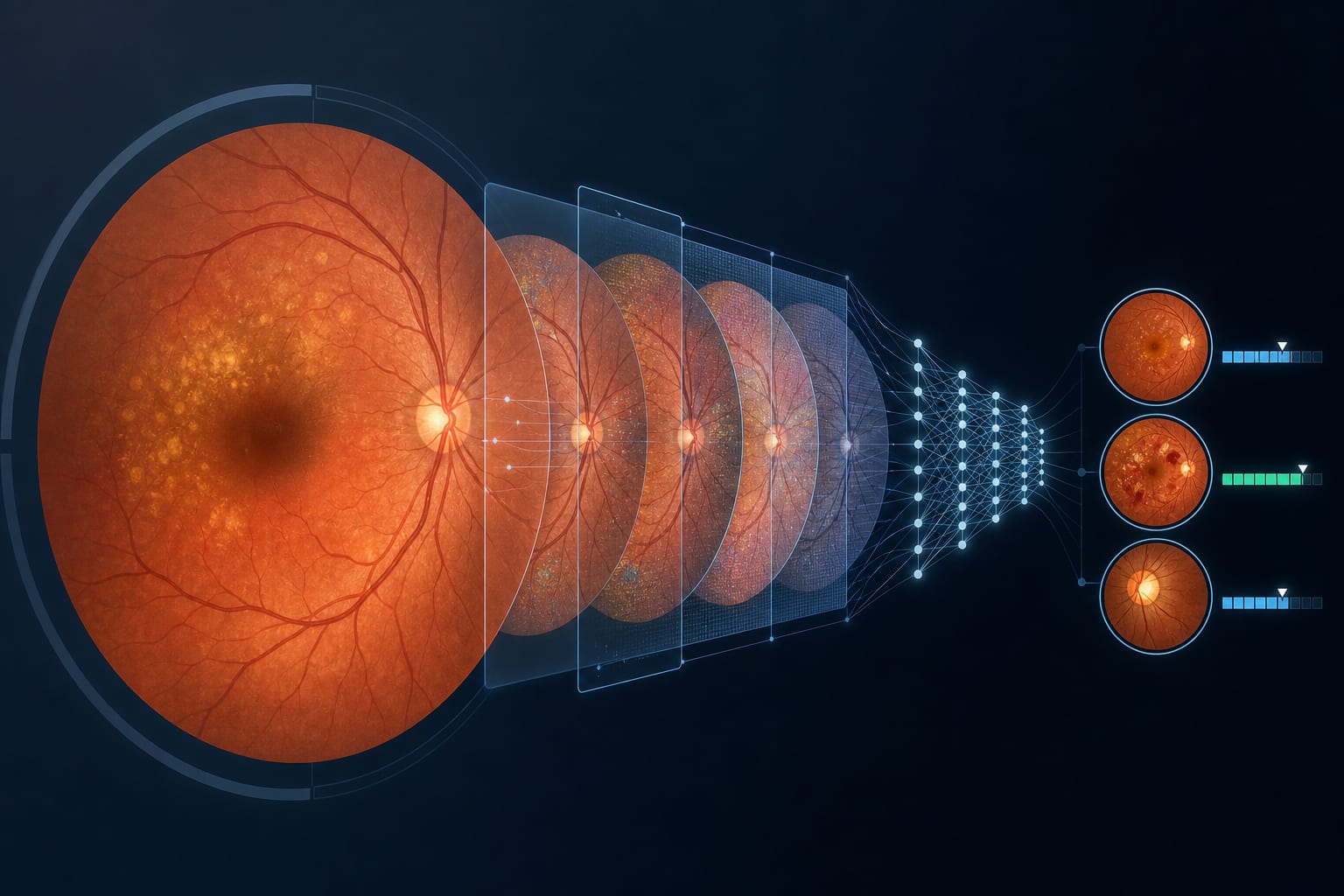
This study evaluates the impact of six data augmentation techniques on deep learning models for classifying age-related macular degeneration, diabetic retinopathy, and glaucoma.
Background
Glaucoma, age-related macular degeneration (AMD), and diabetic retinopathy (DR) are leading causes of irreversible blindness, affecting millions globally. The reliance on clinical expertise for interpreting retinal images can lead to inconsistencies and inefficiencies in diagnosis. The integration of deep learning models aims to automate and improve diagnostic accuracy, but their effectiveness is contingent upon the quality and diversity of training datasets.
Data Highlights
No numerical data provided in the source material.
Key Findings
Deep learning models can achieve diagnostic accuracy comparable to experienced clinicians.
Data augmentation techniques can prevent overfitting and improve model robustness.
Different retinal diseases exhibit distinct performance responses to various augmentation types.
Data scarcity remains a significant barrier to developing effective deep learning models.
Clinical Implications
The study highlights the importance of employing data augmentation techniques to enhance the performance of deep learning models in retinal disease classification.
Conclusion
Further research is needed to optimize data augmentation techniques for clinical application.