Clinical outcomes after single-level posterior lumbar interbody fusion in osteoporotic patients with or without paraspinal muscle atrophy: a retrospective study - Report - MDSpire
Advertisement
Clinical outcomes after single-level posterior lumbar interbody fusion in osteoporotic patients with or without paraspinal muscle atrophy: a retrospective study
Outcomes of Single-Level Posterior Lumbar Interbody Fusion in Osteoporotic Patients
Overview
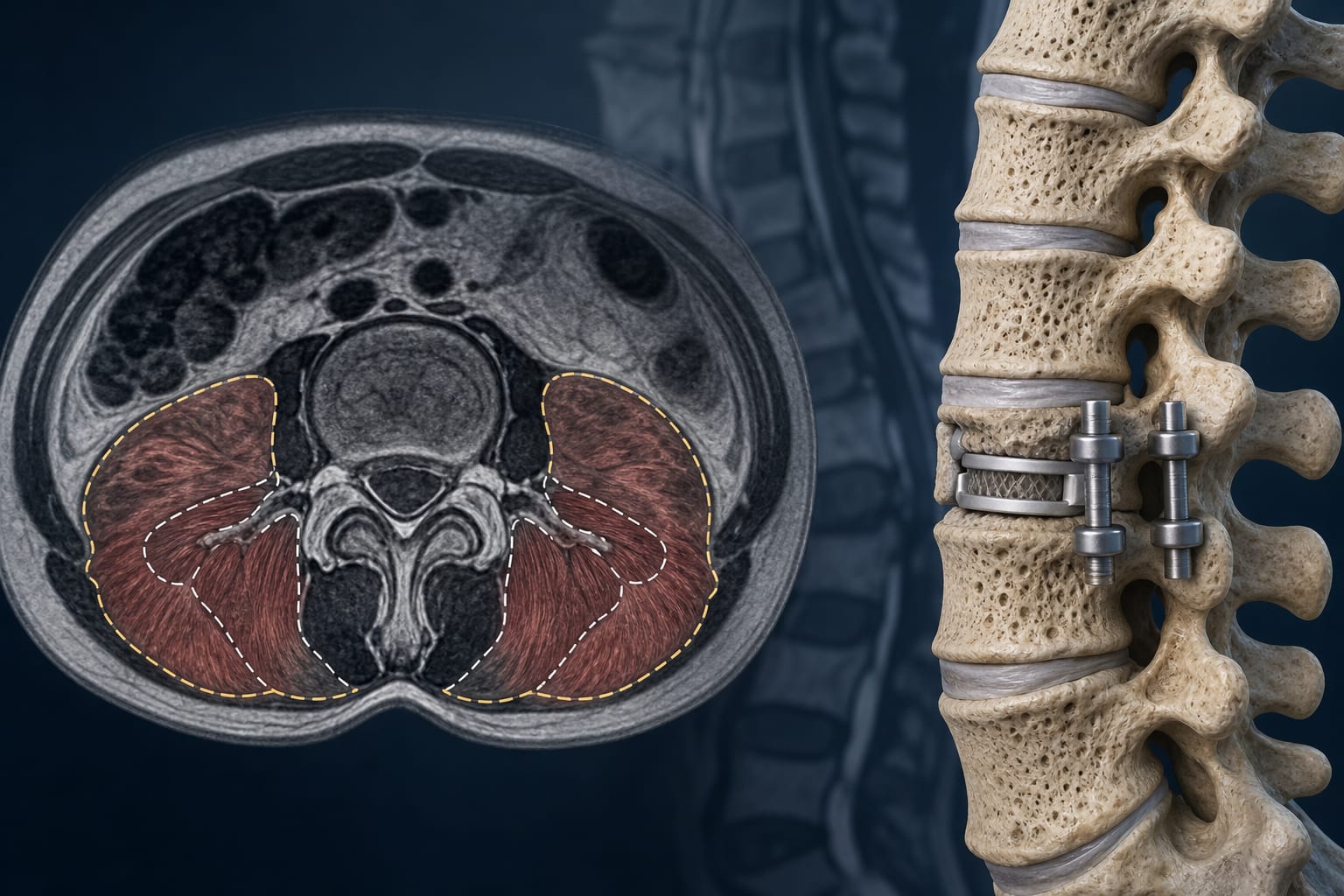
This study evaluates the impact of paraspinal muscle atrophy (PMA) on postoperative outcomes in osteoporotic patients undergoing posterior lumbar interbody fusion (PLIF) for lumbar disc herniation (LDH). Findings indicate that patients with concomitant PMA experience poorer recovery and worse functional outcomes compared to those without PMA.
Background
Lumbar disc herniation is a prevalent cause of low back pain and disability, particularly in aging populations. Osteoporosis can complicate surgical outcomes in patients undergoing PLIF due to impaired bone quality. Additionally, the role of paraspinal muscle condition, specifically atrophy, in influencing recovery post-surgery has gained attention, necessitating further investigation into its prognostic value.
Data Highlights
Group
FCSA
FI%
VAS Scores
ODI Improvement
SF-36 Bodily Pain
SF-36 Physical Function
OP
Higher
Lower
Lower
Greater
Higher
Higher
OP + PMA
Lower
Higher
Higher
Smaller
Lower
Lower
Key Findings
The OP + PMA group showed significantly greater paraspinal muscle degeneration.
Patients with PMA had persistently higher VAS scores throughout follow-up.
Worse ODI scores were observed at 6 and 12 months in the OP + PMA group.
Improvements in SF-36 scores were significantly smaller in the OP + PMA group compared to the OP group.
Both groups improved post-surgery, but the OP + PMA group had poorer functional prognosis.
Clinical Implications
The presence of paraspinal muscle atrophy in osteoporotic patients undergoing PLIF may indicate a need for tailored postoperative care and rehabilitation strategies. Clinicians should consider assessing muscle quality as part of preoperative evaluations to better predict recovery outcomes.
Conclusion
Concomitant paraspinal muscle atrophy is associated with poorer postoperative recovery in osteoporotic patients undergoing PLIF, highlighting the importance of evaluating both bone and muscle health in surgical planning.
Patients with preoperative vitamin D deficiency had higher postoperative pain scores and opioid use after mastectomy, including more than triple the odds of moderate to severe pain within 24 hours of surgery.