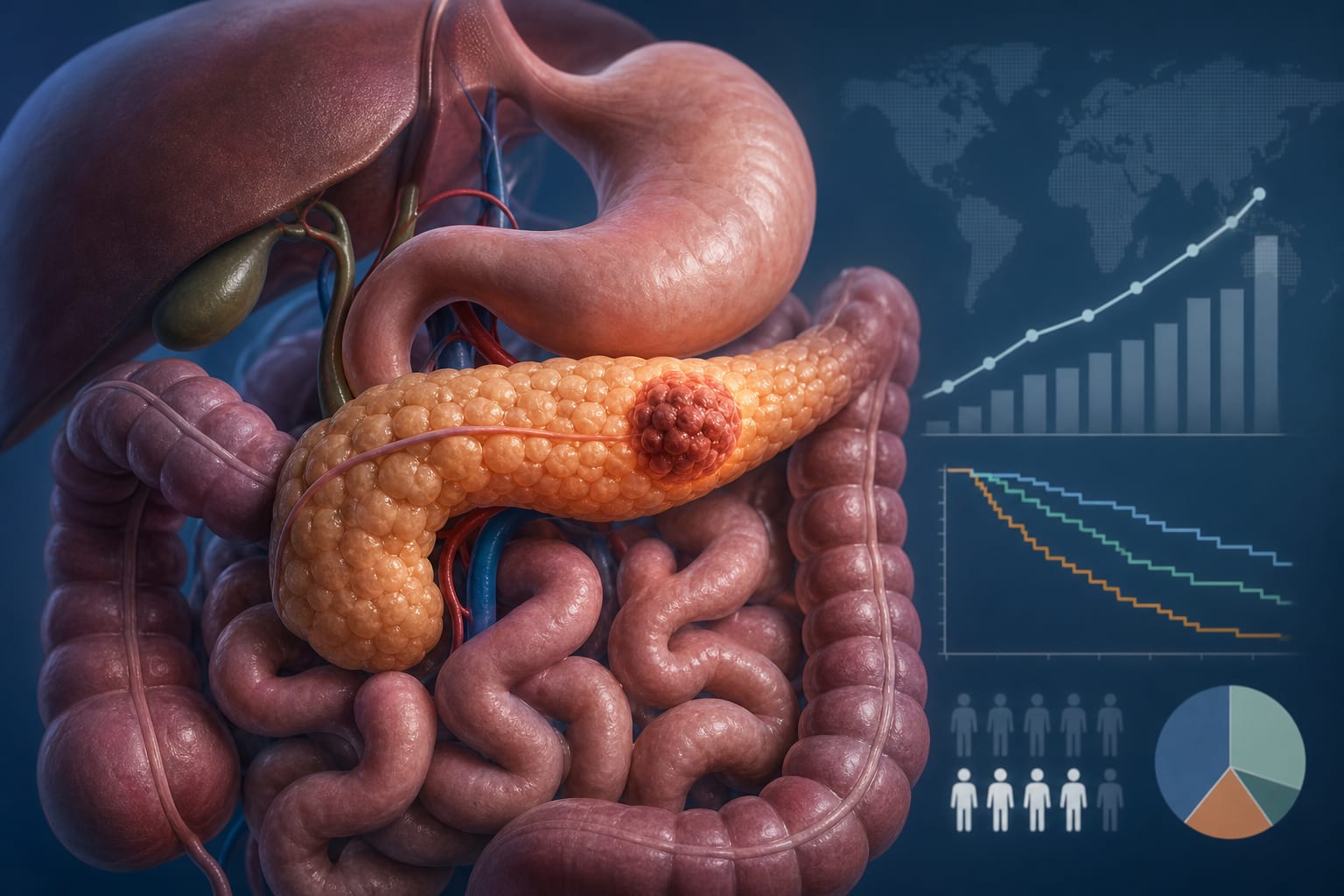
Clinical Report: Trends in the Incidence and Prognosis of GEP-NETs
Overview
This report examines the rising incidence and survival trends of gastro-entero-pancreatic neuroendocrine tumors (GEP-NENs) over the past two decades in Ontario, Canada. The study utilizes linked administrative health care datasets to provide updated epidemiological data critical for clinical practice and health system planning.
Background
Neuroendocrine neoplasms (NENs) are a diverse group of tumors that have shown a significant increase in incidence, particularly GEP-NENs, which are now among the most prevalent gastrointestinal malignancies. Advances in diagnostic and therapeutic approaches have improved detection and management of these tumors, highlighting the need for ongoing assessment of their epidemiology.
Data Highlights
No specific numerical data provided in the source material.
Key Findings
GEP-NENs have become one of the most prevalent gastrointestinal malignant neoplasms.
There has been a reported rise in the incidence of NENs since the early 2000s.
Improvements in imaging and histopathologic characterization have enhanced detection and prognostication.
Systemic therapies and surgical techniques have evolved, impacting care delivery for GEP-NENs.
Understanding trends in incidence and survival is essential for informing clinical practice and health system planning.
Clinical Implications
The findings emphasize the importance of updated epidemiological data in managing GEP-NENs and highlight the need for clinicians to stay informed about evolving diagnostic and treatment strategies. Enhanced awareness and access to care are crucial for improving patient outcomes.
Conclusion
The study underscores the necessity of continuous evaluation of GEP-NEN incidence and survival trends to guide clinical practice and health policy effectively.