Clinical Report: Identifying Risk Factors and Outcomes of Cardiac Rupture
Overview
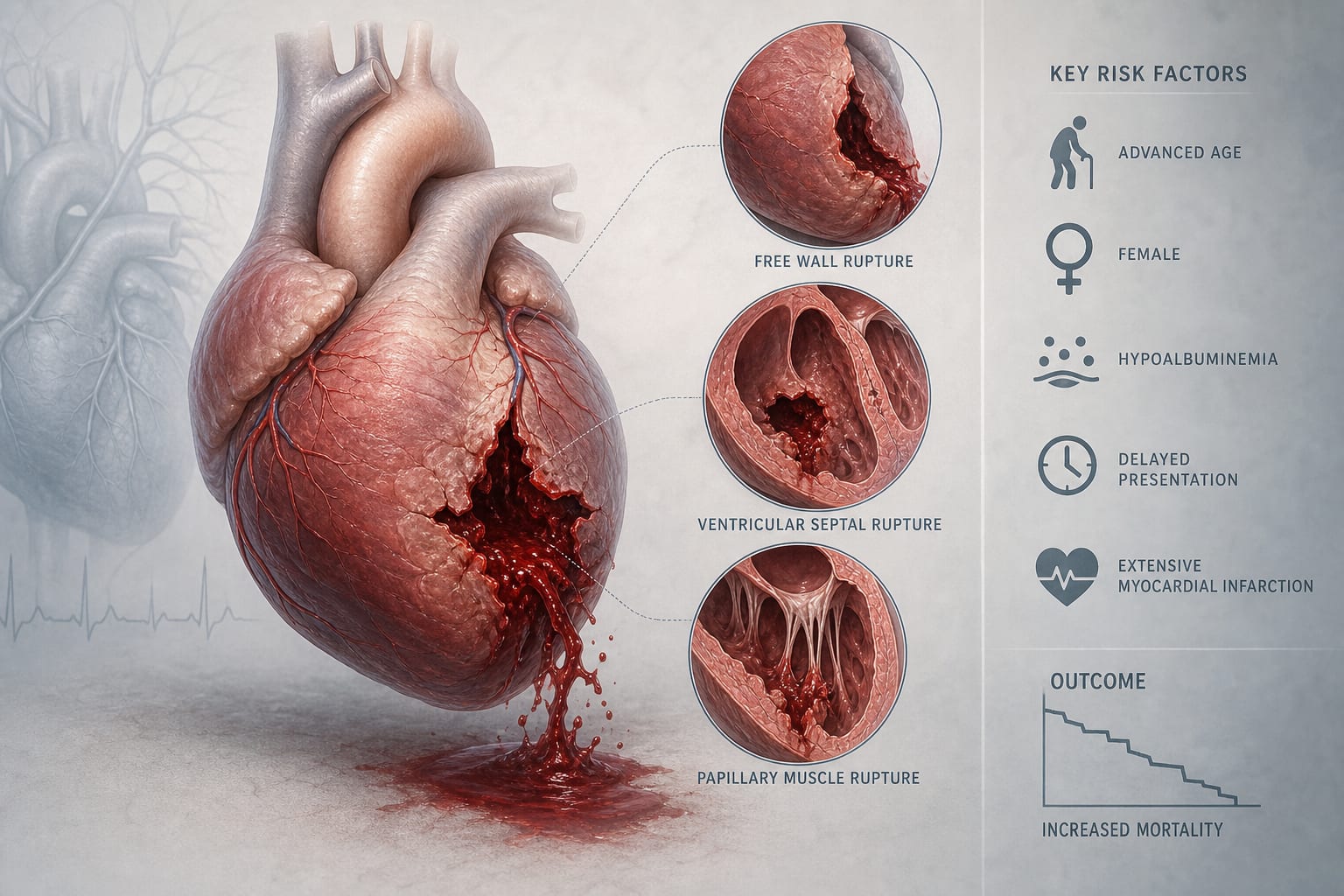
This study identifies key risk factors associated with cardiac rupture (CR) following acute myocardial infarction (AMI) and highlights significant differences in outcomes between CR subtypes. The findings underscore the importance of early identification and intervention in high-risk patients.
Background
Cardiac rupture is a severe complication of AMI, with mortality rates exceeding 50%. Understanding the risk factors and clinical characteristics associated with CR is crucial for improving patient outcomes, especially in settings with delayed presentations. This study fills a gap in the literature by providing data from a central Chinese population and comparing different CR subtypes.
Data Highlights
Characteristic
CR Patients (n=71)
AMI Controls (n=213)
Age (years)
69.6 ± 8.5
59.5 ± 11.7
Female (%)
40.8%
12.2%
Onset-to-door time (hours)
48 (median)
5 (median)
FWR Mortality (%)
97.4%
-
VSR Mortality (%)
57.1%
-
Key Findings
Absence of emergency PCI was associated with an OR of 8.23 for CR.
Killip class III–IV had an OR of 6.82 for CR risk.
Female sex was linked to a 3.41-fold increased risk of CR.
Lower serum albumin levels were associated with CR (OR = 0.84 per g/L).
FWR had a significantly higher mortality rate compared to VSR (97.4% vs. 57.1%).
Surgical repair was associated with lower in-hospital mortality (OR = 0.06).
Clinical Implications
Healthcare providers should prioritize early identification of patients at high risk for cardiac rupture, particularly those who are older, female, or present with higher Killip class. The findings support the need for prompt intervention, including surgical repair, to improve survival rates in affected patients.
Conclusion
The study highlights critical risk factors for cardiac rupture following AMI and emphasizes the importance of timely intervention. Understanding these factors can aid in better management and potentially reduce mortality associated with this complication.