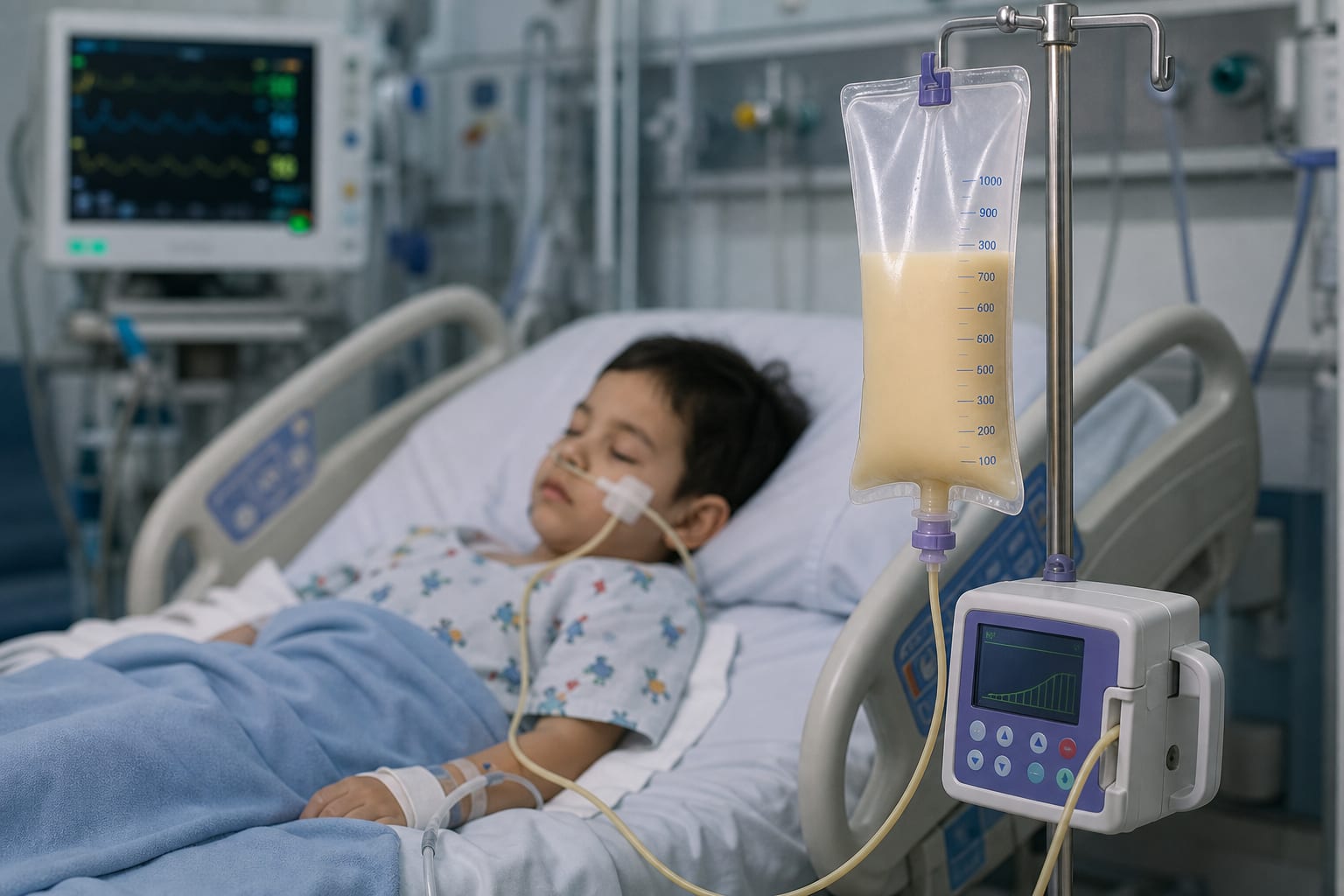
This systematic review and meta-analysis evaluated the impact of structured nutritional protocols on caloric adequacy in critically ill pediatric patients.
Background
Malnutrition is prevalent among critically ill children in the Pediatric Intensive Care Unit (PICU), leading to adverse outcomes such as prolonged mechanical ventilation and increased mortality. Despite guidelines recommending early enteral nutrition, actual caloric delivery often falls short of targets. Structured nutritional protocols have been proposed to address these deficiencies.
Data Highlights
Outcome
Pooled Mean Difference
P-Value
Caloric Adequacy
+21.98%
< 0.001
Key Findings
Nutritional protocols improved caloric adequacy by a pooled mean difference of +21.98%.
Both nurse-led and non-nurse-led protocols showed similar improvements in caloric delivery.
Study design accounted for 93.6% of the heterogeneity observed in the results.
Caloric deficits during PICU admission correlate with adverse outcomes, including increased mortality.
Clinical Implications
Implementing structured nutritional protocols in PICUs can significantly enhance caloric delivery and potentially improve patient outcomes. Clinicians should consider adopting these evidence-based strategies to address malnutrition in critically ill pediatric patients.
Conclusion
The study supports the adoption of structured nutritional protocols to improve caloric adequacy in critically ill children.
Related Resources & Content
Intensive Care Medicine, Research Priorities in Nutrition and Metabolism for Intensive Care Medicine, 2017 -- https://link.springer.com/article/10.1007/s00134-017-4711-6
Intensive Care Medicine, Nutritional Management in the Intensive Care Setting: Navigating the Acute Phase and Beyond, 2024 -- https://link.springer.com/article/10.1007/s00134-024-07458-9
Intensive Care Medicine, Nutritional Guidance for Pediatric Patients in Critical Care: Position Statement and Recommendations from the European Society of Pediatric and Neonatal Intensive Care (ESPNIC), 2019 -- https://link.springer.com/article/10.1007/s00134-019-05922-5
Critical Care, Hypophosphatemia as a biomarker of metabolic intolerance to enhanced nutrition in the PICU, 2026 -- https://link.springer.com/article/10.1186/s13054-026-05844-x
SCCM, Guidelines for the Provision and Assessment of Nutrition Support Therapy in the Pediatric Critically Ill Patient -- https://www.sccm.org/clinical-resources/guidelines/guidelines/guidelines-for-the-provision-and-assessment-of-nut
Health-related quality of life of children and their parents 2 years after critical illness, 2020 -- https://pmc.ncbi.nlm.nih.gov/articles/PMC7296688/?utm_source=openai
Frontiers, Nutrition protocols improve caloric adequacy in critically Ill children: a systematic review and meta-analysis, 2026 -- https://www.frontiersin.org/journals/pediatrics/articles/10.3389/fped.2026.1889905/abstract