Preoperative electrolyte-based metabolic biomarkers for prognostic assessment in gastric cancer: a multicenter study - Report - MDSpire

Preoperative electrolyte-based metabolic biomarkers for prognostic assessment in gastric cancer: a multicenter study

  • By

  • Weihao Kong

  • Jiawen Wang

  • Xuqin Wu

  • Kangjie Zhang

  • Xingyu Wang

  • Jianlin Zhang

  • June 11, 2026

  • 0 min

Share

Clinical Report: Electrolyte Metabolic Biomarkers for Prognostic Evaluation in Gastric Cancer

Overview

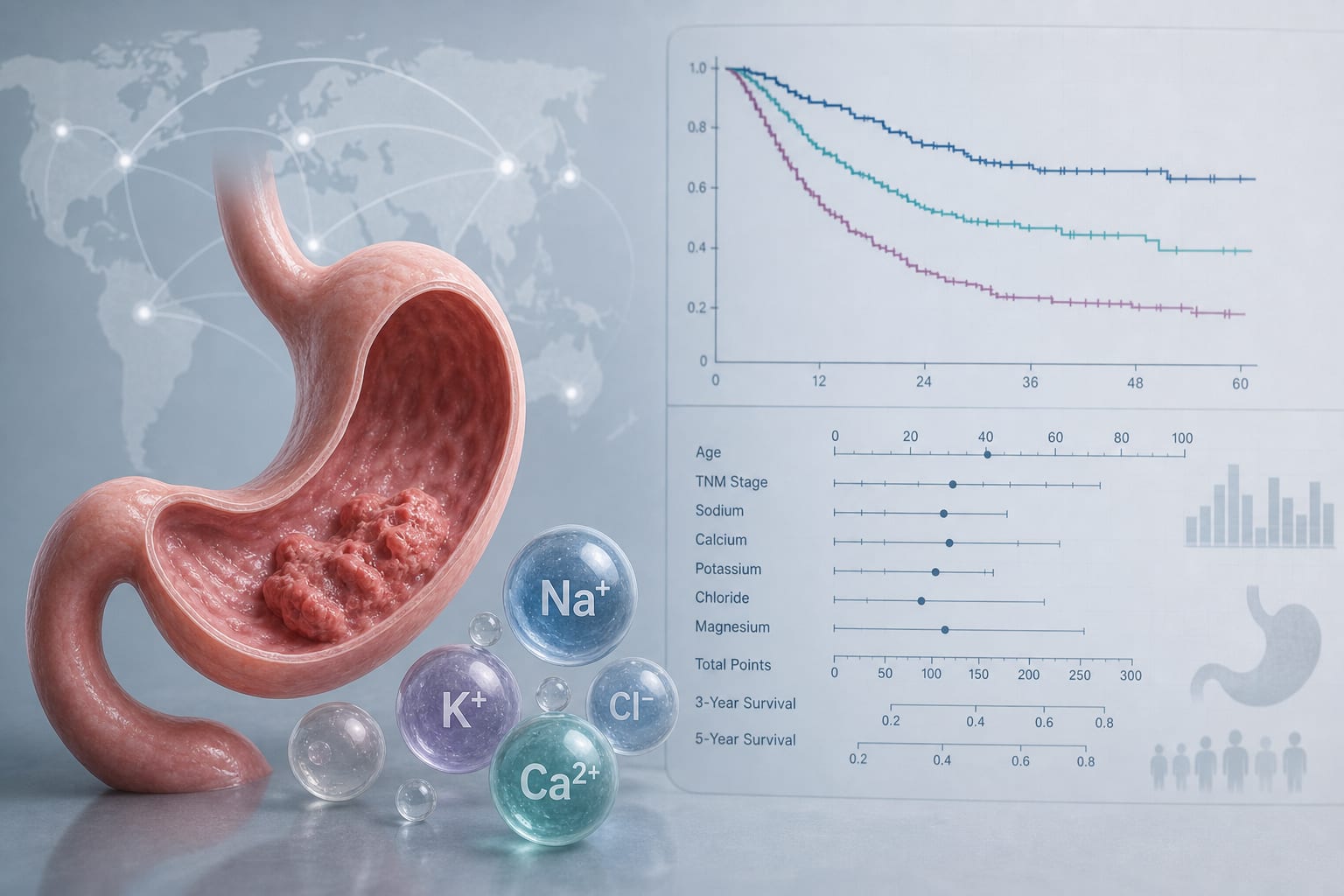
This study identifies sodium and calcium as independent prognostic factors for overall survival in gastric cancer, leading to the development of an electrolyte-based metabolic biomarker score. The score, while limited in predictive ability alone, enhances risk stratification when combined with clinicopathological variables.

Background

Gastric cancer is a leading cause of cancer-related mortality, with significant variability in patient outcomes. Current prognostic evaluations primarily rely on clinicopathological factors, which may not fully capture the complexity of disease progression. The identification of easily accessible biomarkers, such as serum electrolytes, could improve prognostic stratification and patient management.

Data Highlights

ElectrolytePrognostic Association
SodiumHigher levels associated with better survival
CalciumHigher levels associated with better survival

Key Findings

  • Sodium and calcium were identified as independent prognostic factors for overall survival.
  • A high Electrolyte Score correlated with worse overall survival in both training (P < 0.001) and validation cohorts (P = 0.004).
  • The Electrolyte Score alone had limited discriminatory ability but effectively stratified patients into distinct prognostic groups.
  • Integration of the Electrolyte Score with age, TNM stage, and histological differentiation improved prognostic prediction.
  • This study emphasizes the potential clinical utility of electrolyte-based scores in guiding patient management.

Clinical Implications

Clinicians should consider the incorporation of serum electrolyte levels, specifically sodium and calcium, into routine assessments for gastric cancer patients. The Electrolyte Score can serve as a complementary tool to enhance prognostic evaluations and inform treatment decisions.

Conclusion

The development of an electrolyte-based prognostic score represents a promising advancement in the management of gastric cancer, offering a practical approach to improve individualized patient care.
Related Resources & Content

  1. Gastric Cancer — Genomic Analysis and Molecular Characterization of Somatic Copy Number Variations in Gastric Intramucosal Neoplasias According to Microsatellite Status
  2. Journal of Gastrointestinal Surgery — Clinical Implications of Serum Inflammatory Biomarkers in Gastric Cancer Prognosis
  3. Gastric Cancer — Evaluating the Prognostic Significance of Epidermal Growth Factor Receptors in Gastric Cancer: A Survival Analysis Utilizing a Weibull Model for Long-Term Survivors
  4. Gastric Cancer — Presence of CD44+ cytokeratin-positive tumor cells in blood and bone marrow correlates with unfavorable outcomes in gastric cancer patients
  5. Immunotherapy and Targeted Therapy for Advanced Gastroesophageal Cancer: ASCO Living Guideline | ASCO Publications
  6. Nivolumab plus chemotherapy as first-line treatment for advanced gastric, gastroesophageal junction, and esophageal adenocarcinoma: 5-year follow-up results from CheckMate 649
  7. Zolbetuximab plus mFOLFOX6 in patients with CLDN18.2-positive, HER2-negative, untreated, locally advanced unresectable or metastatic gastric or gastro-oesophageal junction adenocarcinoma (SPOTLIGHT)
  8. Immunotherapy and Targeted Therapy for Advanced Gastroesophageal Cancer: ASCO Living Guideline | ASCO Publications
  9. Tislelizumab plus chemotherapy versus placebo plus chemotherapy as first line treatment for advanced gastric or gastro-oesophageal junction adenocarcinoma: RATIONALE-305 randomised, double blind, phase 3 trial | The BMJ
  10. Prognostic value of preoperative nutritional status in patients with gastric cancer undergoing radical gastrectomy: a comprehensive meta-analysis and multidimensional risk assessment - ScienceDirect
  11. Preoperative serum magnesium level as a prognostic and predictive biomarker in locally advanced gastric cancer patients receiving neoadjuvant immunochemotherapy - PMC
  12. Full article: Serum sodium and cancer: an underrated prognostic and predictive biomarker?
  13. TYPE Review

Original Source(s)

Related Content