Clinical Report: AI-based Framework for Retinal Vessel Segmentation
Overview
This study presents an AI-driven saliency-guided boundary refinement framework (SGB-Net) for retinal vessel segmentation, achieving high Dice scores and AUC values across multiple datasets. The model effectively enhances vessel edge representation and reduces false positives, addressing key challenges in retinal imaging.
Background
Accurate segmentation of retinal blood vessels is crucial for diagnosing various systemic diseases, including diabetes and hypertension. Traditional methods often struggle with low contrast and complex vessel geometries, leading to suboptimal segmentation outcomes. The development of advanced AI techniques, such as the proposed SGB-Net, aims to improve diagnostic accuracy and patient outcomes in ophthalmology.
Data Highlights
Dataset
Dice Score
AUC
DRIVE
98.30%
0.9899
STARE
78.40%
N/A
CHASE_DB1
84.60%
N/A
Key Findings
The SGB-Net achieved Dice scores of 98.30%, 78.40%, and 84.60% on the DRIVE, STARE, and CHASE_DB1 datasets, respectively.
AUC values reached up to 0.9899, indicating high model performance.
The framework effectively preserves thin vessels and enhances boundary continuity.
It reduces false positives in complex imaging conditions compared to existing methods.
The integration of scale-adaptive and attention enhancement modules improves feature representation.
Clinical Implications
The SGB-Net framework offers a robust solution for retinal vessel segmentation, which is essential for early detection of systemic diseases. Its ability to maintain vessel topology and clarity under challenging conditions can enhance automated retinal analysis and improve clinical decision-making.
Conclusion
The proposed AI-driven framework demonstrates significant advancements in retinal vessel segmentation, addressing critical limitations of traditional methods. Its application could lead to improved diagnostic capabilities in ophthalmology and digital pathology.
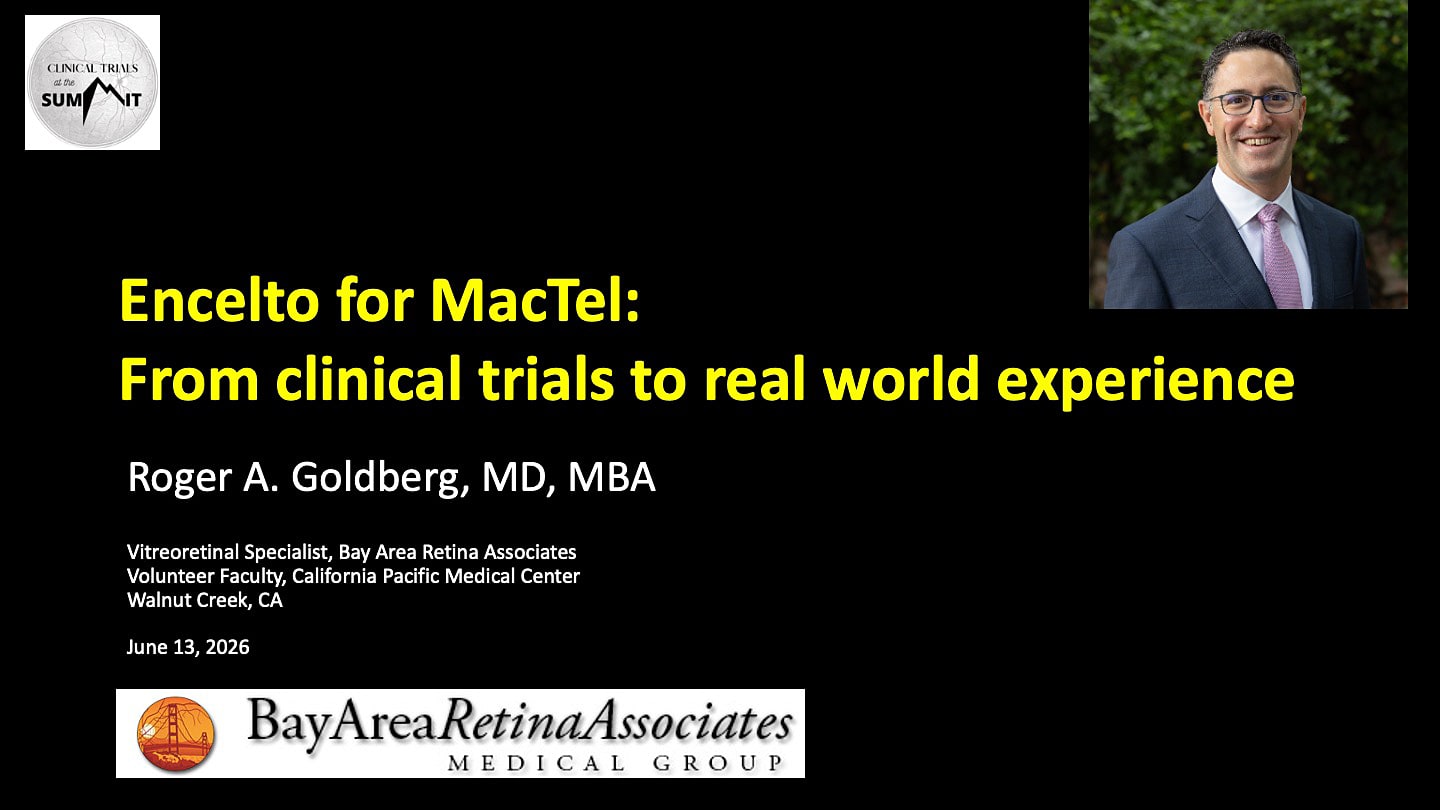
Roger A. Goldberg, MD, MBA, shared early postapproval experience with Encelto, including an evolving surgical technique, at Clinical Trials at the Summit.
Analysis of more than 61,000 patients found higher odds of elevated loneliness scores among those reporting blindness and those with diabetic retinopathy, but not among patients with glaucoma or age-related macular degeneration.
As his term comes to a close, Geoffrey G. Emerson, MD, PhD, FASRS, discusses scientific advances, physician advocacy, and the collaborative leadership behind ASRS.