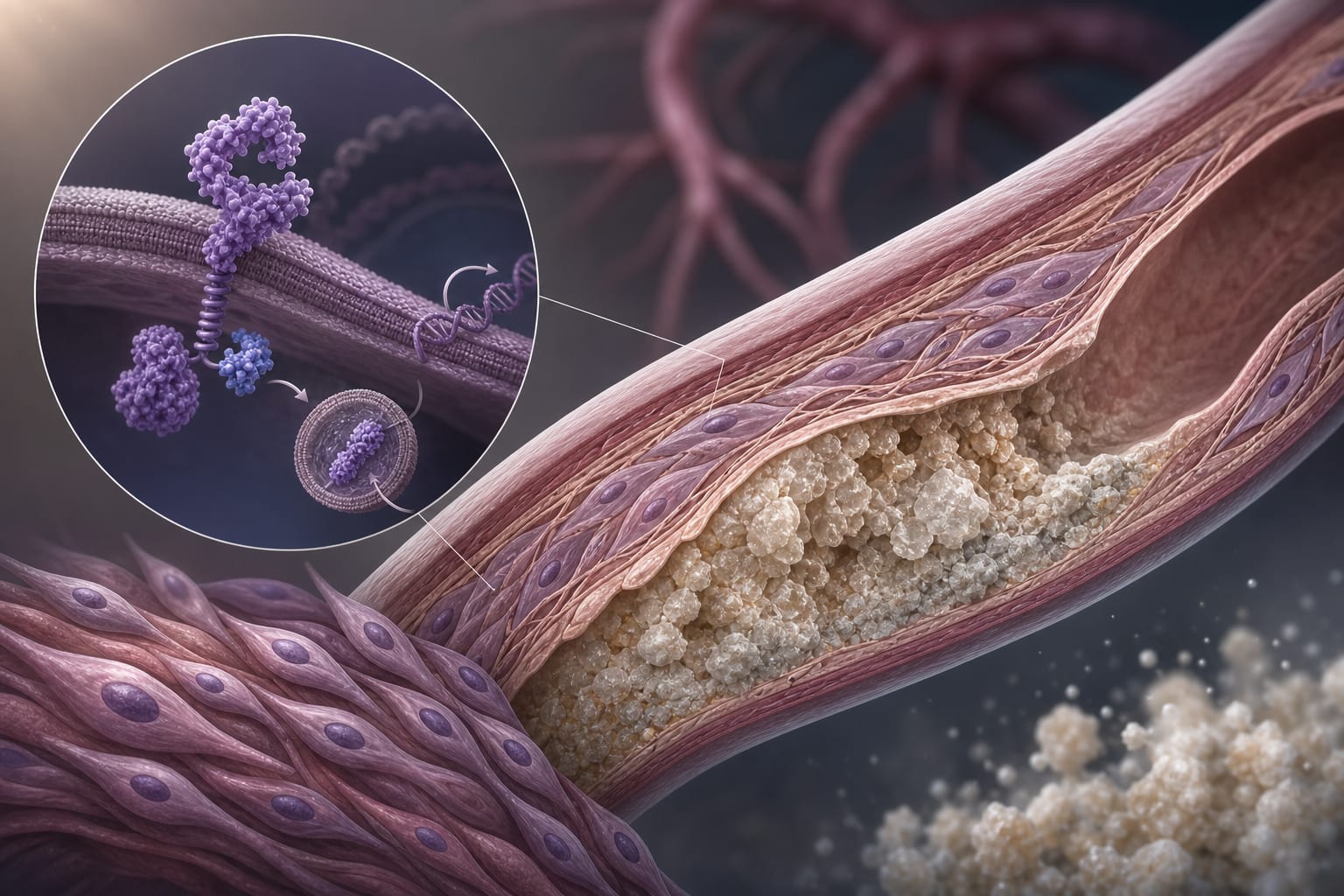
Clinical Report: Investigating Sortilin's Involvement in Cardiovascular Calcification
Overview
This report highlights the role of sortilin as a critical mediator in cardiovascular calcification, linking metabolic risk factors to pro-calcific cellular responses. The findings suggest that sortilin may serve as a potential therapeutic target in managing cardiovascular calcification.
Background
Cardiovascular calcification is a significant contributor to morbidity and mortality in patients with various risk factors, including diabetes and chronic kidney disease. Understanding the mechanisms behind this process is crucial for developing effective therapeutic strategies. Sortilin, a multi-ligand receptor, has emerged as a key player in linking metabolic disturbances to calcification pathways.
Data Highlights
No numerical data or trial data presented in the article.
Key Findings
Sortilin is linked to cardiovascular calcification through its role in osteogenic differentiation and inflammation.
Elevated plasma sortilin levels correlate with hypertension and subclinical carotid atherosclerosis.
Sortilin integrates multiple risk factors, acting as a signaling hub for pro-calcific responses.
Genetic studies associate the SORT1 locus with coronary artery calcification and myocardial infarction.
Sortilin's involvement in lipid metabolism and cytokine release influences atherogenesis.
Clinical Implications
Monitoring sortilin levels may provide insights into cardiovascular risk, particularly in hypertensive patients. Targeting sortilin could represent a novel therapeutic approach to mitigate cardiovascular calcification and its associated complications.
Conclusion
Sortilin plays a pivotal role in the regulation of cardiovascular calcification, linking metabolic risk factors to cellular responses. Further research is needed to explore its potential as a therapeutic target.