Clinical outcomes and safety of efgartigimod in Guillain–Barré syndrome: a retrospective observation study - Report - MDSpire

Clinical outcomes and safety of efgartigimod in Guillain–Barré syndrome: a retrospective observation study

  • By

  • Yongli Tao

  • Ting Yang

  • Chenyang Jiang Jiang

  • Xue Wang

  • Liangliang Gu

  • Rui Zhang

  • June 19, 2026

  • 0 min

Share

Clinical Report: Evaluation of Efgartigimod in Guillain–Barré Syndrome

Overview

This retrospective study evaluates the clinical efficacy and safety of efgartigimod in patients with Guillain–Barré syndrome (GBS).

Background

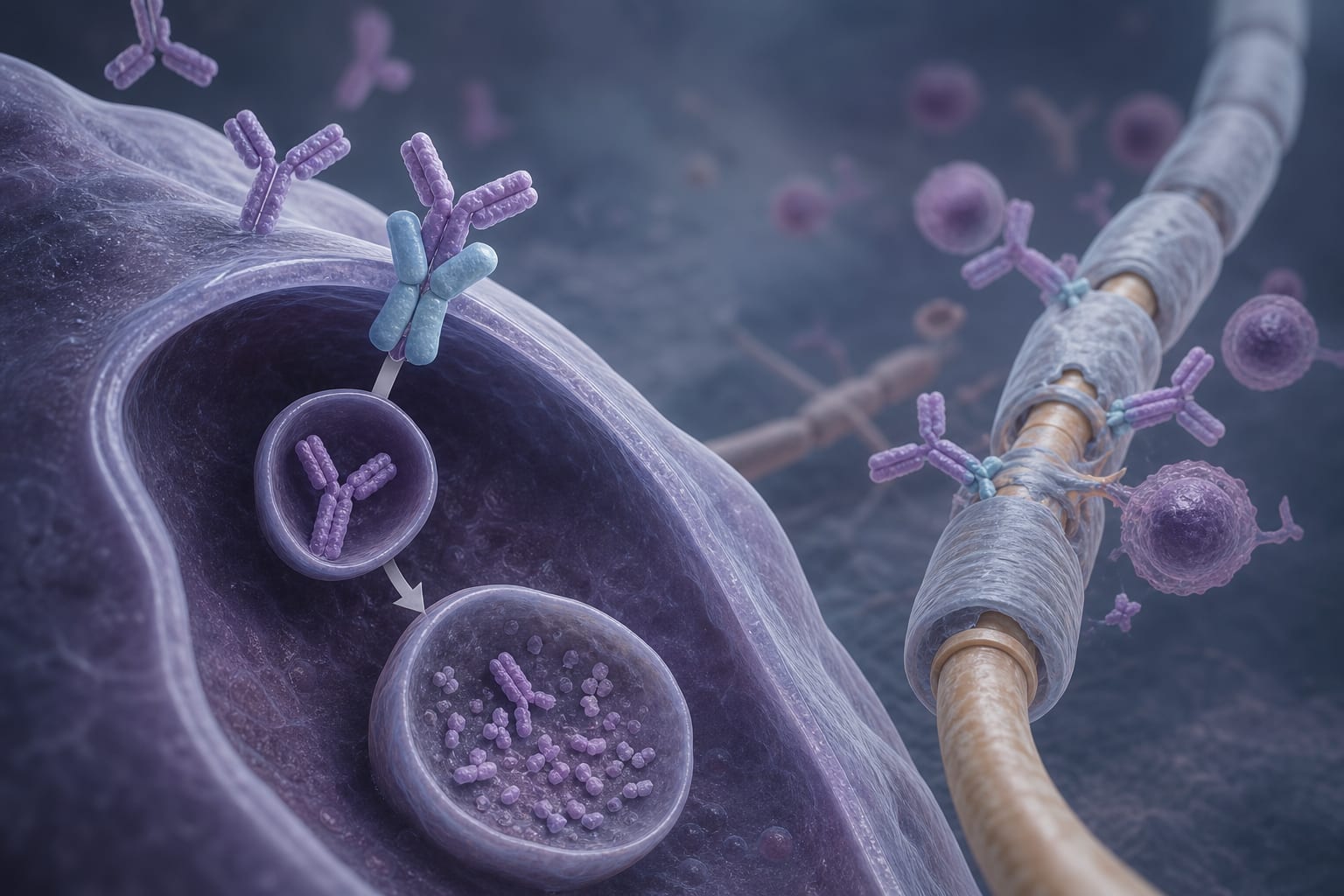
Guillain–Barré syndrome (GBS) is a severe autoimmune neuropathy with limited treatment options, necessitating the exploration of new therapies. Efgartigimod, an IgG antibody Fc fragment, may offer a novel approach by enhancing IgG degradation. This study aims to assess its effectiveness and safety in GBS patients.

Data Highlights

GroupGood Improvement at Week 2Good Improvement at Final VisitTEAEs
Efgartigimod37.5%81.3%18.8%
IVIg0%40.0%50.0%
ISE--43.8%

Key Findings

  • 52 patients were enrolled, receiving either IVIg, efgartigimod, or IVIg sequential efgartigimod (ISE).
  • The efgartigimod group showed a significantly higher rate of good improvement at week 2 (37.5% vs. 0%, p<0.01).
  • At the final visit, 81.3% of efgartigimod patients showed good improvement compared to 40.0% in the IVIg group (p=0.02).
  • The incidence of treatment-related adverse events was lower in the efgartigimod group (18.8%) compared to IVIg (50.0%) and ISE (43.8%).
  • The mean time to achieve GBS-DS ≤1 was shorter in the efgartigimod group (2.6 weeks) compared to IVIg (3.1 weeks).

Clinical Implications

Efgartigimod may represent a promising therapeutic option for GBS patients, showing improved efficacy and safety compared to traditional IVIg treatment. Further large-scale studies are needed to confirm these findings.

Conclusion

The study indicates the need for further research to establish the efficacy and safety of efgartigimod in GBS patients.
Related Resources & Content

  1. Author(s)/Org, Source, Year -- Title
  2. Frontiers in Immunology — Efficacy and safety of efgartigimod as an add-on therapy in patients with NMOSD and MOGAD at the acute attack phase
  3. Frontiers in Neurology — Efgartigimod for generalized myasthenia gravis: a comprehensive review of clinical evidence and future perspectives
  4. Frontiers in Immunology — Case Report: Anti-LGI1 encephalitis during FcRn inhibition with efgartigimod for myasthenia gravis: implications for the limitations of IgG recycling blockade
  5. Frontiers in Neurology — Acupuncture is independently associated with improved recovery in Guillain-Barré Syndrome: A Prospective Observational Study
  6. European Academy of Neurology/Peripheral Nerve Society Guideline on diagnosis and treatment of Guillain-Barré syndrome
  7. Comparison of intravenous efgartigimod and intravenous immunoglobulin in patients with Guillain–Barré syndrome
  8. Diagnosis and Treatment of Guillain–Barré Syndrome
  9. Second intravenous immunoglobulin dose in patients with Guillain-Barré syndrome with poor prognosis (SID-GBS): a double-blind, randomised, placebo-controlled trial - PubMed
  10. JCI - Neonatal Fc receptor antagonist efgartigimod safely and sustainably reduces IgGs in humans
  11. Frontiers | Efgartigimod as a potential alternative to intravenous immunoglobulin in Guillain-Barré syndrome: a retrospective study
  12. Comparison of intravenous efgartigimod and intravenous immunoglobulin in patients with Guillain–Barré syndrome - PMC
  13. Efgartigimod for treating Guillain-Barré syndrome with poor response to intravenous immunoglobulin: a case report | BMC Neurology | Full Text
  14. Efgartigimod for the treatment of Guillain-Barré syndrome with concurrent posterior reversible encephalopathy syndrome - PubMed
  15. Efgartigimod for Guillain–Barré syndrome: a retrospective analysis of efficacy and safety - PMC
  16. Study Details | NCT05701189 | Evaluating Efgartigimod in Patients With Guillain-Barré Syndrome | ClinicalTrials.gov

Original Source(s)

Related Content