Natural History and Impact of Thoracic Endovascular Stent-Grafting on Type B Intramural Hematoma: A World of Caution - Report - MDSpire

Natural History and Impact of Thoracic Endovascular Stent-Grafting on Type B Intramural Hematoma: A World of Caution

  • By

  • Charles Laurin

  • Philippe Chassé

  • William Santoire

  • Jean Porterie

  • Rim Abdelli

  • François Dagenais

  • June 28, 2026

  • 0 min

Share

Clinical Report: The Evolution and Effects of Thoracic Endovascular Stent-Grafting

Background

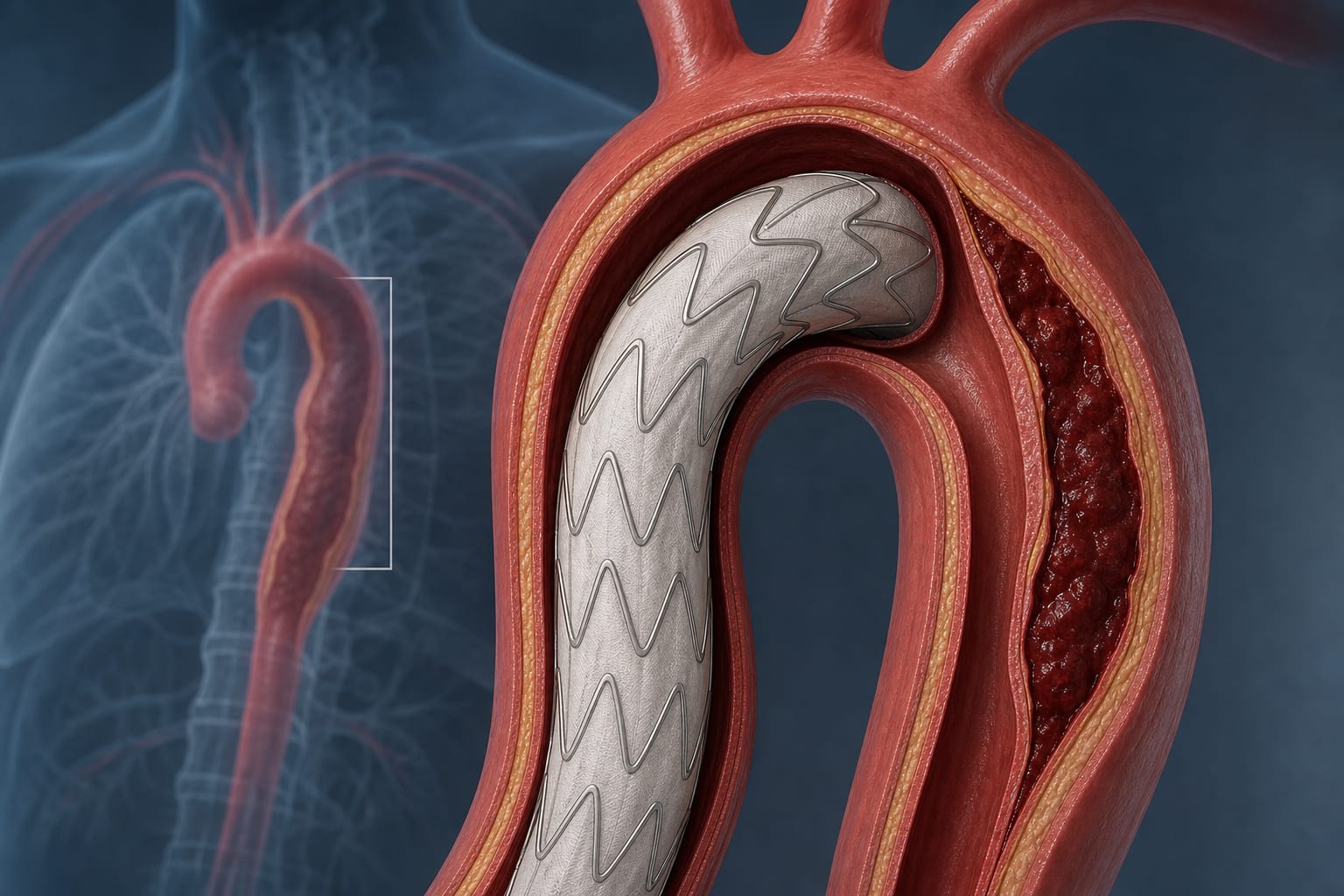
Acute aortic syndrome encompasses conditions such as aortic dissection, intramural hematoma, and penetrating aortic ulcer. The management of uncomplicated type B IMH typically involves optimal medical therapy, but TEVAR is increasingly utilized despite variable mid- to long-term outcomes. Understanding the natural history of IMH and the implications of TEVAR is crucial for improving patient care.

Data Highlights

No numerical data provided in the source material.

Key Findings

  • TEVAR may improve aortic remodeling and reduce aortic-related death compared to medical therapy alone.
  • Patients with type B IMH without focal intimal disruption (FID) were included in the study.
  • Complications from TEVAR include retrograde aortic dissection, endoleaks, and stent-induced entry tears.
  • Patient selection for TEVAR versus continued medical management remains under investigation.
  • Follow-up imaging is essential for monitoring potential progression of IMH.

Clinical Implications

Clinicians should carefully evaluate patients with type B IMH for TEVAR, considering the risks of complications. Ongoing surveillance and assessment of patient response to medical therapy are critical in managing these patients effectively.

Conclusion

The study underscores the complexity of managing type B IMH and the need for a tailored approach to treatment, balancing the benefits of TEVAR against its potential risks.

Related Resources & Content

  1. Management of Acute Traumatic Aortic Injuries Using TEVAR: A Retrospective Study of 19 Cases from a Level-1 Trauma Center
  2. Outcomes of Thoracic Endovascular Aortic Repair with Coverage of the Left Subclavian Artery Without Preventive Revascularization: Early and Midterm Findings
  3. Surgical Endoscopy — Aortic Bleeding Resulting from Anastomotic Leakage After Esophagogastric Surgery: Insights Before and After the Adoption of Endoscopic Vacuum Therapy
  4. Frontiers in Cardiovascular Medicine — Preoperative exercise tolerance, nutritional-inflammatory markers, and outcomes after TEVAR for type B aortic pathology
  5. 2022 ACC/AHA Aortic Disease Guideline Key Perspectives: Part 2 of 2 - American College of Cardiology
  6. 2024 ESC Guidelines (Peripheral Arterial and Aortic Diseases)
  7. Thoracic endovascular aortic repair compared with medical treatment in patients with type B intramural hematoma: a systematic review and meta-analysis | European Heart Journal | Oxford Academic
  8. Comparative Outcomes of Acute Type B Aortic Dissection and Intramural Hematoma: Implications for Surgical and Endovascular Management - PubMed
  9. Treatment of retrograde ascending aorta and aortic arch intramural hematoma (IMH) with thoracic endovascular aortic repair (TEVAR) | Journal of Cardiothoracic Surgery | Springer Nature Link
  10. Thoracic Endovascular Aortic Repair versus Optimal Medical Treatment in Patients with Type B Intramural Hematoma: A Meta-Analysis - PMC

Original Source(s)

Related Content