Efficiency and safety of single anastomosis sleeve ileal (SASI) bypass in the treatment of obesity and associated comorbidities: a systematic review and meta-analysis - Report - MDSpire
Advertisement
Efficiency and safety of single anastomosis sleeve ileal (SASI) bypass in the treatment of obesity and associated comorbidities: a systematic review and meta-analysis
Clinical Report: Efficacy and Safety of Single Anastomosis Sleeve Ileal Bypass
Overview
This systematic review and meta-analysis evaluated the Single Anastomosis Sleeve Ileal (SASI) bypass for obesity treatment, analyzing 18 studies including one randomized controlled trial. SASI bypass demonstrated effective weight loss and improvement in obesity-related comorbidities with a favorable safety profile compared to other bariatric procedures.
Background
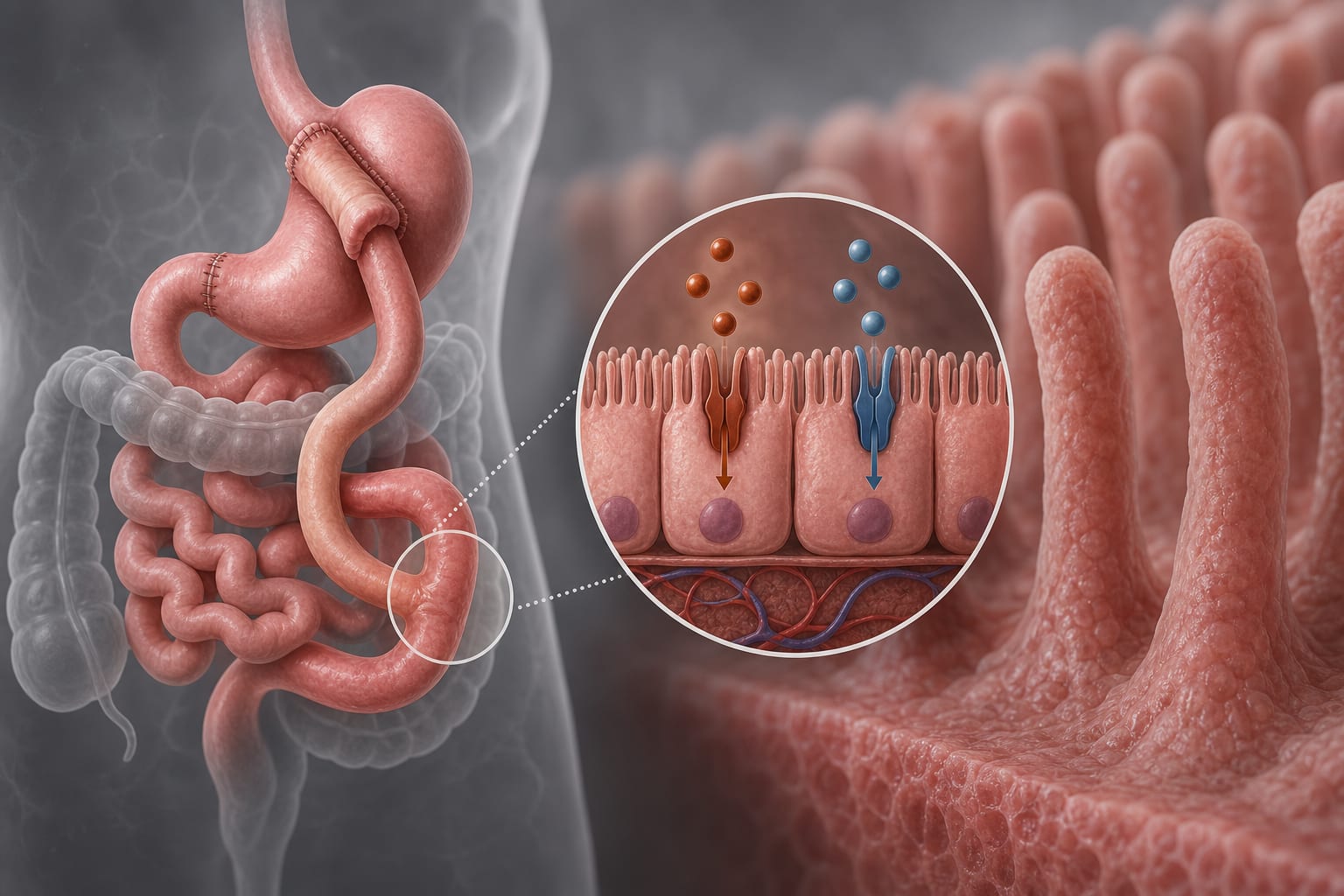
Obesity is a growing public health concern with limited success from conservative treatments. Bariatric surgery remains the most effective intervention, with Sleeve Gastrectomy (SG) and Roux-en-Y Gastric Bypass (RYGB) being the most common procedures. The SASI bypass, introduced in 2014, combines SG with a loop gastroileostomy, offering a simpler and potentially safer alternative. This review aims to systematically assess SASI bypass outcomes and compare them with other bariatric surgeries.
Data Highlights
Outcome
Measure
Findings
Weight Loss
% Excess Weight Loss (%EWL)
Significant reduction post-SASI bypass; meta-analysis included 4 studies
Comorbidities
Improvement/Remission Rates
Notable improvements in T2DM, hypertension, dyslipidemia, GERD, and OSA
Complications
Incidence and Safety Profile
Lower complication rates compared to more complex procedures like RYGB
Key Findings
SASI bypass is associated with significant weight loss measured by %EWL.
Improvement or remission of type 2 diabetes mellitus, hypertension, dyslipidemia, GERD, and obstructive sleep apnea was observed.
The procedure involves a simpler loop anastomosis, potentially reducing operative complexity and risks.
Comparative studies suggest SASI bypass has a favorable safety profile relative to SG and OAGB.
Variations in common limb length (200–350 cm) exist, with different terminologies used across studies.
The meta-analysis included 18 studies with diverse designs, including retrospective, prospective, and one RCT.
Clinical Implications
SASI bypass offers an effective surgical option for obesity and related comorbidities with potentially fewer complications due to its simpler technique. Clinicians should consider SASI bypass as a viable alternative to traditional bariatric surgeries, especially in patients where procedural simplicity and safety are priorities. Standardization of the technique and limb length may further optimize outcomes.
Conclusion
The Single Anastomosis Sleeve Ileal bypass is a promising bariatric surgery technique demonstrating effective weight loss and comorbidity improvement with a favorable safety profile. Further high-quality studies are warranted to standardize the procedure and confirm long-term outcomes.
References
Mui et al. 2014 -- Description of SASI bypass technique
Mahdy et al. 2016 -- First case series of SASI bypass
PRISMA 2020 -- Preferred Reporting Items for Systematic Reviews and Meta-analyses
by Carolina Rodrigues Oliveira, Hugo Santos-Sousa, Maria Pinho Costa, Filipe Amorim-Cruz, Raquel Bouça-Machado, Jorge Nogueiro, Fernando Resende, André Costa-Pinho, John Preto, Eduardo Lima-da-Costa, Silvestre Carneiro, Bernardo Sousa-Pinto
These 10 states make it more practical for physicians to participate in hospital ownership by aligning statutory structure, corporate practice of medicine rules, and population trends.