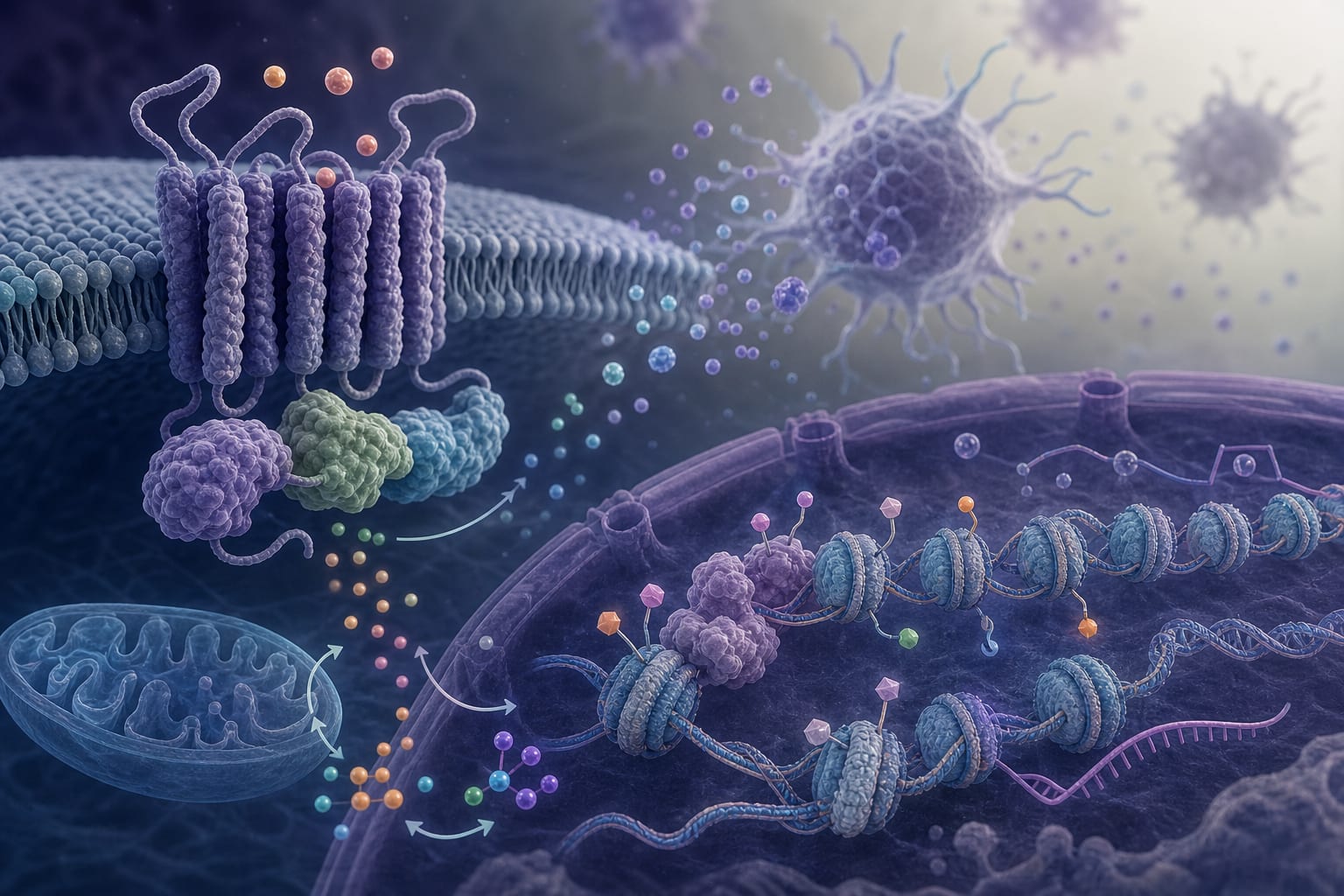
Long COVID Symptoms Linked to Lymphocyte Mitochondrial Dysfunction and Immune Changes
Overview
This study identifies significant mitochondrial dysfunction in lymphocytes and altered cytokine responses in patients with long COVID (LC). Symptom severity correlates with impaired mitochondrial membrane potential in specific immune cells and reduced cytokine production upon immune stimulation.
Background
Long COVID (LC) affects millions globally with persistent symptoms such as fatigue, cognitive dysfunction, and dysautonomia. The underlying pathology remains poorly understood, complicating therapeutic development. Immune dysregulation and metabolic abnormalities, particularly mitochondrial dysfunction in immune cells, have been proposed as contributing factors. The study utilizes the validated COVID-19 Yorkshire Rehabilitation Scale (C19-YRSm) to quantify symptom burden and investigates mitochondrial and immune function in LC patients.
Data Highlights
Parameter
LC Patients
Recovered Controls
Number of Participants
27
27
Mitochondrial Membrane Potential in CD56bright NK Cells
Decreased (notably in patients with dizziness)
Normal
Mitochondrial Membrane Potential in CD4+ Lymphocytes
Reduced (associated with worsening breathlessness)
Normal
IFN-γ Production after LPS Stimulation
Significantly Lower
Normal
IFN-β and IL-10 Responses to Viral Ligand R848
Impaired (linked to worsening cough and executive dysfunction)
Normal
Key Findings
LC patients exhibit significant symptom burden across multiple domains compared to pre-infection health.
Decreased mitochondrial membrane potential observed in CD56bright natural killer cells, especially in those with dizziness.
Reduced mitochondrial membrane potential in CD4+ lymphocytes correlates with worsening breathlessness.
LC patients show significantly lower IFN-γ production upon bacterial (LPS) stimulation.
Impaired IFN-β and IL-10 responses to viral ligand R848 are associated with worsening cough and executive function deficits.
Symptom severity in LC is linked to immune cell mitochondrial dysfunction and altered cytokine responses.
Clinical Implications
Assessment of mitochondrial function in immune cells may serve as a biomarker for LC severity and symptom phenotypes. Therapeutic strategies targeting mitochondrial dysfunction and immune response modulation could potentially improve symptom management in LC. Digital platforms like the C19-YRSm facilitate comprehensive symptom monitoring and may guide personalized interventions.
Conclusion
Mitochondrial impairment in lymphocytes and altered immune cytokine responses are closely associated with symptom severity in long COVID. These findings highlight potential biomarkers and therapeutic targets to address the complex pathology of LC.
References
University of Leeds/ELAROS 24/7 Ltd/2024 -- Long COVID Symptoms Evaluated Digitally Show Links to Lymphocyte Mitochondrial Impairment and Immune Function Changes
by Vasile Mihai Sularea, Liam Townsend, Cian Reid, Andreea V Atanasescu, Adam H Dyer, Federica Giangrazi, Roman Rocha Lawrence, Manoj Sivan, Barry Moran, Derek G Doherty, Niall P Conlon, Aideen Long, Cliona O’Farrelly