A personalized and automated real-time meal detection algorithm based on continuous glucose monitoring and heart rate data for individuals with post-bariatric hypoglycemia - Report - MDSpire
Advertisement
A personalized and automated real-time meal detection algorithm based on continuous glucose monitoring and heart rate data for individuals with post-bariatric hypoglycemia
Clinical Report: An Automated Real-Time Meal Detection System Utilizing Continuous Glucose Monitoring and Heart Rate Data for Patients Experiencing Post-Bariatric Hypoglycemia
Overview
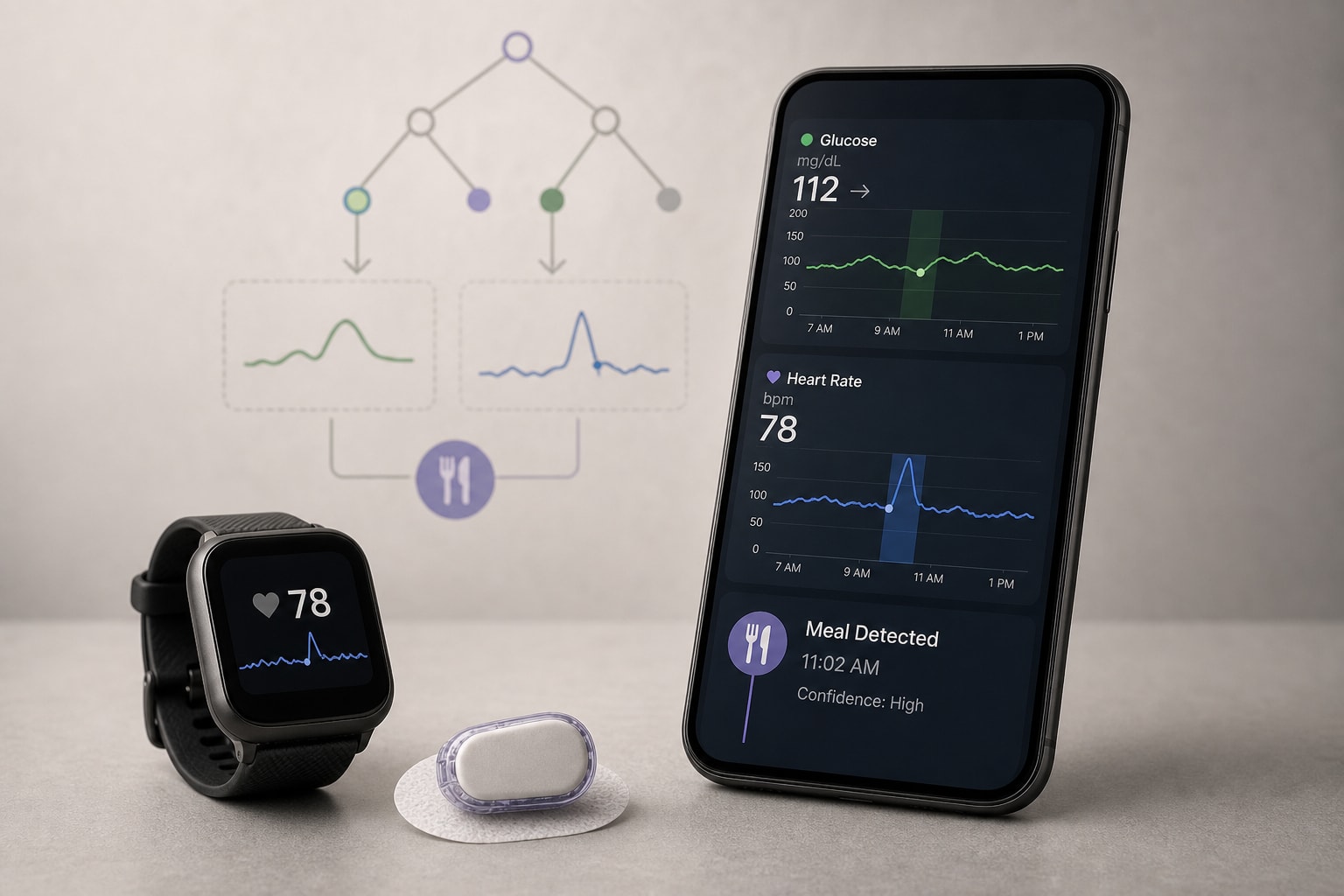
This study presents a real-time meal detection algorithm that integrates continuous glucose monitoring (CGM) and heart rate data for patients with post-bariatric hypoglycemia (PBH). The algorithm demonstrated high recall and precision in meal detection.
Background
Post-bariatric hypoglycemia (PBH) is a significant complication following bariatric surgery, characterized by exaggerated insulin responses leading to hypoglycemic episodes. Accurate meal detection is crucial for managing PBH, yet current methods rely heavily on manual logging, which is often inaccurate. Continuous glucose monitoring (CGM) has emerged as a promising tool for real-time glucose management.
Data Highlights
Setting
Recall
Precision
False Positives (per day)
Controlled
100%
N/A
N/A
Free-living
78%
85%
1 every 2.3 days
Key Findings
The algorithm achieved 100% recall in controlled settings.
In free-living conditions, the algorithm demonstrated an average precision of 85% and recall of 78%.
False positives were reduced to one every 2.3 days compared to CGM-only algorithms, which had one every 1.3 days.
The algorithm utilizes a heuristic decision-tree model based on individualized features from CGM and heart rate data.
Clinical Implications
The integration of this meal detection algorithm into decision support systems could enhance glucose management for patients with PBH.
Conclusion
The proposed algorithm represents an advancement in automated meal detection for patients with PBH, offering reliable performance in both controlled and free-living environments.