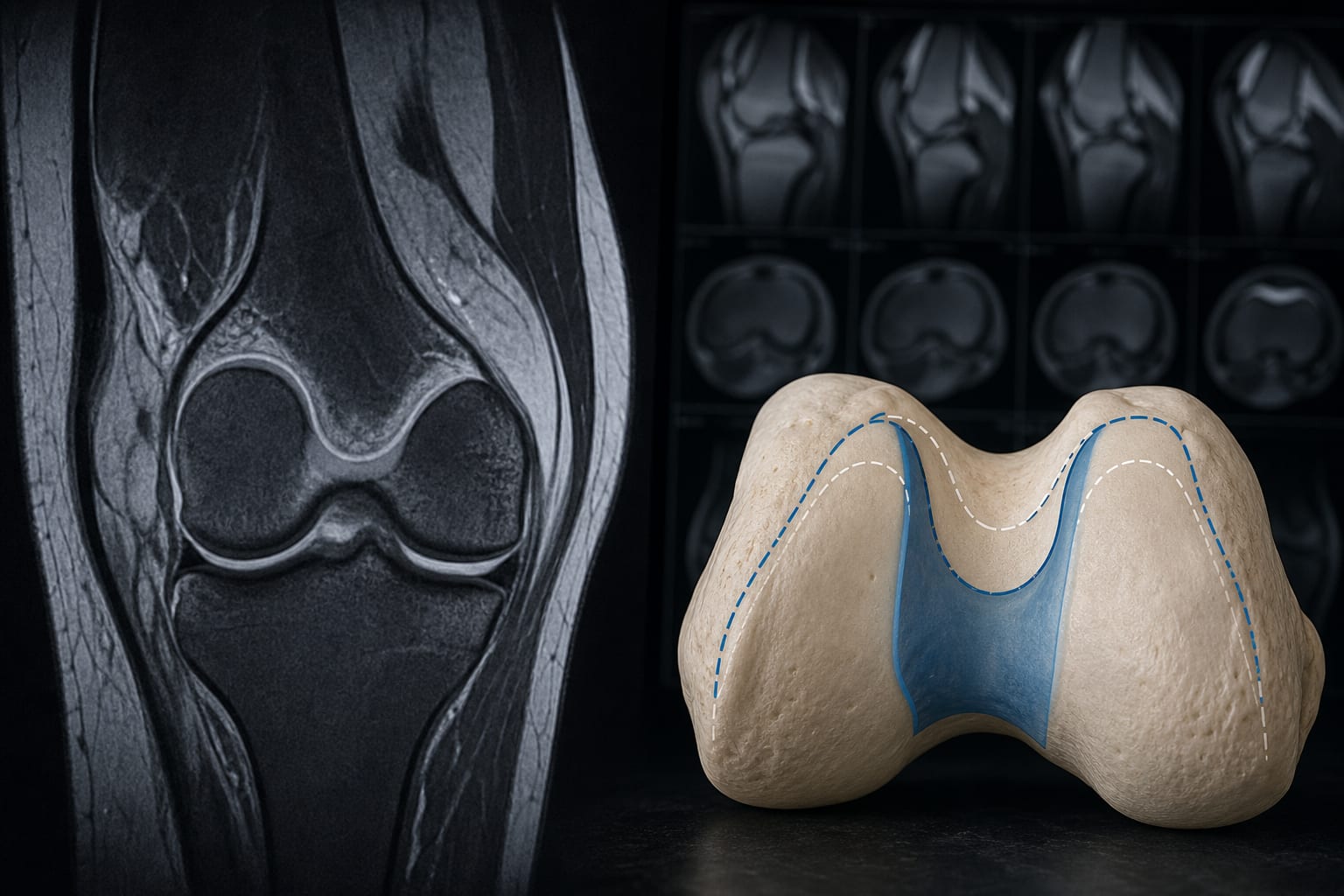
Diagnostic value of D-dimer in screening for deep vein thrombosis after total joint arthroplasty: a meta-analysis
-
By
-
Xinzhen Ding
-
Hubing Wu
-
Qionglin Huang
-
July 14, 2026
Clinical Report: Evaluating the Diagnostic Role of D-dimer in DVT Detection
Overview
This meta-analysis evaluates the diagnostic performance of D-dimer for detecting deep vein thrombosis (DVT) after total joint arthroplasty (TJA). The findings indicate moderate diagnostic performance, particularly in ruling out DVT when results are negative, but highlight substantial heterogeneity among studies.
Background
Deep vein thrombosis (DVT) is a significant complication following total hip and knee arthroplasties, with a high incidence despite prophylactic measures. Accurate and timely screening for DVT is crucial to prevent serious outcomes such as pulmonary embolism. D-dimer, a biomarker reflecting coagulation activity, is commonly used, but its diagnostic accuracy in postoperative settings remains debated due to nonspecific elevations.
Data Highlights
| Measure | Pooled Value (95% CI) |
|---|---|
| Sensitivity | 0.76 (0.64–0.85) |
| Specificity | 0.86 (0.55–0.97) |
| Positive Likelihood Ratio | 5.24 (1.30–21.08) |
| Negative Likelihood Ratio | 0.28 (0.16–0.49) |
| Diagnostic Odds Ratio | 18.59 (2.94–117.42) |
| Area Under Curve | 0.83 (0.80–0.86) |
Key Findings
- The pooled sensitivity of D-dimer for diagnosing postoperative DVT after TJA is 0.76.
- The pooled specificity is 0.86, indicating a moderate ability to correctly identify those without DVT.
- The positive likelihood ratio (PLR) is 5.24, suggesting a higher likelihood of DVT with a positive D-dimer result.
- The negative likelihood ratio (NLR) is 0.28, indicating a good ability to rule out DVT when D-dimer results are negative.
- Substantial heterogeneity (I2 > 98%) was observed, primarily due to differences in diagnostic cutoff values among studies.
- The AUC of the summary receiver operating characteristic curve is 0.83, reflecting moderate diagnostic performance.
Clinical Implications
D-dimer can be a useful tool in the screening process for DVT following total joint arthroplasty, particularly for ruling out the condition when results are negative. However, clinicians should be aware of the limitations and variability in specificity due to postoperative changes.
Conclusion
D-dimer shows moderate diagnostic potential for DVT screening after TJA, but its use should be considered within a broader risk-stratified approach.
Related Resources & Content
- Conexiant, Rethinking D-Dimer with Age in Mind, 2023 -- https://conexiant.com/pathology/articles/rethinking-d-dimer-with-age-in-mind/
- Evaluating Serum D-Dimer Levels in Diagnosing Periprosthetic Shoulder Infections, 2022 -- https://link.springer.com/article/10.1007/s00402-022-04385-6
- Frontiers in Neurology, Diagnostic value of thromboelastography combined with conventional coagulation tests for lower extremity deep vein thrombosis after cerebrovascular surgery, 2026 -- https://www.frontiersin.org/journals/neurology/articles/10.3389/fneur.2026.1832825/full
- American Society of Hematology 2018 guidelines for management of venous thromboembolism: diagnosis of venous thromboembolism - PMC -- https://pmc.ncbi.nlm.nih.gov/articles/PMC6258916/?utm_source=openai
- Frontiers in Medicine — Machine Learning Prediction Models for Deep Vein Thrombosis in Hospitalised Patients: A Systematic Review and Meta-Analysis
- Utility of D-dimer in total joint arthroplasty - PMC
- Diagnostic value of D-dimer in screening for deep vein thrombosis after total joint arthroplasty: a meta-analysis
- American Society of Hematology 2018 guidelines for management of venous thromboembolism: diagnosis of venous thromboembolism - PMC
This content is an AI-generated, fully rewritten summary based on a published scholarly article. It does not reproduce the original text and is not a substitute for the original publication. Readers are encouraged to consult the source for full context, data, and methodology.