Clinical Report: Machine Learning to Predict FOGQ Deterioration in PD Post-STN-DBS
Overview
A multimodal machine learning model was developed to predict postoperative worsening of FOGQ scores in Parkinson’s disease patients undergoing STN-DBS. The LightGBM model demonstrated high predictive accuracy, achieving an AUC of 0.917, emphasizing the importance of integrating clinical and neuroimaging data.
Background
Parkinson’s disease (PD) is a prevalent neurodegenerative disorder characterized by debilitating symptoms, including freezing of gait (FOG), which significantly impacts patient quality of life. Accurate prediction of postoperative outcomes, particularly FOG, is crucial for optimizing patient selection for STN-DBS. This study addresses the urgent need for reliable predictive models to enhance preoperative risk stratification.
Data Highlights
This study analyzed data from 134 patients with PD who underwent bilateral STN-DBS, utilizing a multimodal approach that included clinical assessments, neuroimaging features, and radiomics.
Key Findings
The LightGBM model achieved an AUC of 0.917 for predicting postoperative FOGQ deterioration.
Integration of clinical, structural, and radiomic features significantly enhanced predictive accuracy.
Feature selection methods included LASSO, Boruta, and RFECV to identify relevant predictors.
Model performance was validated using ROC curves and calibration curves.
SHAP values were used to analyze model interpretability.
Clinical Implications
The findings suggest that a multimodal machine learning approach can improve preoperative risk assessment for patients undergoing STN-DBS. Clinicians should consider integrating diverse data modalities to better predict postoperative outcomes and tailor treatment plans accordingly.
Conclusion
This study highlights the potential of machine learning models in enhancing the prediction of postoperative FOGQ deterioration in PD patients, underscoring the need for further external validation in multicenter cohorts.
by Min Xu, Shuhong Mei, Shuming Huang, Longyuan Gu, Yuting Zhang, Siyan Chen, Yuyao Tian, Li Du, Hui Zhao, Zixuan Zhang, Ruyi Chen, Guiyun Cui, Wei Zhang, Jie Zu
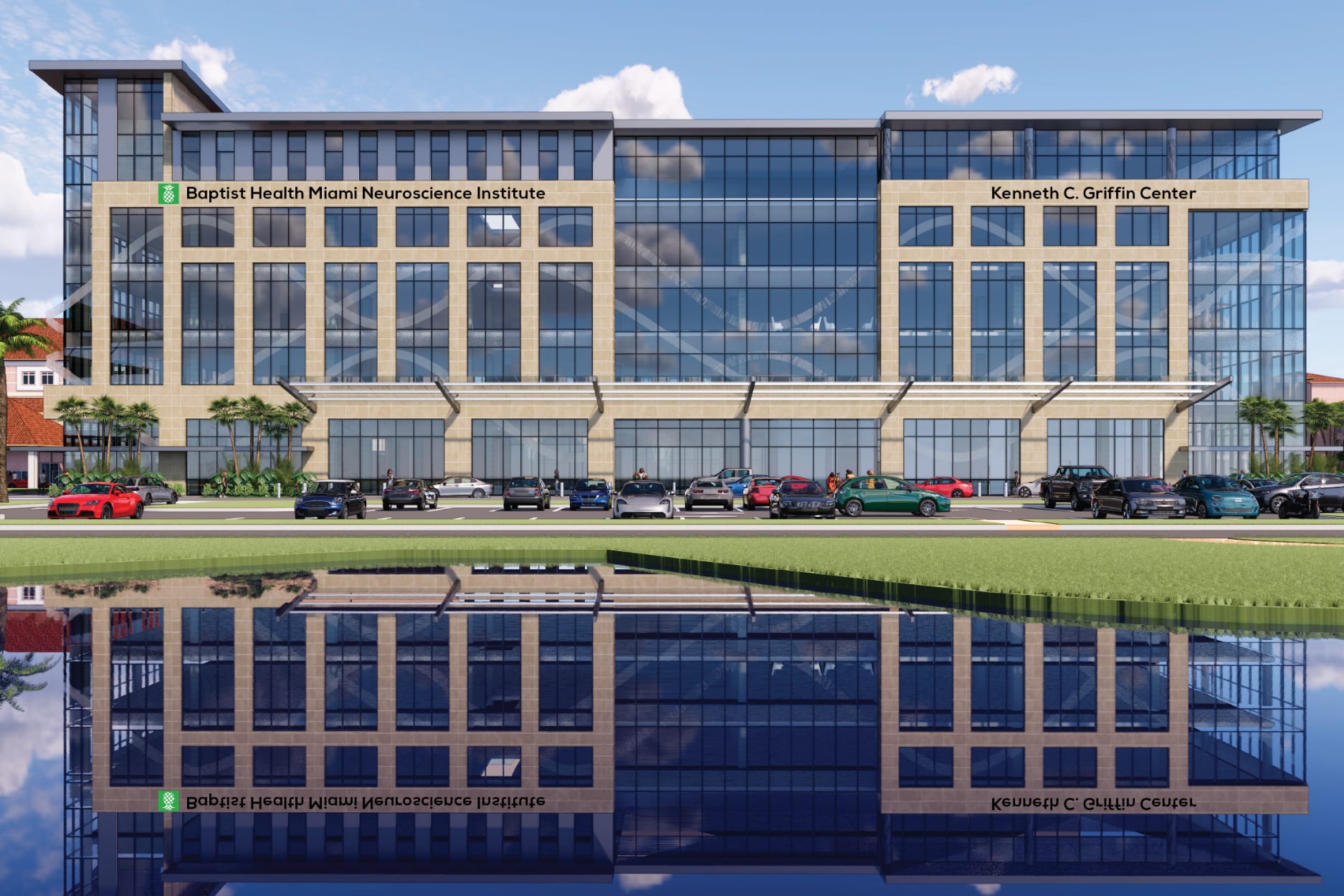
Baptist Health Foundation announced that it has received a $2 million donation from Anthony and Joyce Esernia to establish a new endowed chair at Baptist Health Miami Neuroscience Institute.
Baptist Health Miami Neuroscience Institute invites Dr. Aviva Abosch to discuss innovation, leadership, and discovery in the Marie Curie Women in Neuroscience Lectureship.