Case Report: A literature review of the medical complications arising from etomidate-laced vapes and two case studies of hypokalemia associated with etomidate use - Report - MDSpire
Advertisement
Case Report: A literature review of the medical complications arising from etomidate-laced vapes and two case studies of hypokalemia associated with etomidate use
Clinical Report: Medical Issues Linked to Etomidate-Infused Vaping
Overview
This report describes two cases of asymptomatic hypokalemia in patients using etomidate-laced vaporizers, highlighting the potential for adrenal dysfunction associated with this misuse. The findings emphasize the importance of early screening for hypokalemia in this emerging patient population.
Background
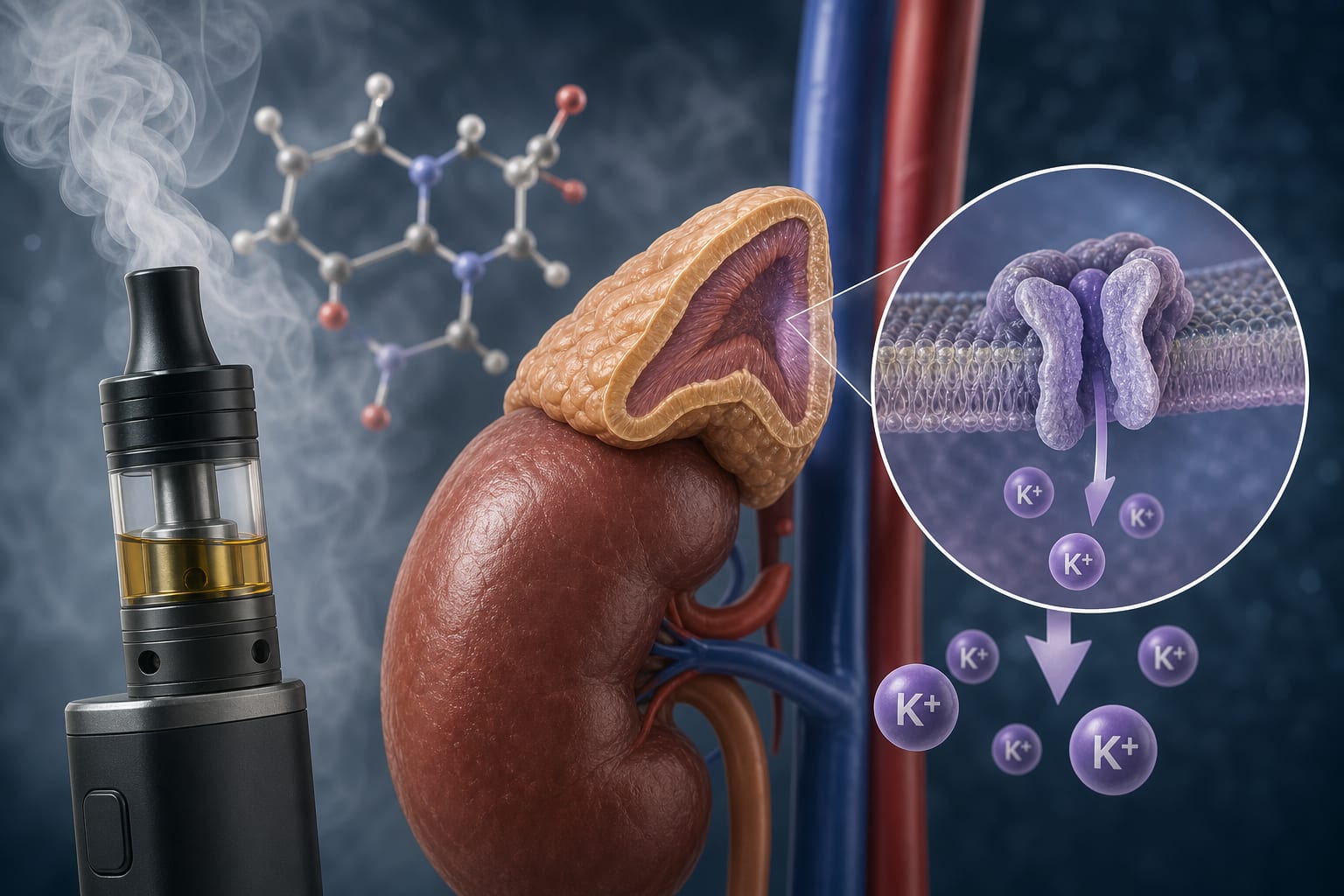
Etomidate, an anesthetic agent, has recently been misused through e-vaporizers, raising concerns about its effects on adrenal function. The inhalation of etomidate can lead to unpredictable dosing and serious medical complications, including hypokalemia and adrenal insufficiency. Understanding these risks is crucial for clinicians as the prevalence of etomidate misuse increases.
Data Highlights
Patient
Serum Potassium (mmol/L)
Patient 1
2.9
Patient 2
3.3
Key Findings
Two patients with etomidate-laced vaporizer use exhibited asymptomatic hypokalemia.
Both patients presented with diffuse and palmer crease hyperpigmentation, indicating potential adrenal dysfunction.
Etomidate misuse can lead to subclinical manifestations of endocrine disruption.
Early screening for hypokalemia is essential in patients misusing etomidate to prevent severe complications.
Unregulated inhalation of etomidate can result in prolonged adrenal dysfunction and associated health risks.
Clinical Implications
Clinicians should be aware of the potential for hypokalemia and adrenal dysfunction in patients using etomidate-infused vaping products. Early identification and management of these issues are critical to preventing severe health complications.
Conclusion
The misuse of etomidate through vaping poses significant health risks, including hypokalemia and adrenal dysfunction. Awareness and early screening are vital for managing affected patients.
Estonian Biobank analysis of more than 67,000 adults challenges assumptions about age and desire, finding men's peak does not align with expected testosterone decline patterns.