Clinical Report: Robotic-Assisted vs Conventional Laparoscopic Cholecystectomy in Pediatrics
Overview
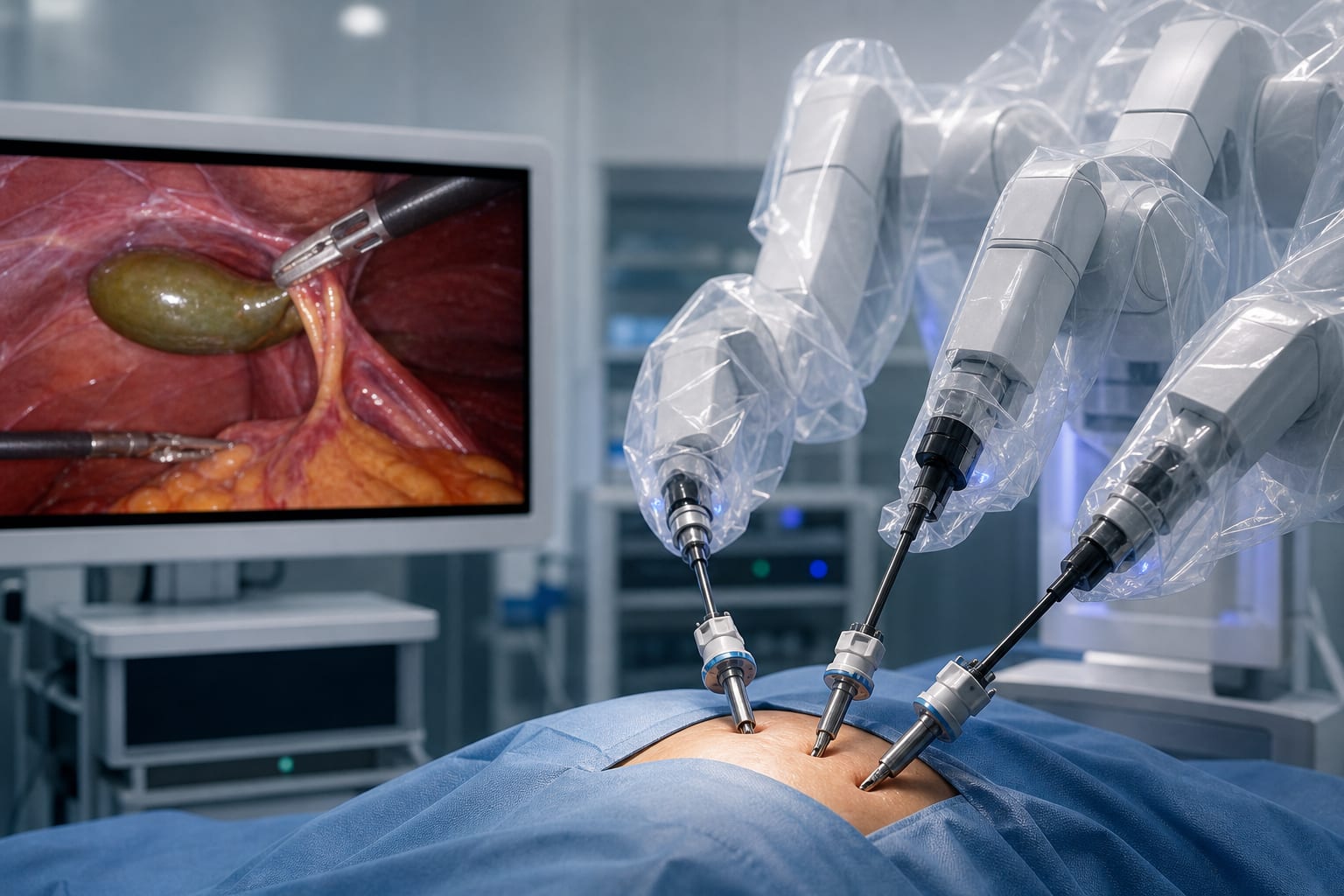
This study compares perioperative outcomes and gastrointestinal recovery between robotic-assisted and conventional laparoscopic cholecystectomy in pediatric patients. Findings indicate that robotic surgery has longer operative times, shorter hospital stays, and improved early gastrointestinal recovery.
Background
Gallbladder disease in children is common and often requires cholecystectomy as the definitive treatment. Laparoscopic cholecystectomy is the standard of care, but robotic-assisted techniques are emerging as an alternative. Understanding the differences in recovery and outcomes between these approaches is crucial for optimizing pediatric surgical care.
Data Highlights
Outcome
Robotic Group
Conventional Group
p-value
Operative Time
2:22 h
1:33 h
< 0.001
Length of Hospital Stay
2 days
4 days
0.003
Early Oral Feeding within 24 h
100%
69.2%
0.041
Passage of Flatus within 24 h
93.3%
30.8%
0.002
Key Findings
Median operative time was significantly longer in the robotic group (2:22 h vs. 1:33 h; p < 0.001).
Length of hospital stay was significantly shorter in the robotic group (2 days vs. 4 days; p = 0.003).
No conversions to open surgery or surgical site infections were observed in either group.
Postoperative complications were rare and comparable between groups (7.7% vs. 0%; p = 0.46).
Early oral feeding within 24 h occurred in 100% of robotic cases versus 69.2% in the pre-robotic group (p = 0.041).
Passage of flatus within 24 h was observed in 93.3% of robotic cases versus 30.8% in the pre-robotic group (p = 0.002).
Clinical Implications
The study presents outcomes of robotic-assisted cholecystectomy in pediatric patients, highlighting differences in operative time and recovery metrics compared to conventional techniques.
Conclusion
Robotic-assisted cholecystectomy is a safe and feasible option for pediatric patients, with differences in recovery metrics compared to conventional laparoscopic techniques.